TAIPEI, Taiwan — Taiwan’s National Health Insurance premiums are not expected to increase next year if stronger wage growth and additional government funding improve the system’s financial position, Health Minister Shih Chung-liang said Thursday.
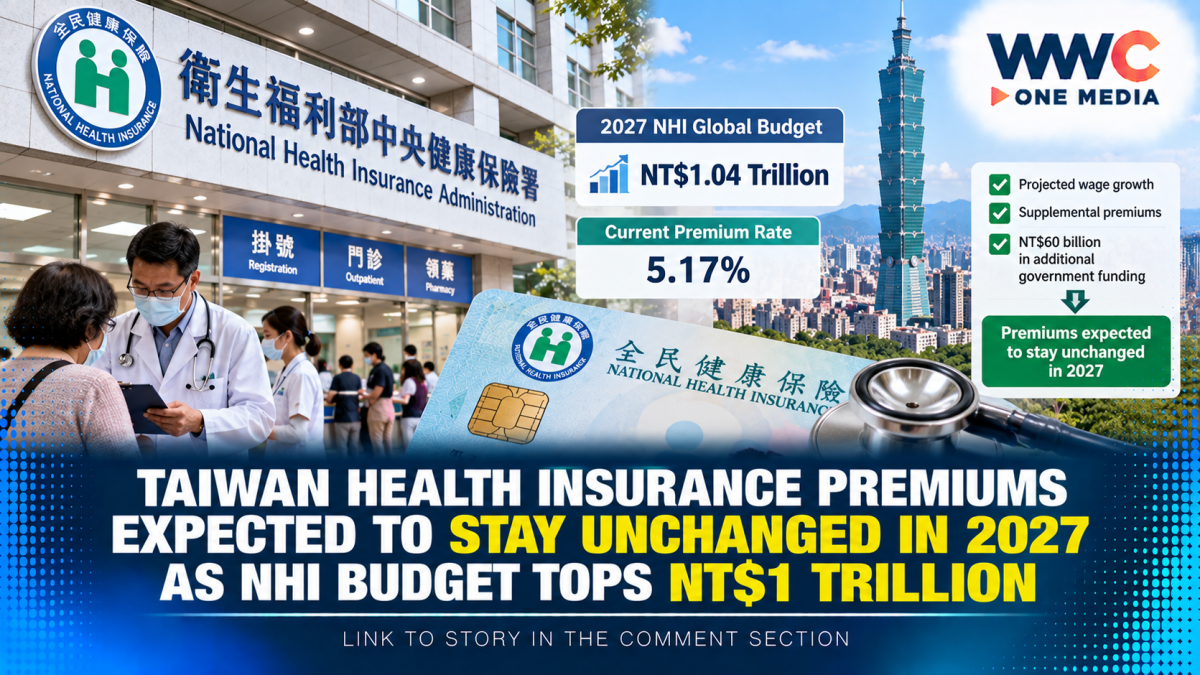
The outlook comes as Taiwan prepares for a major expansion in its 2027 National Health Insurance budget, which is expected to reach approximately NT$1.04 trillion (US$32.7 billion).
The figure represents a 5.5% increase and marks the first time Taiwan’s NHI global budget has surpassed NT$1 trillion.
Why Taiwan’s NHI Premiums May Not Rise
Health Minister Shih said higher wages could generate additional regular insurance-premium revenue.
The expected increases in Taiwan’s minimum wage, public-sector salaries and wages in other industries could strengthen the NHI system’s revenue base, helping offset some of the additional spending planned for 2027.
The government is also expected to provide NT$60 billion in additional funding, while supplemental premiums will contribute further revenue.
Under those conditions, the Ministry of Health and Welfare estimates that NHI reserves could equal approximately 2.3 months of spending by the end of 2027.
That financial outlook is what could allow the regular premium rate to remain unchanged.
NHI Spending Set for Another Major Increase
The 2027 global budget will cover healthcare services provided by hospitals, clinics, dental facilities and traditional Chinese medicine providers.
The 5.5% increase translates to roughly NT$55 billion more in NHI spending compared with this year.
Representatives from healthcare sectors and premium payers agreed on the 5.5% growth rate during the budget-setting process.
The increase also marks the third consecutive year in which Taiwan’s NHI system has adopted the upper end of the government’s projected growth range.
What Is Driving the Higher Budget?
Taiwan’s healthcare system is facing rising demand and increasing costs across multiple areas of medical care.
The expanded budget is intended to provide additional resources for healthcare providers while maintaining coverage across the NHI system.
At the same time, authorities are watching the system’s financial reserves closely. Keeping the premium rate unchanged will depend on whether projected revenue and government support materialize as expected.
That makes wage growth particularly important to the 2027 outlook.
Government Defends Budget Negotiations
Shih also addressed criticism that much of the annual NHI budget negotiation is effectively settled before the formal meeting.
The health minister defended advance discussions, saying they are necessary to make the process more efficient.
He argued that attempting to resolve every issue during a single formal meeting would make negotiations more difficult.
What Happens to Taiwan’s Premiums Next Year?
For now, the message from Taiwan’s health authorities is cautiously reassuring: the regular NHI premium rate is expected to remain unchanged in 2027, assuming the projected wage increases and government funding strengthen the system’s finances.
But the decision is tied to the financial assumptions behind the NHI budget.
With healthcare spending crossing the NT$1 trillion threshold for the first time, Taiwan is entering a significant new phase for its national health insurance system.
The premium rate may stay where it is — but with NHI spending climbing to a record NT$1.04 trillion, the financial balancing act behind Taiwan’s healthcare system is becoming more important than ever.
WWC ONE MEDIA G,A