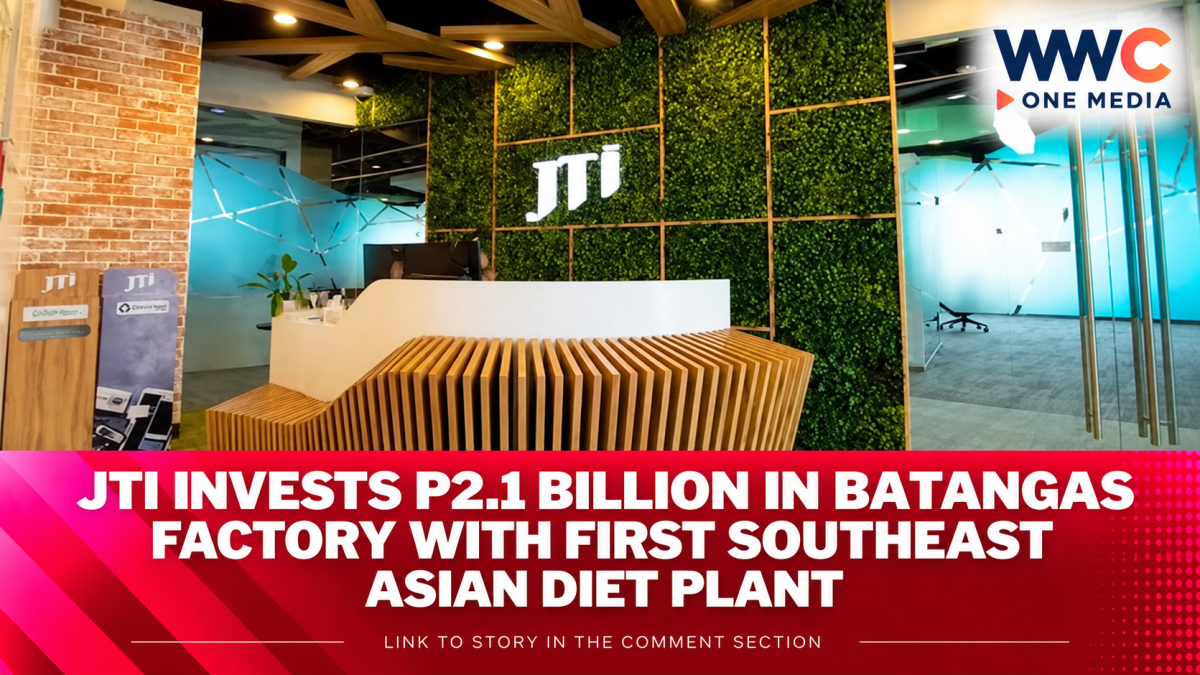
Japan Tobacco International (JTI) is investing P2.1 billion to upgrade its manufacturing operations in Malvar, Batangas, including the company’s first Dry Ice Expanded Tobacco (DIET) facility in Southeast Asia.
About P1.9 billion of the investment went to the 2,006-square-meter DIET plant, while more than P177 million was allocated to expand the factory’s Controlled Atmosphere (CA) treatment facility. The CA expansion became operational in July and doubled the facility’s treatment capacity.
DIET is an advanced tobacco-processing technology that uses dry ice to expand tobacco, changing how the raw material is prepared before manufacturing. JTI said the process is designed to improve consistency and efficiency in tobacco processing. The company already operates DIET facilities in other Asian markets, including Japan and Bangladesh.
The new facility strengthens the role of JTI’s Batangas operation as a major manufacturing hub for the company’s Asian network. The plant produces cigarettes for the Philippine market and exports to 22 markets worldwide.
The investment also allows JTI to localize the processing of DIET-treated tobacco in the Philippines. Company officials said the new capability could potentially support higher production and additional export opportunities, although any increase in export orders will depend on market demand and commercial considerations.
The expanded CA facility, meanwhile, is designed to preserve the quality and integrity of tobacco before it enters production. Together, the two investments strengthen different stages of the manufacturing process, from raw-material treatment to tobacco processing.
JTI said the Batangas facility’s existing technical capabilities and workforce were key factors in selecting the Philippines for its first Southeast Asian DIET installation. The company also cited the country’s workforce, strategic location and manufacturing ecosystem as factors supporting its continued investment.
The latest investment adds to JTI’s footprint in the Philippines. The company has invested more than P17 billion locally since registering with the Philippine Economic Zone Authority in 2013 and has created more than 1,000 jobs within economic zones, according to PEZA officials.
The Batangas expansion comes as JTI continues to position the Philippines within its regional manufacturing and export network. The new technology could support further localization and production growth, while future expansion will depend on demand, capacity requirements and the company’s commercial plans.