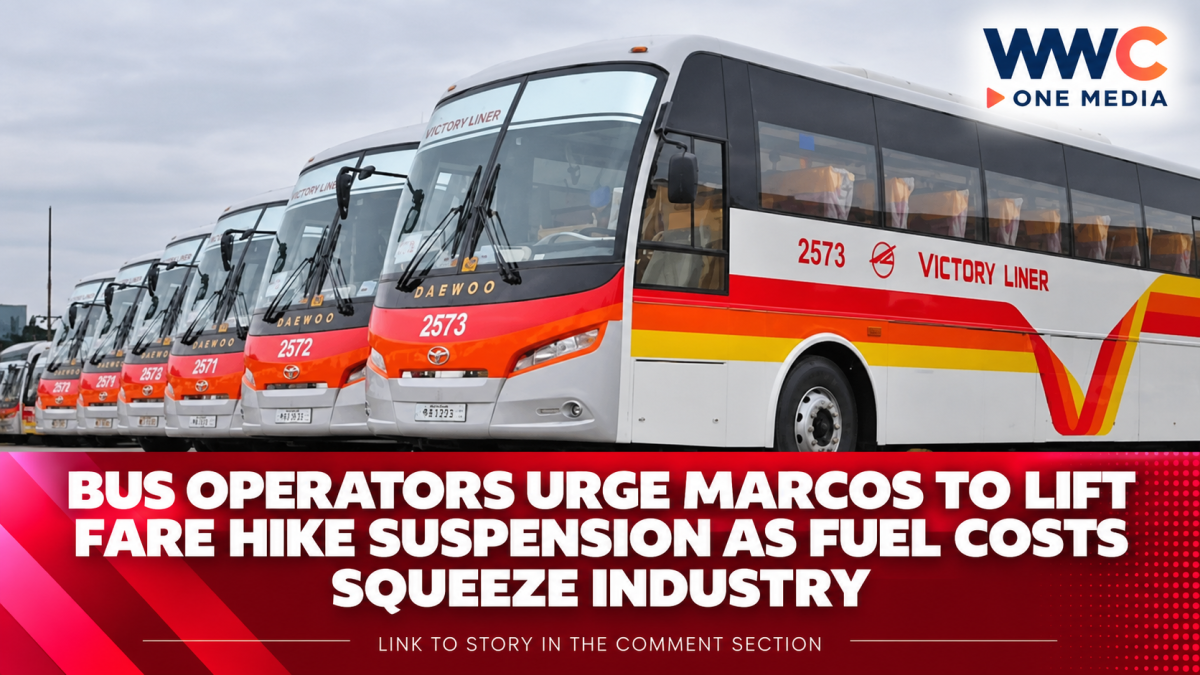
Bus operators are urging President Ferdinand Marcos Jr. to lift the suspension of an approved public transport fare increase, warning that rapidly rising fuel and operating costs are making it increasingly difficult for provincial and city bus companies to keep services running.
The appeal was made by the Nagkakaisang Samahan ng Nangangasiwa ng Panlalawigang Bus sa Pilipinas Inc., formerly known as the Provincial Bus Operators Association of the Philippines, in a letter coursed through Executive Secretary Ralph Recto. The group said the current regulated fares no longer cover the cost of operating buses.
The operators said diesel, spare parts, tires, toll fees, maintenance, insurance, wages and other expenses have risen sharply. Fuel alone now accounts for roughly 45% to 60% of operating costs, according to the group, leaving operators with little room to absorb further increases.
The fare adjustment had been approved by the Land Transportation Franchising and Regulatory Board in March but was suspended by Marcos less than a day after approval. The suspension was ordered as the government sought to shield commuters from additional costs amid the surge in fuel prices linked to the Middle East conflict.
Under the suspended adjustment, the minimum fare for Metro Manila and city ordinary buses would rise from P13 to P15 for the first five kilometers, while air-conditioned city buses would increase from P15 to P18. Provincial bus fares would also rise depending on the type of service, while the overall approved adjustments represented about a 19% increase across land transport modes.
Bus operators said they face a structural disadvantage because airlines and sea transport companies can impose fuel surcharges during periods of extraordinary fuel-price increases, while provincial and city buses cannot independently add such charges to passengers’ fares. They also pointed to the VAT they pay on fuel as an additional operating cost.
The industry is also carrying the financial burden of fleet modernization. Operators said they took on substantial loans to acquire newer buses while continuing to shoulder costs for repairs, maintenance, insurance, tolls and regulatory compliance. An impending wage increase could add another layer of pressure.
The operators warned that prolonged financial pressure could eventually affect the availability of bus services. They said some members have already experienced disrupted dispatches, layoffs and delayed loan payments, raising concerns that continued losses could lead to fewer buses, reduced trips and longer waiting times for passengers.
Malacañang, however, has said Marcos is not currently inclined to immediately lift the suspension. Palace officials said the administration is trying to find ways to support drivers and operators without passing the full burden of higher fuel costs to commuters.
The Department of Transportation continues to provide measures such as fuel discounts and toll exemptions for buses, while the government is also considering targeted subsidies for transport groups. A possible suspension or reduction of fuel excise taxes is another measure under consideration as international crude prices remain elevated.
The dispute puts the government between two competing pressures: protecting commuters from higher fares while ensuring that public transport operators can continue providing regular and financially sustainable services. The outcome of the fare suspension could affect both household transportation costs and the availability of bus services across cities and provinces.