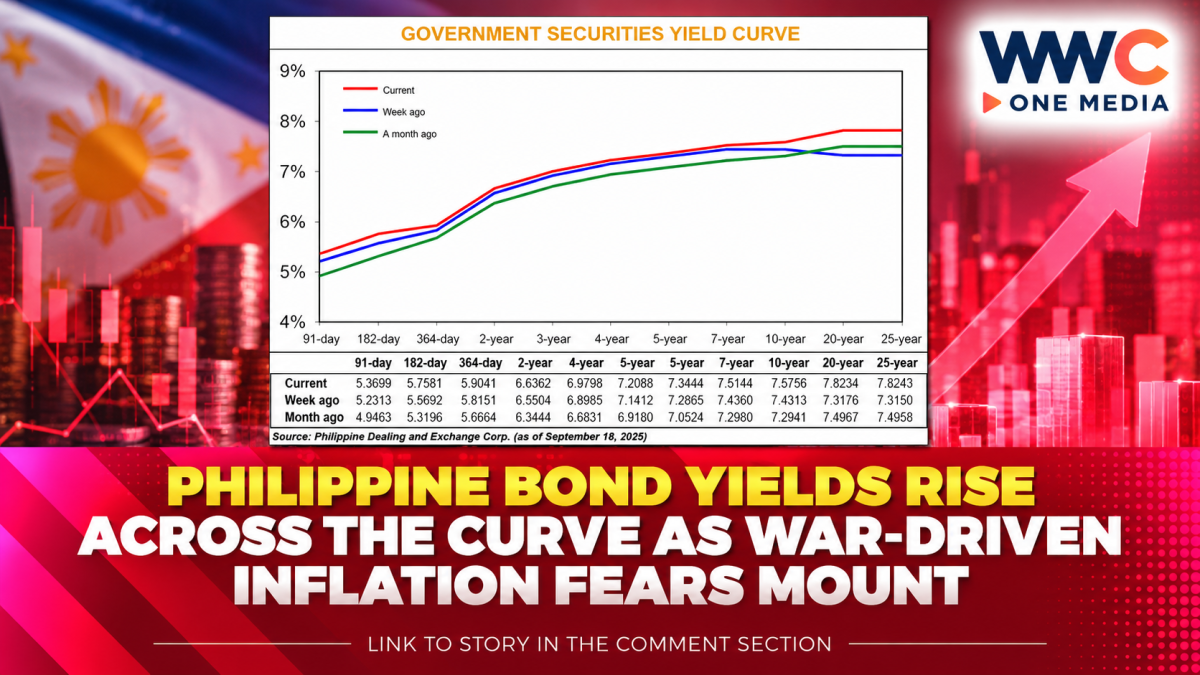
Philippine government bond yields moved higher across the curve last week as the prolonged conflict in the Middle East fueled concerns over oil prices, inflation and the outlook for interest rates.
Yields on government securities rose as investors demanded higher returns to compensate for increased inflation and market risks. The move reflects growing caution in the local fixed-income market as geopolitical uncertainty continues to influence global energy and financial markets.
The increase was broad-based, with yields on short-, medium- and long-term Philippine government securities all moving higher. Bond yields generally rise when prices fall, meaning the shift indicated weaker demand for existing fixed-income securities during the period.
The Middle East conflict remains a key source of concern because a prolonged disruption to energy supplies could keep global oil prices elevated. For an import-dependent economy such as the Philippines, higher fuel costs can feed into transportation, electricity and other consumer prices, potentially complicating the inflation outlook.
The pressure on Philippine bonds is also being reinforced by movements in advanced-economy interest rates. Higher US Treasury yields can influence local borrowing costs because investors compare returns across markets and currencies. Philippine mid- to long-term government securities have already been trading above 7% in the secondary market, well above levels seen before the Middle East conflict intensified.
Rising yields could create additional challenges for the Philippine government because higher market rates increase the cost of issuing new debt and refinancing existing obligations. The effect is particularly relevant as the government seeks to maintain spending while managing its fiscal position.
The Bangko Sentral ng Pilipinas is also facing a more complicated policy environment. Higher energy prices could add to inflation pressures and reduce the room for monetary easing, while weaker economic activity could argue for continued support through lower borrowing costs. Investors therefore continue to closely monitor both inflation data and BSP policy signals.
The latest movement follows earlier episodes of bond-market pressure this year, when geopolitical developments and oil-price increases also pushed Philippine yields higher. Market participants have repeatedly cited the conflict and its potential effect on energy prices as important factors behind changes in domestic bond pricing.
The situation also reflects broader global bond-market volatility. International investors have been reassessing interest-rate expectations as higher energy prices raise the possibility of persistent inflation, while longer-term yields have faced additional pressure from fiscal concerns and higher term premiums.
For Philippine borrowers and investors, the direction of the yield curve will depend heavily on how the Middle East conflict develops, where global oil prices settle and how major central banks respond to renewed inflation risks. Until those uncertainties ease, domestic bond yields may remain sensitive to developments well beyond the Philippine market.