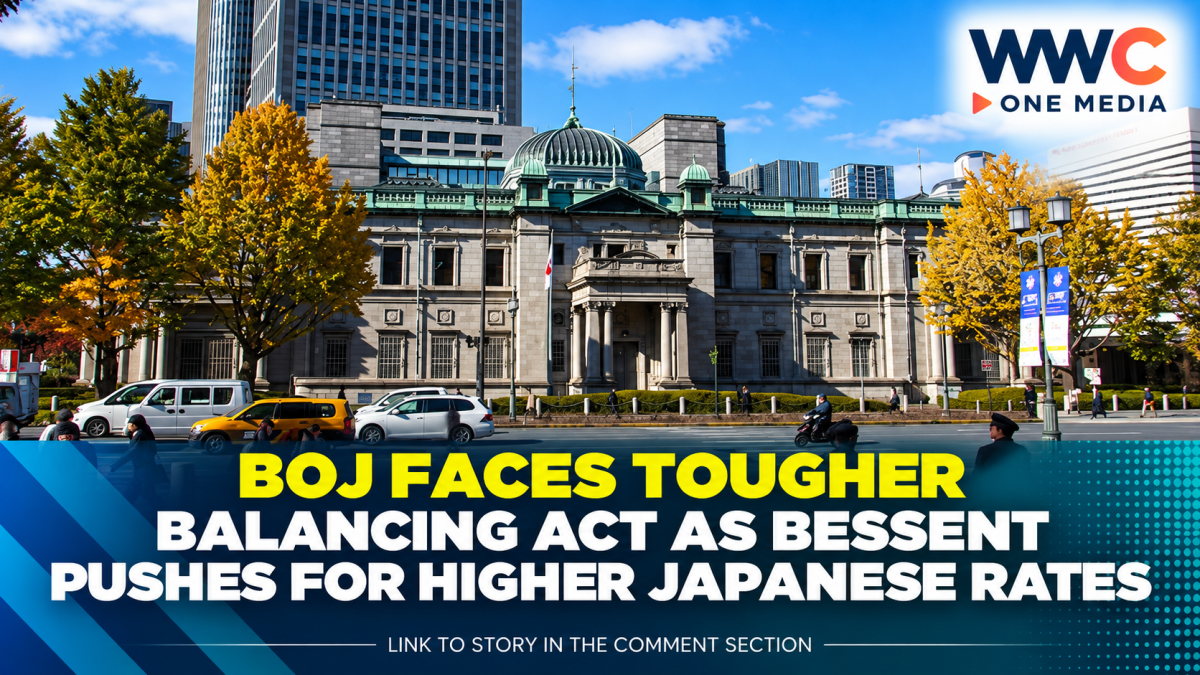
The Bank of Japan is facing a more complicated policy environment as Governor Kazuo Ueda tries to balance inflation and the weak yen against Japan’s need to sustain economic growth, while US Treasury Secretary Scott Bessent continues to press for tighter monetary and fiscal policies.
The BOJ raised its policy rate by 25 basis points to 1.25% on Sept. 18, its second increase in three months and the highest level in 31 years. The decision came as underlying inflation remained around the central bank’s 2% target and the yen continued to face pressure.
The rate increase broadly aligned with Bessent’s calls for Japan to raise borrowing costs and support the yen. But the BOJ has maintained that its monetary-policy decisions are based on economic conditions, inflation and financial developments rather than pressure from foreign governments. Reuters reported that a US Treasury official separately emphasized that Japanese authorities are responsible for monetary-policy decisions.
Bessent’s interest in Japanese monetary policy is closely linked to the global bond market. Japan is the largest foreign holder of US government debt, and a sharp rise in Japanese bond yields could potentially affect capital flows and the US Treasury market. Bessent has also argued that a stronger yen would reduce the risk that Japan would need to sell US assets to finance currency intervention.
The pressure creates a difficult policy balance for Ueda. Faster rate increases could help contain inflation and support the yen, but higher borrowing costs could also weigh on household spending, business activity and government debt-servicing costs. Japan’s economy has continued to face weaker consumption and growth even as prices remain elevated.
The BOJ’s latest decision also exposed differences within its policy board. Two members appointed by Prime Minister Sanae Takaichi voted against the September rate increase. Their opposition has drawn attention because two of the board’s more hawkish members are scheduled to leave in July 2027, potentially changing the balance of views on future rate increases.
Takaichi’s economic priorities add another complication. Her government has favored policies aimed at supporting economic growth, including fiscal measures that could increase government spending. Higher interest rates, meanwhile, raise the cost of servicing Japan’s substantial public debt, creating a different set of considerations for the government than those facing the central bank.
The yen has also remained a central concern. Japan and the United States coordinated currency intervention in late July after the yen weakened sharply. Although the intervention initially strengthened the currency, the yen later came under renewed pressure, keeping exchange-rate developments on the radar of Japanese and US policymakers.
Ueda has not ruled out another rate increase, saying after the latest decision that monetary policy had entered a “new stage.” However, the timing of any further move remains dependent on inflation, economic activity, financial conditions and the outlook for prices and wages.
The situation is becoming even more complex because the US Federal Reserve has also been adjusting its policy stance. A wider or narrower interest-rate gap between the United States and Japan can influence the yen and international capital flows, adding another variable for the BOJ as it determines how quickly to normalize monetary policy.
Japan’s next policy moves will therefore be watched not only for their domestic impact but also for their consequences across global currency and bond markets. The BOJ must navigate inflation, economic growth, government finances and the yen while maintaining the independence of its monetary-policy decisions amid growing international attention.