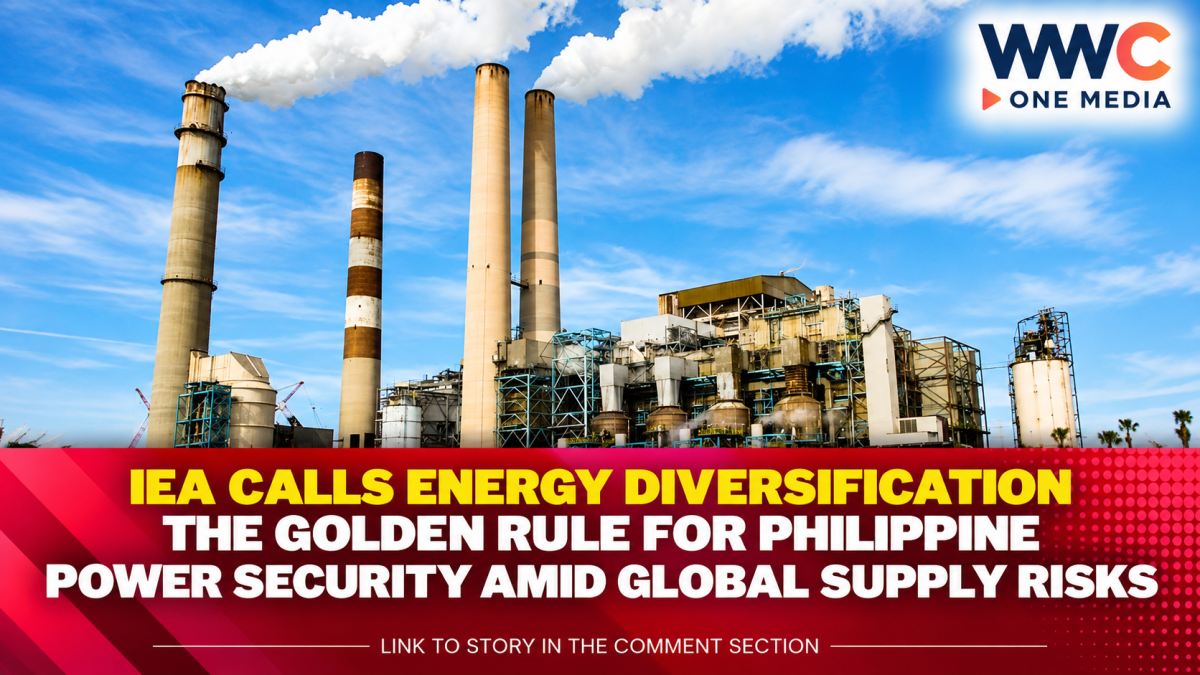
The Philippines needs to diversify its energy sources and strengthen domestic power capacity to reduce its exposure to global fuel shocks, according to the International Energy Agency (IEA), as geopolitical tensions continue to highlight vulnerabilities in energy-importing economies.
IEA senior energy analyst Sue-Ern Tan described diversification as the “golden rule” of energy security during an energy industry event in Jakarta. She said countries need a mix of energy sources rather than relying heavily on a single fuel or supply route.
The warning comes as the Middle East conflict has disrupted global energy markets and exposed Southeast Asia’s dependence on imported fuels. The IEA’s 2026 Southeast Asia Energy Outlook said around 60% of the region’s crude oil imports and about one-third of its gas imports came from the Middle East before the crisis, leaving countries vulnerable to supply disruptions and price spikes.
For the Philippines, the risks are particularly significant because the country remains dependent on imported energy while electricity demand continues to grow. The IEA said greater use of domestic resources, including geothermal and other indigenous energy sources, alongside renewable energy can help reduce exposure to international fuel markets.
Renewable energy is expected to play a larger role in that diversification. The IEA said Southeast Asia’s renewable capacity is projected to nearly triple by 2035 under current policies and could grow fivefold if announced targets are achieved. The Philippines has also emerged as a major destination for solar equipment, with Chinese solar exports to the country roughly tripling in the first quarter of 2026 from a year earlier.
Tan also pointed to the importance of maintaining reliable baseload generation while expanding cleaner sources. The Philippines is pursuing additional solar, wind, gas and geothermal projects, while nuclear power is being considered as a longer-term component of the country’s energy mix.
The Department of Energy has likewise emphasized a more diversified energy strategy, including indigenous oil and gas resources, geothermal development, renewable energy, hydrogen exploration and potential nuclear power. The government has set targets for renewable energy to account for 35% of power generation by 2030 and 50% by 2040.
Diversification, however, will require major investment in the infrastructure needed to connect and balance different sources of electricity. The IEA said Southeast Asia needs substantially more spending on transmission networks, energy storage and other flexibility measures as renewable generation expands.
Regional cooperation could also strengthen energy resilience. The IEA has highlighted the ASEAN Power Grid as a way for countries to share electricity, balance supply and demand and integrate renewable resources across borders. It has also called for stronger regional emergency-response arrangements and coordinated fuel stockpiling.
For the Philippines, the latest warning comes as energy security has become more closely linked to economic stability. Higher international fuel prices can raise transportation and electricity costs, increase inflationary pressure and widen the country’s import bill.
The challenge now extends beyond adding more generating capacity. The Philippines will need to build a more flexible and diversified energy system that can withstand disruptions while meeting rising electricity demand. The IEA’s message puts diversification at the center of that effort as the country navigates a more volatile global energy market.