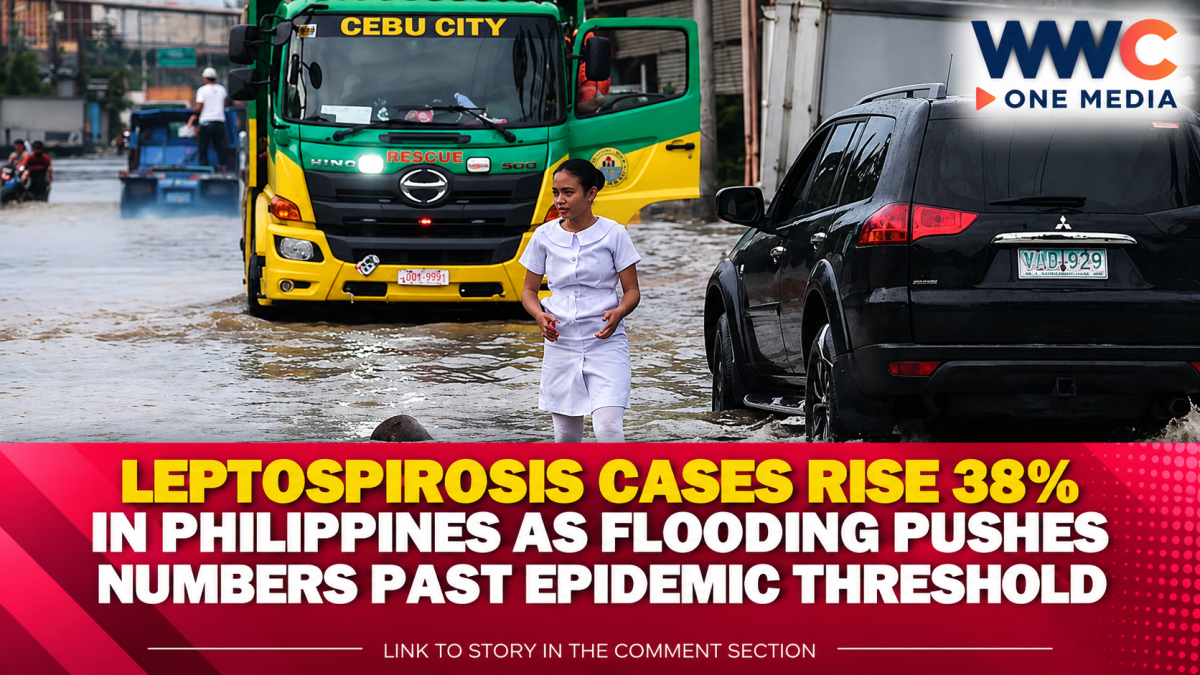
Suspected leptospirosis cases in the Philippines have climbed by 38 percent this year, with the Department of Health warning that the national figures have already surpassed the epidemic threshold amid continued rains and flooding.
As of September 16, the DOH recorded 10,936 suspected leptospirosis cases nationwide, up from 7,931 during the same period in 2025. The sharp increase has been recorded alongside repeated flooding that has exposed more people to potentially contaminated water.
The rise has accelerated in recent weeks. The DOH recorded 1,762 cases from August 6 to 19, but that figure jumped to 3,805 cases from August 20 to September 2. The department said cases during the most recent three to four weeks were 116 percent higher than during the preceding five to six weeks, pushing national surveillance figures beyond the epidemic threshold.
Flood exposure remains a major concern. Health authorities said continuous rains and flooding linked to climate change are the primary drivers of the current increase, with 7,242 cases, or about 66 percent of the cumulative total, associated with exposure to floodwaters.
The National Capital Region, Cagayan Valley and Calabarzon have recorded the highest numbers of cases. The DOH also reported that 8,640 cases, or 79 percent of the total, involved working-age males, with a median age of 33.
The disease is caused by Leptospira bacteria, which can spread through water or soil contaminated with the urine of infected animals, particularly rats. Exposure can lead to serious complications if the infection is not recognized and treated promptly.
The DOH is monitoring and replenishing doxycycline supplies at Rural Health Units and Barangay Health Stations. As of September 21, more than 3.7 million doxycycline capsules were available as buffer stocks in Centers for Health Development and the national warehouse.
Health authorities are also strengthening patient referral and coordination among government hospitals and other health facilities to help ensure that patients receive timely treatment. The DOH has expanded its monitoring system into a Unified Leptospirosis and Dengue Case Tracker to track hospital capacity, caseloads and resource requirements.
The DOH is urging people who have been exposed to floodwaters to seek medical advice immediately, even if they do not yet have symptoms. Early assessment is important because leptospirosis can progress to severe illness when treatment is delayed.
The latest figures underscore the continuing health risks associated with widespread flooding as the rainy season persists. With cases already above the epidemic threshold, health officials are focusing on early detection, access to treatment and reducing exposure to contaminated floodwaters as authorities respond to the surge.