
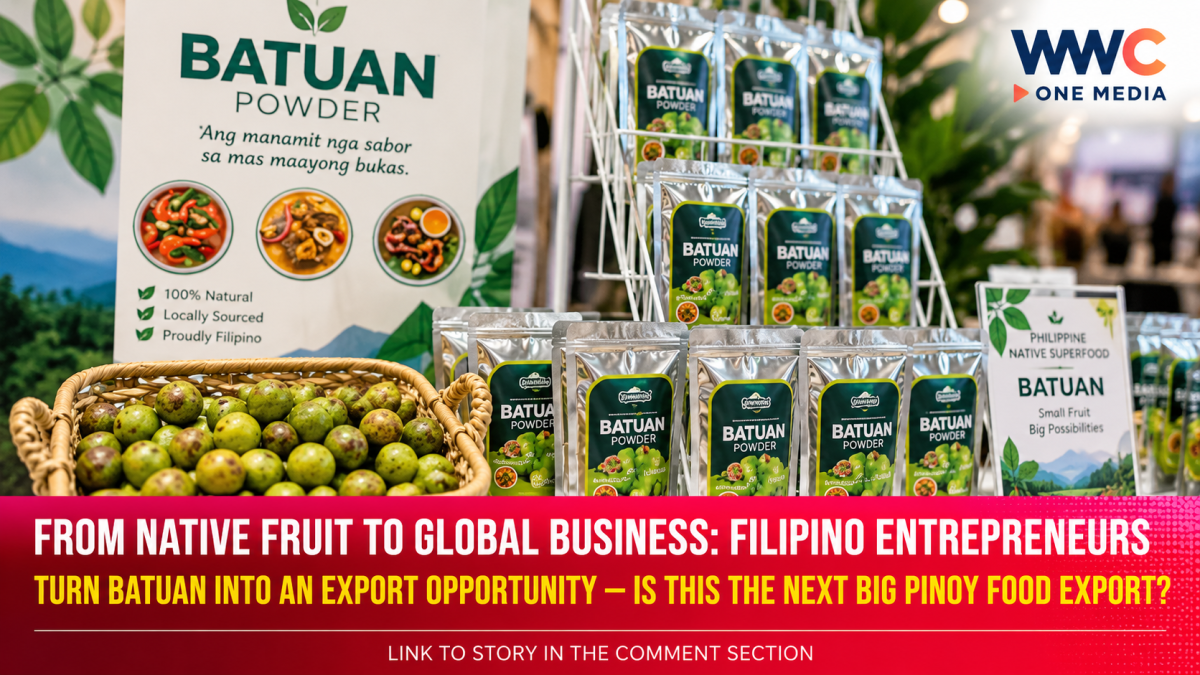
A little-known Philippine fruit traditionally used to add sourness to local dishes is finding a new life as a value-added product, with entrepreneurs turning batuan into a potential export business.
The story highlights how Filipino agricultural entrepreneurs are looking beyond conventional crops and transforming indigenous produce into commercially viable food products.
Batuan, scientifically known as Garcinia binucao, is a native fruit widely associated with the Visayas, particularly Panay and Negros Occidental. It is traditionally used as a souring ingredient in dishes such as Ilonggo-style soups and KBL, or kadyos, baboy and langka.
From an overlooked fruit to a business opportunity
The potential of batuan is not new, but its commercialization has been gaining momentum.
Research supported by the Department of Agriculture–Bureau of Agricultural Research (DA-BAR) has identified batuan as an underutilized indigenous crop with potential beyond its traditional culinary use.
Researchers and agricultural agencies have developed products including batuan powder, sinigang mix, jam, jelly, pickles, puree, dried halves, pastillas and piaya. These innovations are designed to extend the fruit’s shelf life and create additional income opportunities for farmers and processors.
That transformation is important because fresh batuan is seasonal and highly perishable. Processing the fruit allows entrepreneurs to sell it in forms that can reach consumers far beyond the communities where the fruit naturally grows.
The entrepreneurs behind the batuan push
Among the businesses that have worked with batuan products is MFK Agri Products & Technology, founded by former overseas Filipino workers Gina and Francis Salviejo.
The couple returned to the Philippines and eventually moved into agriculture and food processing. Their venture initially began on a smaller scale before developing value-added products from locally sourced agricultural ingredients.
Their experience with batuan illustrates a broader opportunity: instead of selling indigenous crops only as raw produce, Filipino entrepreneurs can process them into products with longer shelf lives and potentially higher market value.
The Philippine FDA’s current records also list MFK Agri Products & Technology as a licensed food manufacturer, with its license valid through January 2027.
Why foreign markets are taking notice
Batuan’s strongest selling point is its distinct flavor and connection to Filipino cuisine.
For Filipinos living overseas, products made from native ingredients can offer something more than food—they provide a taste of home.
DA research indicates that processed batuan products have already reached international markets through partner outlets, trade fairs and independent buyers, including destinations such as the United States, Canada, Australia, the Middle East and Europe.
This makes batuan part of a larger effort to turn indigenous Philippine ingredients into export-ready products.
The opportunity also fits Western Visayas’ broader push to expand international trade. In 2026, the Department of Trade and Industry completed a Western Visayas Export Development Roadmap for 2026–2028, aimed at improving export readiness among local enterprises and connecting more regional products with global markets.
A bigger opportunity for Filipino farmers
The batuan story is ultimately about more than one fruit or one business.
DA-BAR research has found that increased demand for processed batuan can create additional income opportunities for farmers, particularly during periods when fresh fruit prices rise.
Government-backed programs have also promoted the propagation of batuan using grafted seedlings, helping increase the supply of raw materials while encouraging farmers to cultivate the indigenous crop commercially.
Earlier agricultural research likewise identified batuan as an indigenous Philippine fruit with commercial and export potential, particularly because of its use as a souring ingredient and its ability to be processed into different food products.
From Ilonggo kitchens to international shelves
What was once largely known as a traditional souring fruit is slowly becoming something much bigger.
The challenge now is scaling production while maintaining quality, food safety, reliable farmer supply and consistent processing standards. If those hurdles are addressed, batuan could become another example of how distinctly Filipino agricultural products can move from local kitchens to international markets.
For entrepreneurs, the lesson is clear: sometimes, the next export opportunity is already growing in the backyard.
WWC ONE MEDIA M.J.E




Leave a Reply