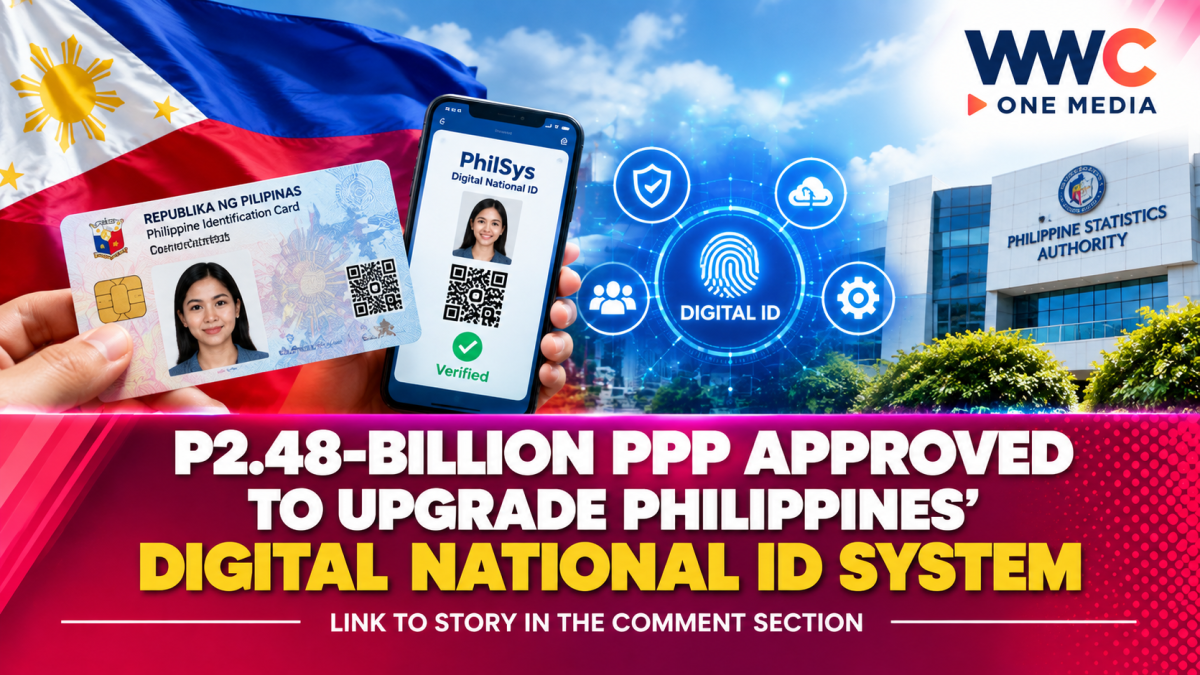
The Philippine government has approved a ₱2.48-billion public-private partnership project to upgrade, operate and maintain the country’s National ID system, paving the way for a major overhaul of its digital infrastructure.
The Investment Coordination Committee-Cabinet Committee approved the Philippine Digital National Identity Project of the Philippine Statistics Authority during its September 9 meeting. The approval allows the project to move into the procurement stage through a comparative challenge.
Under the comparative challenge process, other potential private-sector proponents will be given an opportunity to match or improve the proposal submitted by the original proponent. The government expects this stage to proceed through the fourth quarter of 2026.
The project was submitted as an unsolicited PPP proposal by Unisys Public Sector Services Corp. It will cover the upgrading, operation and maintenance of major components of the National ID system, including registration, card production, authentication services and the technical onboarding of private-sector organizations that rely on National ID verification.
The partnership will also involve the operation of key information and communications technology infrastructure supporting the National ID system.
The project will follow a build-transfer-operate arrangement, with a six-month transition period followed by a 20-year concession. The PPP Center previously provided transaction advisory services during preparations for the proposed partnership.
The PSA said the planned improvements are intended to make National ID registration more accessible and authentication services more efficient. PSA Undersecretary Claire Dennis S. Mapa said the partnership is intended to tap private-sector expertise and resources while keeping the National ID system focused on its public-service purpose.
The National ID system is designed to provide Filipinos with a government-recognized means of establishing their identity when accessing public and private services. Expanding reliable authentication could potentially make transactions involving banks, government agencies and other participating institutions more streamlined.
However, the approval does not yet mean the private partner has received the final concession. The project still has to go through the required procurement process, including the comparative challenge, before the government awards the long-term concession.
The ₱2.48-billion project therefore marks the next stage in the government’s effort to strengthen the country’s digital identity infrastructure — with the procurement process now set to determine how the system will be upgraded and operated over the coming decades.