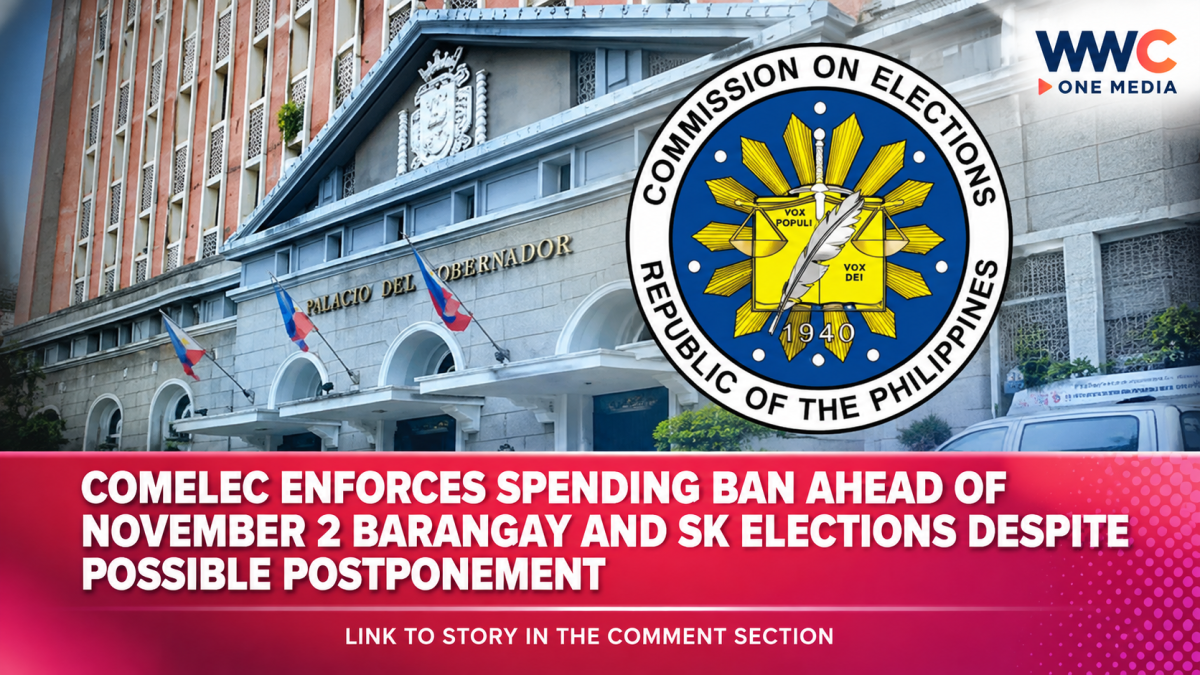
The Commission on Elections has begun enforcing restrictions on government spending ahead of the scheduled November 2 Barangay and Sangguniang Kabataan Elections, even as Congress has moved to postpone the polls.
Comelec said the release, disbursement or expenditure of public funds is prohibited from September 18 to November 1 under Section 261(v) of the Omnibus Election Code. The restriction also covers the construction of public works, delivery of materials for public projects and the issuance of treasury warrants and similar instruments.
The ban also covers the appointment or hiring of new employees, creation or filling of new positions, promotions and salary increases, as well as additional remuneration or privileges during the restricted period.
Comelec’s decision to enforce the restrictions comes despite legislation moving through Congress that would extend the terms of barangay and SK officials and effectively move the elections to November 2028.
Comelec Chairman George Garcia has said the poll body must continue preparing for the November 2 elections until a postponement measure becomes law. He has also noted that even if the measure is signed, it could still face a legal challenge before the Supreme Court.
That uncertainty is also why Comelec is continuing to implement the existing election-related restrictions.
The spending ban, however, is not absolute. Comelec has approved exemptions for several assistance programs of the Land Transportation Franchising and Regulatory Board, allowing them to continue despite the restrictions.
The exemptions cover the EDSA Busway Extension service contracting program, the Love Bus “Libreng Sakay” program, the Fuel Subsidy Program and the Public Transport Modernization Program. Approved disbursements listed by Comelec amount to P51 million for the EDSA Busway Extension, P940 million for the Love Bus, P1.785 billion for the fuel subsidy program and P1.5 billion for public transport modernization.
Comelec imposed conditions on the exemptions. Elective officials, candidates, nominees and aspirants cannot participate in the distribution of assistance, and the programs must not be used in a way that could influence the November 2 elections. The LTFRB must also provide program guidelines and submit periodic reports on the funds disbursed.
The restrictions are designed to prevent government resources and public projects from being used in ways that could affect the electoral process during the period immediately before an election.
Comelec has already spent about P8 billion of the P19 billion allocated for preparations for the scheduled BSKE, according to Garcia. He said equipment purchased for the elections could still be used if the polls are eventually reset.
For now, the situation leaves Comelec preparing for an election that remains on the calendar under existing law while simultaneously operating under the possibility that Congress’ postponement measure could change the timetable.
The key issue is whether the postponement becomes law before the current election calendar advances further — and what happens to the restrictions and preparations already being implemented if the polls are eventually moved.