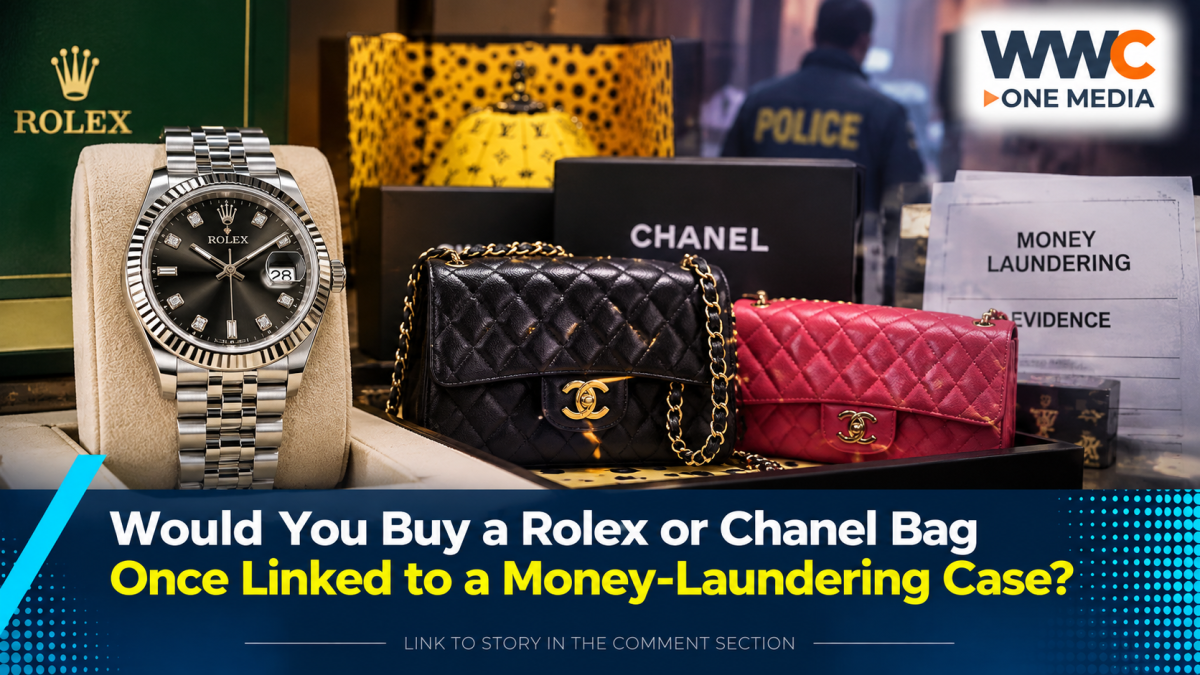
SINGAPORE — A Rolex, Chanel handbag or designer accessory can carry serious resale value—but what happens when its history is tied to one of Singapore’s biggest money-laundering investigations?
That question is becoming increasingly real as more than 1,000 luxury items forfeited in Singapore’s S$3 billion money-laundering case are being sold through a series of official auctions running from September 2026 into 2027.
The sales include luxury handbags, jewellery and, in later phases, watches from brands such as Rolex, Patek Philippe and Richard Mille.
But the bigger question isn’t simply whether these items are genuine or valuable.
It is whether buyers care about where the money used to acquire them came from—and whether that history affects what the items are worth today.
The Luxury Goods Are Now State-Forfeited Assets
The items were forfeited in connection with Singapore’s landmark money-laundering investigation, which began after coordinated police raids in August 2023.
Ten foreigners were subsequently convicted in connection with the case and later deported after serving their sentences. Investigators seized or took control of approximately S$1.25 billion in non-cash assets, including luxury properties, cars, jewellery, watches, handbags and other valuables.
Deloitte was appointed by the Singapore Police Force in 2025 to manage and realise the forfeited non-cash assets.
The proceeds from the sales will go into Singapore’s Consolidated Fund, rather than returning to the former owners.
Chanel and Louis Vuitton Are Already Up for Auction
The first phase focuses on handbags, accessories and jewellery.
Hotlotz opened its first online auctions on September 7, with bidding for the handbag and accessories sale scheduled to close on September 20.
The auction contains 338 handbag and accessory lots, including pieces from Chanel, Louis Vuitton and Christian Dior.
A separate jewellery auction contains 286 lots, including pieces from brands such as Graff, Bulgari and Van Cleef & Arpels.
The combined pre-sale estimate for the first two auctions is between S$2.9 million and S$3.9 million.
One Louis Vuitton Bag Is Already Drawing Attention
Among the eye-catching pieces is a Louis Vuitton x Yayoi Kusama Pumpkin Bag, which had attracted bids during the opening days of the auction.
The bag is part of a collection that has drawn significant public attention because of the unusual circumstances surrounding its history.
CNA also highlighted unusual pieces including a Chanel leather water-bottle holder and a pink enamel clutch shaped like a serpent’s head.
The range illustrates just how varied the forfeited collection is—from highly recognizable designer handbags to unusual luxury accessories.
The Watches Come Later
If you’re looking specifically at the Rolex question, there’s an important timing detail.
The Rolex watches are not part of the first handbag auction.
Hotlotz has said subsequent auction phases will include luxury watches from Rolex, Patek Philippe and Richard Mille, with a later tranche expected to take place in November 2026.
That means the headline-grabbing question about whether buyers would purchase a Rolex connected to the case remains relevant as the later auctions approach.
Does a Criminal History Affect a Luxury Item’s Value?
This is where the story becomes more complicated.
Luxury goods normally attract buyers based on brand, condition, rarity, provenance and market demand.
But these items carry another kind of provenance: their connection to a major criminal investigation.
Hotlotz chief executive Matthew Elton has said the auction house expects the criminal history of the goods to have limited influence on their prices, although the unusual background has clearly generated considerable public interest.
That creates an unusual tension.
For some buyers, the history may simply be an uncomfortable footnote.
For others, it could become part of the item’s story.
The auction process allows the market to provide the answer through actual bidding rather than speculation.
Bidding Has Already Started
Interest has been substantial.
The Straits Times reported that potential buyers had registered more than S$1.3 million in bids shortly after the first auctions opened.
The Yayoi Kusama Louis Vuitton bag was among the popular lots, while a 15.02-carat fancy yellow diamond ring also attracted significant attention.
The ring carried an estimated value of S$200,000 to S$300,000, making it one of the most valuable individual pieces in the opening jewellery sale.
The Auction Will Continue Into 2027
This isn’t a one-off sale.
Hotlotz plans 15 online auctions between September 2026 and May 2027, with more luxury handbags, watches and jewellery being released in stages.
More than 80 properties connected to the case are also being progressively offered for sale through appointed real-estate agencies.
Deloitte has emphasized that members of the public should participate only through the officially appointed auction and sales channels.
Why the Sales Matter Beyond Luxury Fashion
The liquidation of the assets represents another chapter in Singapore’s response to its largest money-laundering case.
Rather than allowing seized luxury assets to remain idle indefinitely, authorities are converting them into financial proceeds for the state.
At the same time, the auctions put an unusual spotlight on the relationship between luxury, wealth and financial crime.
A Chanel bag doesn’t become illegal simply because it was once owned by someone convicted of a crime. But its history can affect how potential buyers perceive it—and potentially how much they are willing to pay.
That makes the upcoming Rolex and other luxury-watch auctions particularly interesting.
The question isn’t only “How much is it worth?”
It is also:
“How much does its history matter?”
As Singapore continues selling assets from the S$3 billion case, the answer will ultimately come from the buyers—and the prices they are willing to put on the past.
Would You Buy a Rolex or Chanel Bag Once Linked to a Money-Laundering Case?
SINGAPORE — A Rolex, Chanel handbag or designer accessory can carry serious resale value—but what happens when its history is tied to one of Singapore’s biggest money-laundering investigations?
That question is becoming increasingly real as more than 1,000 luxury items forfeited in Singapore’s S$3 billion money-laundering case are being sold through a series of official auctions running from September 2026 into 2027.
The sales include luxury handbags, jewellery and, in later phases, watches from brands such as Rolex, Patek Philippe and Richard Mille.
But the bigger question isn’t simply whether these items are genuine or valuable.
It is whether buyers care about where the money used to acquire them came from—and whether that history affects what the items are worth today.
The Luxury Goods Are Now State-Forfeited Assets
The items were forfeited in connection with Singapore’s landmark money-laundering investigation, which began after coordinated police raids in August 2023.
Ten foreigners were subsequently convicted in connection with the case and later deported after serving their sentences. Investigators seized or took control of approximately S$1.25 billion in non-cash assets, including luxury properties, cars, jewellery, watches, handbags and other valuables.
Deloitte was appointed by the Singapore Police Force in 2025 to manage and realise the forfeited non-cash assets.
The proceeds from the sales will go into Singapore’s Consolidated Fund, rather than returning to the former owners.
Chanel and Louis Vuitton Are Already Up for Auction
The first phase focuses on handbags, accessories and jewellery.
Hotlotz opened its first online auctions on September 7, with bidding for the handbag and accessories sale scheduled to close on September 20.
The auction contains 338 handbag and accessory lots, including pieces from Chanel, Louis Vuitton and Christian Dior.
A separate jewellery auction contains 286 lots, including pieces from brands such as Graff, Bulgari and Van Cleef & Arpels.
The combined pre-sale estimate for the first two auctions is between S$2.9 million and S$3.9 million.
One Louis Vuitton Bag Is Already Drawing Attention
Among the eye-catching pieces is a Louis Vuitton x Yayoi Kusama Pumpkin Bag, which had attracted bids during the opening days of the auction.
The bag is part of a collection that has drawn significant public attention because of the unusual circumstances surrounding its history.
CNA also highlighted unusual pieces including a Chanel leather water-bottle holder and a pink enamel clutch shaped like a serpent’s head.
The range illustrates just how varied the forfeited collection is—from highly recognizable designer handbags to unusual luxury accessories.
The Watches Come Later
If you’re looking specifically at the Rolex question, there’s an important timing detail.
The Rolex watches are not part of the first handbag auction.
Hotlotz has said subsequent auction phases will include luxury watches from Rolex, Patek Philippe and Richard Mille, with a later tranche expected to take place in November 2026.
That means the headline-grabbing question about whether buyers would purchase a Rolex connected to the case remains relevant as the later auctions approach.
Does a Criminal History Affect a Luxury Item’s Value?
This is where the story becomes more complicated.
Luxury goods normally attract buyers based on brand, condition, rarity, provenance and market demand.
But these items carry another kind of provenance: their connection to a major criminal investigation.
Hotlotz chief executive Matthew Elton has said the auction house expects the criminal history of the goods to have limited influence on their prices, although the unusual background has clearly generated considerable public interest.
That creates an unusual tension.
For some buyers, the history may simply be an uncomfortable footnote.
For others, it could become part of the item’s story.
The auction process allows the market to provide the answer through actual bidding rather than speculation.
Bidding Has Already Started
Interest has been substantial.
The Straits Times reported that potential buyers had registered more than S$1.3 million in bids shortly after the first auctions opened.
The Yayoi Kusama Louis Vuitton bag was among the popular lots, while a 15.02-carat fancy yellow diamond ring also attracted significant attention.
The ring carried an estimated value of S$200,000 to S$300,000, making it one of the most valuable individual pieces in the opening jewellery sale.
The Auction Will Continue Into 2027
This isn’t a one-off sale.
Hotlotz plans 15 online auctions between September 2026 and May 2027, with more luxury handbags, watches and jewellery being released in stages.
More than 80 properties connected to the case are also being progressively offered for sale through appointed real-estate agencies.
Deloitte has emphasized that members of the public should participate only through the officially appointed auction and sales channels.
Why the Sales Matter Beyond Luxury Fashion
The liquidation of the assets represents another chapter in Singapore’s response to its largest money-laundering case.
Rather than allowing seized luxury assets to remain idle indefinitely, authorities are converting them into financial proceeds for the state.
At the same time, the auctions put an unusual spotlight on the relationship between luxury, wealth and financial crime.
A Chanel bag doesn’t become illegal simply because it was once owned by someone convicted of a crime. But its history can affect how potential buyers perceive it—and potentially how much they are willing to pay.
That makes the upcoming Rolex and other luxury-watch auctions particularly interesting.
The question isn’t only “How much is it worth?”
It is also:
“How much does its history matter?”
As Singapore continues selling assets from the S$3 billion case, the answer will ultimately come from the buyers—and the prices they are willing to put on the past.