World leaders are gathering at the United Nations this week as the international community confronts a widening list of crises, from wars and geopolitical divisions to rapidly advancing artificial intelligence, climate shocks and rising economic pressures.
The high-level week of the 81st UN General Assembly begins against a backdrop of conflicts involving Iran, Gaza, Ukraine, Sudan, the Democratic Republic of Congo and Myanmar. Leaders are facing renewed questions over whether diplomacy can make progress at a time when disagreements among major powers have repeatedly complicated international action.
More than 190 countries are represented at the General Assembly, with around 130 heads of state and government expected to address the gathering. The general debate runs from Sept. 22 through Sept. 26 and resumes on Sept. 28.
Artificial intelligence has also moved much closer to the centre of the global agenda. Rapid advances in AI have raised questions about safety, accountability, misinformation, employment and whether international rules can keep pace with technology.
The UN Security Council is scheduled to hold a high-level meeting on artificial intelligence, reflecting growing concern over technology that is developing faster than many existing regulatory frameworks. At the same time, governments are weighing how AI can be used for economic growth and innovation without creating risks that are difficult to control.
Climate change will be another major focus. The UN has scheduled a high-level meeting on climate action and a just transition on Sept. 23, followed by a meeting on the threat posed by rising sea levels on Sept. 24.
Those discussions come as countries face increasingly costly climate-related disasters and pressure to accelerate the transition to cleaner energy while maintaining energy security and economic stability.
The UN itself is also under pressure to change. Member states have agreed to a broad reform programme, including proposals affecting major institutions such as the Security Council, where the United States, Russia, China, Britain and France hold permanent seats and veto powers.
Financial pressure has added another challenge. The organisation has faced difficulties caused in part by unpaid US assessments, contributing to constraints on peacekeeping and humanitarian operations. The United States recently made a payment toward its outstanding obligations, helping prevent it from losing its General Assembly voting rights.
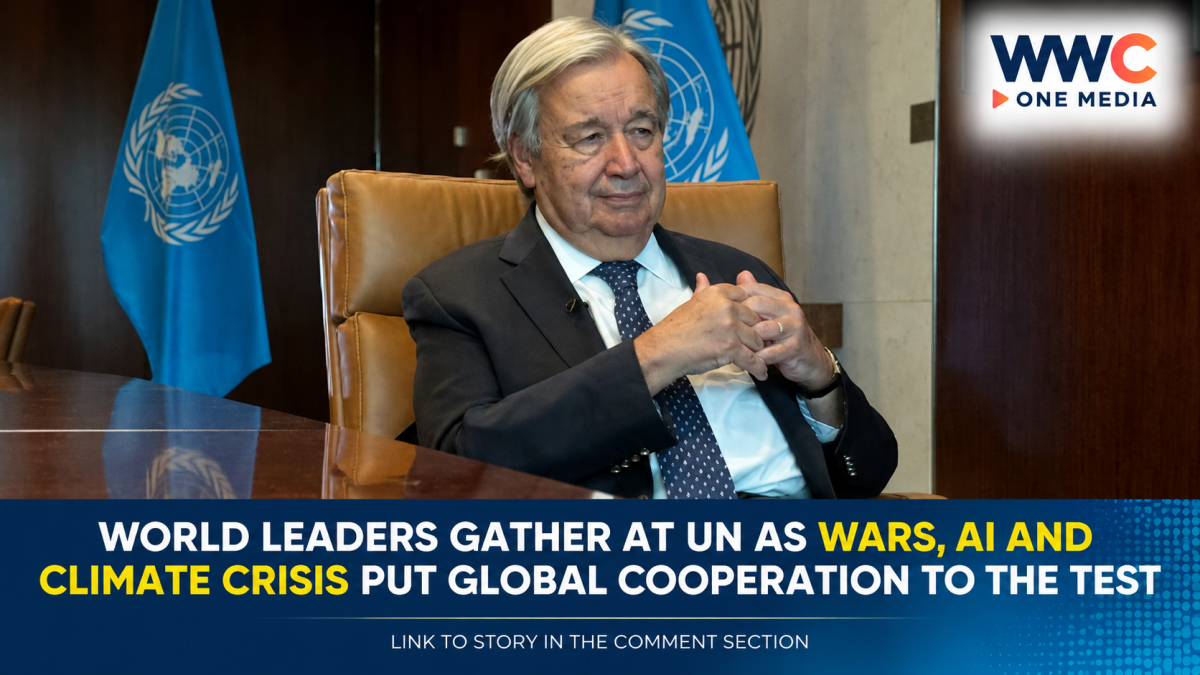
This year’s gathering also carries added significance for Secretary-General António Guterres, whose second five-year term ends on Dec. 31. He has described the current period as an “era of deep uncertainty” and has repeatedly called for stronger international cooperation to confront what he has identified as major global threats, including AI, climate change and inequality.
The UN agenda extends beyond the biggest geopolitical crises. Leaders will also discuss sustainable development, pandemic preparedness, sea-level rise, inequality and the future of multilateral cooperation.
With so many issues competing for attention, the week in New York will test whether countries can still find areas of cooperation despite deep political disagreements. The bigger question is whether negotiations behind closed doors can produce concrete action once the speeches are over.