NEW YORK — New York Fashion Week’s Spring/Summer 2027 collections delivered a message that was difficult to miss: fashion is getting louder, more colorful and more playful.
Across the runways, designers moved away from the predictable spring formula of soft pastels and conventional florals, embracing saturated color, movement, exaggerated details and clothing designed to make a statement.
From Ralph Lauren and Tory Burch to Coach, Michael Kors, Thom Browne and emerging labels, the season leaned heavily into what fashion insiders described as “joyful dressing”—a return to personality and visual excitement after years of minimalist styling and the dominance of so-called quiet luxury.
The official CFDA schedule featured about 70 runway shows and designer presentations, with the Spring/Summer 2027 season running through September 15. Major names including Ralph Lauren, Coach, Tommy Hilfiger, Tory Burch, Michael Kors, Carolina Herrera, Proenza Schouler and Thom Browne were among those presenting collections.
And while London, Milan and Paris will continue shaping the international fashion conversation, New York has already established several trends worth watching.
1. Joy Is Back on the Runway
Perhaps the biggest shift was an unmistakable appetite for fun.
Coach marked its 85th anniversary with party hats, glittering gowns, oversized bows and accessories resembling wrapped presents. Eckhaus Latta celebrated its collaboration with J.Crew with rainbow confetti, while Tory Burch combined ornate femininity with practical sportswear.
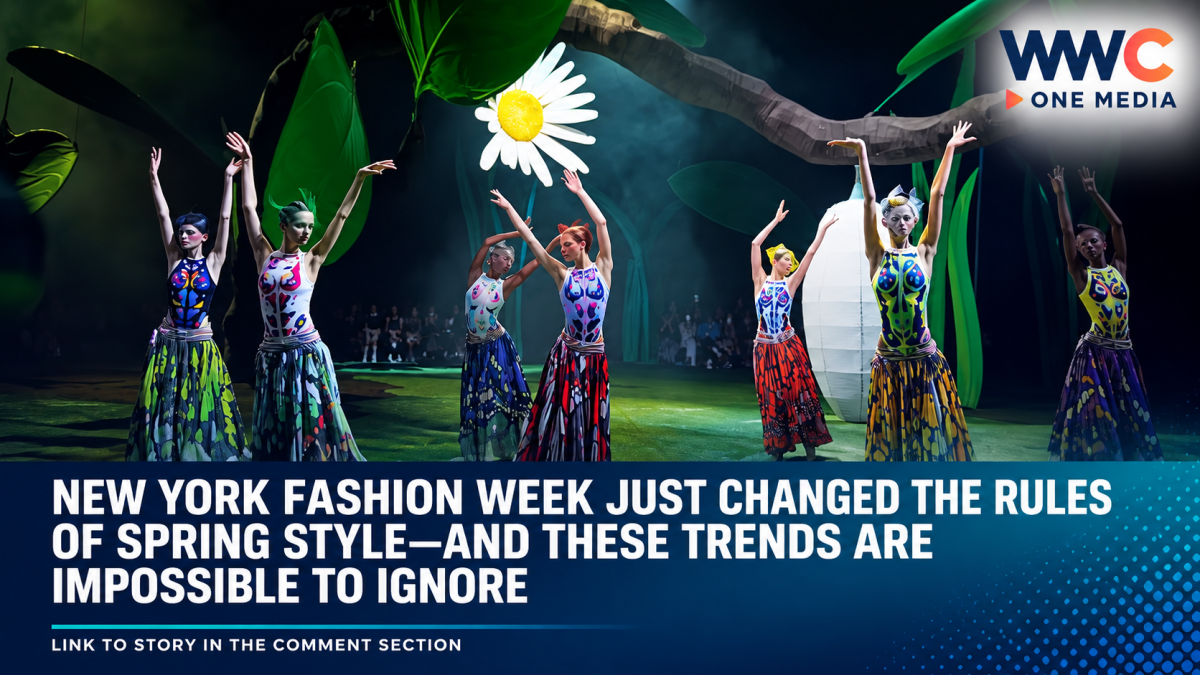
Thom Browne pushed the theatrical side even further, transforming his presentation into a whimsical garden inspired by nature, with models appearing in elaborate looks referencing butterflies, ladybugs and cocoons.
The result was a fashion week that often felt more like a celebration than a conventional seasonal wardrobe preview.
2. Blue Emerges as One of the Season’s Defining Colors
If one color repeatedly appeared across New York’s runways, it was blue.
Designers explored everything from navy and turquoise to teal and intense cobalt, sometimes referred to as Klein Blue.
Ralph Lauren used blue across denim, tailoring, satin, lace and statement outerwear. Tommy Hilfiger incorporated navy into nautical-inspired pieces, while Tory Burch worked turquoise and navy into her collection. Proenza Schouler and Sergio Hudson also featured vivid cobalt shades.
WGSN’s analysis of the New York season—based on 104 collections, 3,120 looks and 4,639 individual items—also identified significant shifts in color and key fashion categories for Spring/Summer 2027.
The message is clear: spring’s color story may be considerably stronger than the muted palettes that dominated recent seasons.
3. The Waistline Gets the Spotlight
Another noticeable development was the return of accessories and styling techniques that emphasize the waist.
Cummerbunds, oversized belts and scarves appeared across multiple collections, creating sharper silhouettes and adding structure to otherwise relaxed outfits.
Kallmeyer incorporated cummerbunds into both blue separates and black tailoring, while Ralph Lauren used fringed scarves around the waist to introduce contrast and movement.
Rather than simply returning to traditional body-conscious dressing, the trend also introduced an androgynous element, particularly through tailoring and oversized silhouettes.
4. Fringe Is Everywhere
Fringe became another major visual signature of the season.
Jonathan Simkhai incorporated fringe into asymmetrical dresses, Rachel Comey used shimmering fringe as an accent, and Monse applied the detail to tailored jackets.
The appeal is practical as well as visual: fringe creates movement, making garments appear dynamic as models walk.
That makes it particularly suited to Spring/Summer collections, where designers have more freedom to experiment with lighter fabrics and fluid silhouettes.
5. Preppy Style Is Getting a Modern Makeover
Beyond the major runway trends, street style and secondary fashion coverage pointed to another revival: preppy dressing.
Pleated skirts, Oxford shirts, rugby stripes, sweater vests, polos, loafers and roomy blazers appeared across New York, but the look was not necessarily the polished, traditional preppy uniform of earlier eras.
Instead, designers and fashion insiders mixed classic American pieces with relaxed proportions, sporty details and stronger colors.
Tommy Hilfiger’s runway, for example, drew on nautical flags and American sportswear, reinforcing the broader return of recognizable American fashion codes.
6. Street Style Is Writing Its Own Fashion Story
The runway wasn’t the only place where trends emerged.
Vogue’s post-NYFW street-style roundup highlighted blue jeans, flannel shirts, fringe scarves, statement coats, floral skirts, colorful accents and eye-catching accessories among the pieces attracting attention around the city.
That distinction matters because New York Fashion Week increasingly functions as two interconnected events: the designer collections inside venues and the constantly changing street-style scene outside them.
For consumers, the latter can sometimes offer a more practical preview of which runway ideas may actually translate into everyday wardrobes.
7. American Fashion Heritage Is Having Another Moment
The season also underscored the continued influence of established American brands.
Reuters reported ahead of the September shows that labels such as Ralph Lauren, Coach and Tommy Hilfiger were returning to the spotlight as heritage brands seeking to connect with younger consumers, particularly Gen Z shoppers.
The CFDA schedule likewise reflected a mix of established houses and newer designers, with several emerging names joining the official calendar for the first time.
That combination—legacy brands alongside younger labels—helped give the season a distinctly New York character.
8. Diane von Furstenberg Returns With a New Creative Chapter
One of the notable moments of the week was the return of Diane von Furstenberg to the New York Fashion Week schedule after a decade-long gap.
Henry Zankov made his debut as the brand’s artistic director, presenting a collection that incorporated animal prints, sheer pieces, fluid tailoring and strong shades of blue while drawing on the DNA of the iconic wrap-dress label.
The return added another layer to the season’s larger conversation about American fashion heritage and reinvention.
What New York Fashion Week Is Really Signaling
Taken together, the Spring/Summer 2027 collections suggest that designers are experimenting with a fashion language that is less restrained and more emotionally expressive.
That does not mean minimalism or quiet luxury has disappeared. Instead, the New York runways showed a broader appetite for color, movement, personality and contrast.
Vogue’s season roundup similarly identified themes including waist-focused styling, femininity, functionality and references to earlier decades, while noting the increasingly varied ways designers are presenting their collections.
For shoppers, that could translate into a season where there is no single dominant uniform. Blue tailoring can coexist with fringe, preppy sportswear can be mixed with feminine pieces, and minimalist staples can be transformed with oversized accessories or bold color.
And that may be the most important takeaway from New York: Spring 2027 isn’t asking everyone to dress the same way. It’s inviting people to have more fun with fashion.