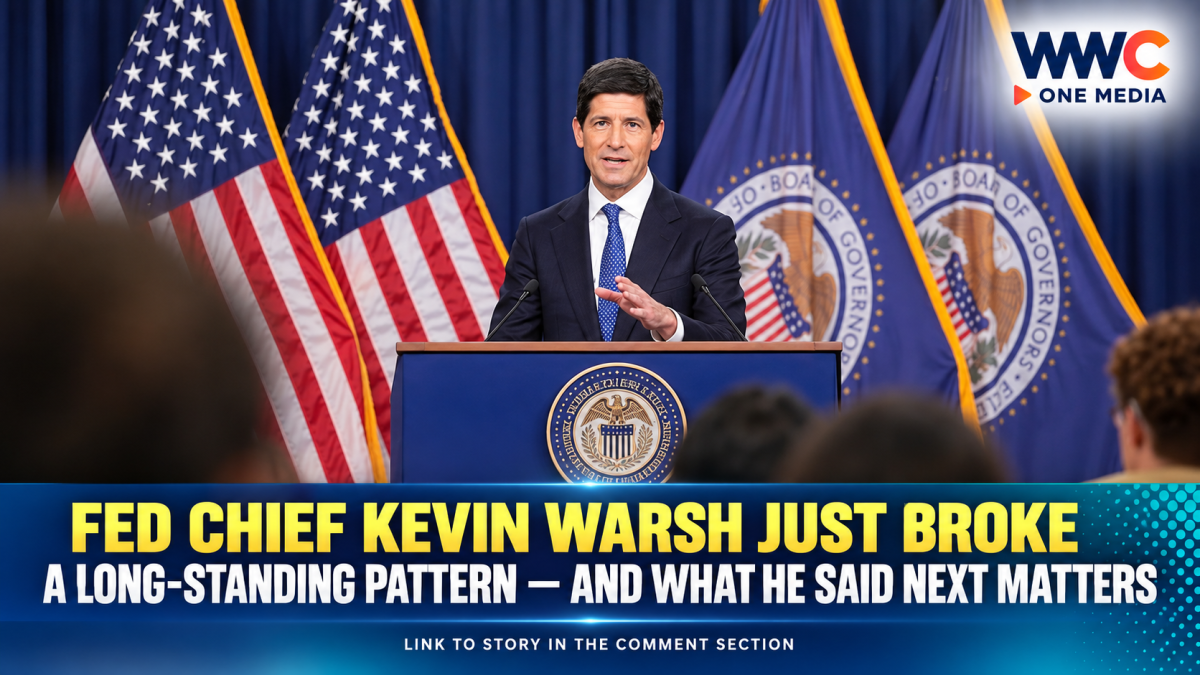
WASHINGTON — Federal Reserve Chairman Kevin Warsh made an immediate mark on the central bank’s communication style this week — not with a lengthy explanation, but with one of the shortest post-meeting press conferences in the modern history of the Federal Reserve.
Warsh’s Sept. 16 news conference lasted roughly 30 minutes, making it the shortest regular post-policy-meeting press conference by a Fed chair since the practice began in 2011, according to Bloomberg reporting cited by The Straits Times. The unusually brief appearance came as the Fed raised interest rates for the first time in more than three years.
The timing was significant. Rather than offering extensive clues about what the Fed might do at its next meeting, Warsh largely focused on the economic conditions behind the latest decision and avoided committing the central bank to a particular future course.
That approach is consistent with Warsh’s previously stated preference for less forward guidance from Fed officials.
Fed raises rates as inflation remains elevated
The Federal Open Market Committee voted unanimously, 12-0, to increase the federal funds target range by a quarter percentage point, taking it to 3.75% to 4%.
It was the first U.S. rate increase since 2023. The Fed said economic activity was expanding at a solid pace, domestic spending remained resilient, productivity growth was strong and capital investment was robust.
At the same time, the central bank said inflation remained elevated and that the latest move was intended to support a more timely return to its 2% inflation goal.
Reuters reported that officials also signaled that additional tightening could be necessary, while Warsh emphasized that the economy had strengthened and that inflation remained the central problem confronting policymakers.
Warsh avoids predicting the Fed’s next move
One of the most closely watched aspects of Warsh’s appearance was what he did not do.
The new Fed chairman avoided providing detailed forward guidance about upcoming meetings, maintaining his position that policymakers should assess conditions as new economic information becomes available.
Axios reported that Warsh said he would not “prejudge” future decisions, while describing the latest move as a withdrawal of some monetary accommodation to bring financial and credit conditions more closely in line with the Fed’s objectives.
That marks a notable change in tone from the longer, more detailed explanations often associated with previous Fed press conferences.
Another rate hike could still be coming
Although Warsh declined to map out the Fed’s next steps, the central bank’s latest economic projections provide an indication of where officials currently stand.
Reuters reported that Fed policymakers’ median projections pointed to one more rate increase in 2026, followed by a period of holding rates steady.
The September decision therefore does not necessarily represent the end of the tightening cycle. Instead, it signals that policymakers remain concerned that inflation is not returning to the Fed’s 2% objective quickly enough.
Warsh said the economy appeared to have strengthened in recent months, while inflation had remained a problem for more than five years. Reuters reported that he argued the Fed’s latest action was designed to encourage a timelier return to price stability.
Bond yields add another layer to the Fed’s challenge
Warsh also addressed rising Treasury yields, an issue that has attracted considerable attention from investors.
Rather than attributing higher long-term borrowing costs primarily to declining confidence in the Fed’s inflation-fighting credibility, Warsh pointed to several other forces.
Reuters reported that he cited stronger economic activity, increased capital spending and greater competition for available capital. He also pointed to geopolitical developments as another factor pushing long-term yields higher.
The explanation is important because Treasury yields influence borrowing costs throughout the U.S. economy, including mortgages, corporate financing and other forms of credit.
The Fed is also reviewing how it communicates
Warsh’s unusually short press conference comes as the Federal Reserve examines its broader approach to communication.
The Fed has created five task forces to examine major aspects of monetary policy. One of those groups is focused on how the central bank communicates policy deliberations and decisions amid uncertainty.
According to The Straits Times, the review could include the future role of the Fed’s press conferences.
Warsh has previously questioned how useful the regular news conferences are, saying they are most valuable when there is something important to communicate. In July, however, he said the regular press conferences would continue through the end of 2026.
The Fed also changed the seating arrangement for reporters at the latest briefing, with seats organized alphabetically by news organization rather than according to the previous arrangement that placed major newspapers and wire services toward the front.
Rate decision puts Warsh in the spotlight
The rate increase also placed Warsh at the center of an ongoing debate over U.S. monetary policy.
President Donald Trump has publicly argued for substantially lower interest rates. Reuters reported that Trump criticized the Fed’s decision on Sept. 16 and said U.S. rates should be 1% or lower.
Warsh, who was appointed Fed chairman by Trump, nevertheless supported the unanimous rate increase.
AP reported that the decision came amid persistent inflation and pressure for lower borrowing costs, while Warsh emphasized the Fed’s focus on economic conditions and its institutional independence.
The result is a potentially consequential period for the central bank: inflation remains above target, borrowing costs are elevated, Treasury yields are under scrutiny and policymakers are signaling that another rate increase remains possible.
For now, Warsh’s message is strikingly restrained. Instead of promising what the Fed will do next, he has emphasized what policymakers are seeing right now.
And that may be the most consequential change in the Fed’s communication strategy yet: fewer predictions, shorter explanations and greater emphasis on waiting for the next set of economic data before making the next move.