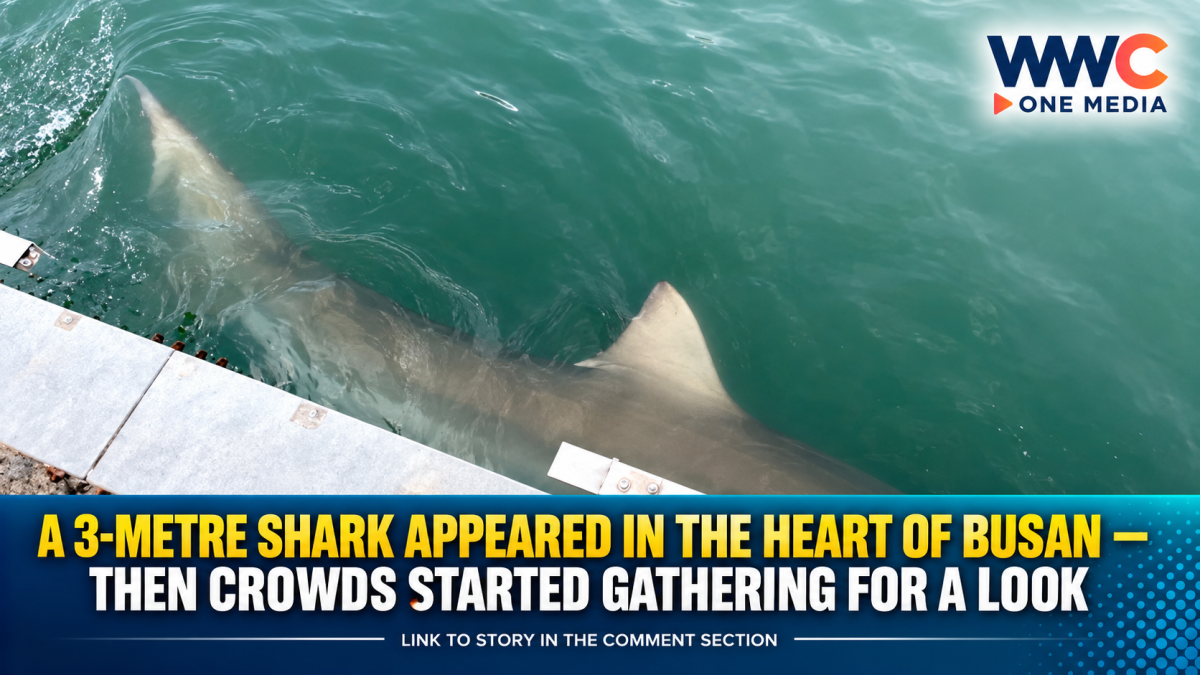
BUSAN, SOUTH KOREA — A more than 3-metre-long shark has transformed a quiet waterfront area in central Busan into an unlikely weekend attraction, with residents gathering along the North Port Waterfront Park hoping to catch a glimpse of the large predator.
The shark was first reported in the park’s waterway at about 8.57am on September 18, according to South Korean authorities. It was spotted again at around 1.05pm on September 19, prompting renewed safety warnings from the Busan Metropolitan Government.
The animal has been estimated at roughly 3 to 4 metres long and is believed by authorities to be a dusky shark (Carcharhinus obscurus), known in Korean as 무태상어. The identification remains an assessment rather than a publicly confirmed laboratory identification.
Instead of keeping people away, however, the unusual sighting has attracted crowds.
South Korean media reported that residents gathered around the waterfront park, with some lining the railings and watching the water in the hope of seeing the shark surface. Photos and videos of the animal swimming close to the waterfront have also circulated widely online.
One Korean report described the North Port area as an unexpected new “hot spot” after the shark appeared for two consecutive days. Another report estimated that around 1,500 people gathered to see the animal on September 19.
Why did the shark come so close to Busan’s waterfront?
The shark’s appearance is particularly striking because the North Port Waterfront Park is a developed urban area, with a waterway connected to the sea running alongside areas used by pedestrians.
South Korea’s National Institute of Fisheries Science has linked the broader increase in large-shark sightings along the country’s eastern coast to warmer waters and changes in the distribution of prey species.
In a June 2026 briefing, the institute said large-shark sightings along the East Coast had reached 46 cases during April-June, compared with 12 during the same period a year earlier. It attributed the increase partly to rising sea temperatures and the expanded distribution of warm-water prey such as mackerel and tuna.
That broader environmental trend does not, however, establish exactly why this particular shark entered the Busan North Port waterway.
Yonhap reported that fisheries experts believed the shark may have entered the waterway while following prey. Authorities have also said it is not yet clear whether the shark seen on September 19 was the same individual that appeared the previous day or a different shark of the same species.
Authorities tried to move it — then stopped
The response initially involved the Korea Coast Guard, rescue boats and other emergency personnel.
Officials attempted to guide the shark toward open water. But the National Institute of Fisheries Science subsequently advised authorities not to force the animal out, warning that aggressively driving it could cause it to react defensively.
The Coast Guard therefore stopped the operation and began monitoring the area instead, allowing the shark an opportunity to leave the waterway on its own.
Busan authorities have issued safety messages telling people near the waterfront to exercise caution. Officials have also urged people not to approach the water when the shark is present.
The Coast Guard has continued land and sea patrols to monitor for another appearance.
A rare spectacle — but not a tourist attraction
The sighting has created a strange contrast: the shark has become an object of fascination at precisely the same time officials are telling people to keep their distance.
Videos aired by YTN showed residents stopping to watch the animal as it moved through the waterway, while Korean reports described families and weekend visitors gathering near the waterfront.
But experts and authorities have emphasized that seeing a large wild shark from a safe distance is very different from approaching one.
South Korea’s fisheries authorities have previously warned that several large shark species appearing in Korean waters can pose risks to people. In its June advisory, NIFS told people who encounter sharks to leave the water immediately and notify local authorities or the Coast Guard.
Busan’s “shark moment” comes amid a wider change in coastal waters
The Busan sighting is also being watched against the backdrop of increasing large-shark reports in Korean waters.
NIFS said the number of large-shark appearances along the East Coast had risen sharply in the first half of 2026 compared with the previous year, with warmer sea temperatures and changing prey distribution identified as possible contributing factors.
A 2019 Korean fisheries study documented Carcharhinus obscurus — the species currently suspected in the Busan incident — in Korean waters, including waters around Busan.
For now, the most unusual consequence of the latest sighting is not another shark encounter but the sudden attention surrounding a previously ordinary urban waterfront.
Residents may be turning up to see one of the ocean’s most recognizable predators.
Authorities, meanwhile, are asking them to do so from a safe distance.
And with the shark’s whereabouts still being monitored, the question now is whether it will quietly return to open water — or make another appearance in the heart of Busan.