
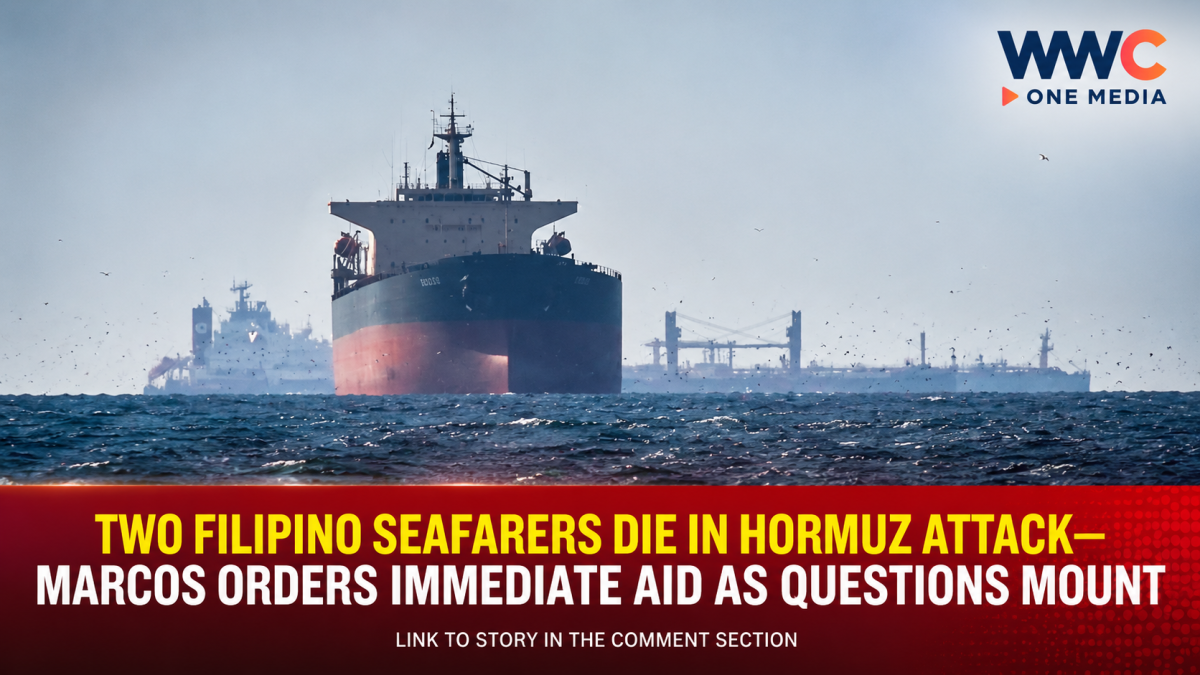
MANILA, Philippines — President Ferdinand Marcos Jr. has ordered government agencies to immediately provide assistance, benefits, compensation and applicable insurance proceeds to the families of two Filipino seafarers killed in a security incident involving an oil tanker in the Strait of Hormuz.
The two Filipino crew members were aboard the Saudi-flagged crude oil tanker SIDR when the vessel was struck by unidentified projectiles while transiting the strategic waterway on August 31, according to Philippine government officials and reports from multiple news organizations.
Malacañang said the President was immediately informed of the incident and directed concerned agencies to ensure that the families of the victims receive the assistance and benefits due to them.
The victims were reportedly from Cabuyao, Laguna, and Daanbantayan, Cebu.
Palace Press Officer Claire Castro said the Marcos administration had extended its condolences to the bereaved families and assured them that the government would not leave them without support.
Benefits, Compensation and Insurance Ordered
Marcos directed the government to ensure the families receive all appropriate assistance, including benefits, compensation and insurance proceeds.
Department of Migrant Workers Secretary Hans Leo Cacdac has also been tasked with coordinating with the families and overseeing government assistance.
The Department of Migrant Workers said it is working with other government agencies, including the Department of Foreign Affairs, Overseas Workers Welfare Administration, Philippine Embassy and Migrant Workers Office in Oman, as well as the vessel’s principal and licensed manning agency.
The government is also coordinating efforts for the repatriation of the Filipino crew and the proper handling and return of the remains of the two Filipino seafarers.
14 Other Filipino Seafarers Reportedly Safe
Philippine authorities said there were 16 Filipino seafarers aboard the SIDR at the time of the incident.
Two were killed, while the remaining 14 Filipino crew members were reported safe, according to the Presidential Communications Office.
Authorities are continuing to coordinate with the employer, ship manager and other concerned parties to provide medical, welfare and other necessary assistance to the affected Filipinos.
Questions Over Seafarer Safety in High-Risk Waters
The deadly incident has once again placed the safety of Filipino seafarers working in conflict-affected waters under intense scrutiny.
The Strait of Hormuz is one of the world’s most strategically important maritime passages, but heightened regional tensions have raised serious concerns over the safety of commercial vessels and their multinational crews.
The latest deaths also come after previous incidents involving Filipino seafarers deployed in dangerous maritime areas, including attacks affecting ships in the Black Sea earlier this year.
Government officials have stressed the need to ensure that Filipino seafarers are properly protected when assigned to high-risk routes.
Reports have indicated that the DMW is expected to examine whether required safety and deployment safeguards were properly observed in connection with the SIDR incident.
Among the key issues being raised are whether adequate risk assessments were conducted and whether Filipino crew members were given sufficient information about the dangers associated with voyages through conflict-affected waters.
Cacdac Personally Visits Families
As assistance efforts intensified, Cacdac said he would personally attend to the needs of the victims’ families in line with the President’s directive.
Recent reports also said the DMW chief had begun visiting the families as the government worked to ensure that they receive immediate assistance and all benefits available under employment contracts and applicable maritime regulations.
The manning agency involved has likewise said it would cooperate with authorities in efforts to bring home the remains of the two Filipino seafarers.
A Dangerous Reality for Filipino Seafarers
The Philippines remains one of the world’s leading sources of maritime labor, with Filipino seafarers serving aboard commercial vessels across the globe.
But the deaths of the two crew members aboard the SIDR underscore the growing risks faced by Filipino workers assigned to shipping routes affected by armed conflict and geopolitical tensions.
For the families in Cabuyao and Daanbantayan, the government’s promise of compensation and assistance may provide immediate support—but the tragedy is also likely to renew calls for stronger safeguards for Filipino seafarers sent into some of the world’s most dangerous waters.
As authorities continue investigating what happened aboard the SIDR, one major question remains:
Could more have been done to protect the Filipino crew before the tanker entered one of the world’s most volatile maritime corridors?
WWC ONE MEDIA J.M.S



Leave a Reply