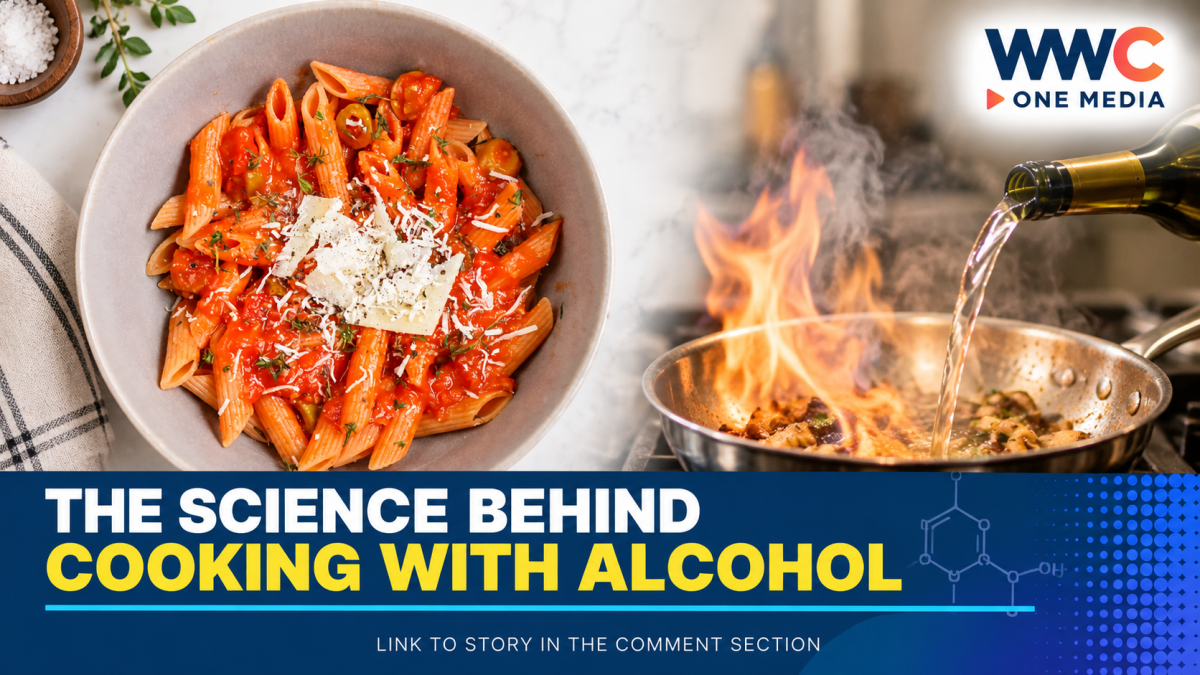
Adding alcohol to food is a familiar technique in kitchens around the world. Wine is used to deglaze pans, vodka appears in creamy tomato sauces, beer gives fried fish a light crust, and spirits can be set alight in flambéed desserts.
While some uses are largely theatrical, others have a clear culinary purpose. Alcohol can extract flavour compounds, influence texture and add aroma in ways that water alone cannot.
Deglazing with wine
When meat or vegetables are seared, browned bits known as fond remain stuck to the bottom of the pan. Adding liquid loosens these concentrated pieces of flavour and creates a foundation for sauces and gravies.
Wine can do more than simply lift the fond. Its ethanol helps dissolve fat-soluble flavour compounds, allowing aromas to become more pronounced. Wine’s acidity can also cut through richness, while tannins can add structure to a sauce.
As the wine is reduced, its flavours become more concentrated. However, reducing a dish does not necessarily remove all of the alcohol.
Beer, vermouth and brandy can also be used for deglazing, although each brings different characteristics, from herbal and hoppy notes to richer flavours.
Why vodka works in tomato sauce
Vodka is relatively neutral in flavour, which makes it useful in sauces where the goal is to enhance existing ingredients rather than introduce a strong new taste.
According to chef and food writer J. Kenji López-Alt’s testing, vodka can intensify the fruity aromas of tomatoes while adding a subtle heat that helps balance the richness of cream. His tested method uses about a quarter cup of vodka per quart of sauce, followed by several minutes of simmering.
The alcohol helps draw out flavour compounds while the cooking process softens its sharper characteristics. The result is a tomato sauce in which the existing flavours can become more pronounced.
The science of flambéing
Flambéing is one of the most dramatic ways to use alcohol in cooking. A spirit is added to a dish and ignited, producing a brief flame.
Classic dishes such as Bananas Foster, Cherries Jubilee and Steak Diane use the technique for both flavour and presentation. The flame can burn away some of the harsher alcohol notes while adding aroma and a burst of heat.
However, the flame is not always responsible for the main cooking effect. Much of the caramelisation or reduction has often already begun before the alcohol is ignited.
For dishes such as Baked Alaska, the flambé is largely theatrical because the meringue has already been browned before the rum is added. Crêpes Suzette occupies something of a middle ground: the flame adds drama, while the orange liqueur contributes flavour to the sauce.
Why beer makes batter crispier
Beer is used in fried fish batter primarily for the texture it creates rather than for its flavour.
The carbonation in beer produces bubbles when cold batter meets hot oil, helping form a light and airy crust. The alcohol also evaporates more quickly than water, helping the batter become crisp in a shorter period.
Ethanol additionally affects how flour hydrates, limiting excessive gluten formation that could otherwise make the coating tough or doughy.
Similar principles can be applied when making tempura. Some cooks use vodka or sake alongside cold water, while carbonation and low temperatures can both contribute to a lighter, crispier coating.
Does cooking completely remove alcohol?
Not necessarily.
The idea that alcohol simply “burns off” during cooking is an oversimplification. A 1992 study published in the Journal of the American Dietetic Association examined six recipes containing alcohol and found that the amount retained varied significantly depending on the cooking method and duration.
In the study, a dish simmered for 15 minutes retained about 40 per cent of its original alcohol, while approximately 25 per cent remained after an hour and about 5 per cent after two and a half hours. Even the flambéed dish retained a substantial amount.
The exact amount depends on factors including cooking time, temperature, preparation method and the amount of alcohol used. For that reason, cooking with alcohol should not automatically be considered a method of completely removing alcohol from a dish.
Ultimately, alcohol can serve several different purposes in cooking. It can help extract flavour, balance richness, improve texture or simply add aroma and visual drama. Understanding the chemistry behind each technique makes it easier to see why a splash of wine, a measure of vodka or a bottle of beer can do much more than simply add another ingredient to a recipe.