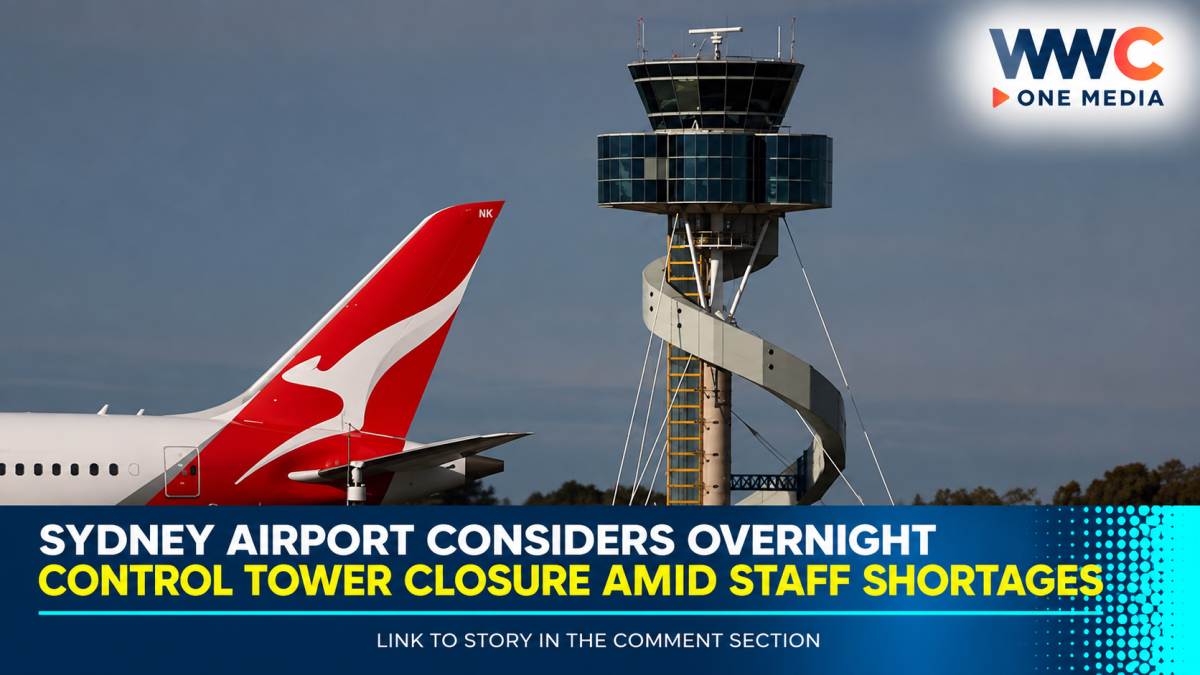
Australia’s major airlines are backing a proposal to temporarily close Sydney Airport’s air traffic control tower overnight as authorities seek to address a shortage of controllers that has contributed to delays and raised concerns about operational resilience.
The proposal was discussed by a task force established in August to tackle continuing disruption at Australia’s busiest airport. Airlines for Australia & New Zealand chief executive Stephen Beckett said there was merit in exploring the idea, which could allow controllers normally assigned to overnight shifts to be redeployed during busier daytime periods.
Sydney Airport already operates under an 11pm-to-6am curfew, meaning most commercial flights would not be affected by an overnight tower closure. However, flights exempt from the curfew, including some emergency and medical flights, could still require access to the airport during those hours.
Airservices Australia, which manages Australia’s air traffic control system, said it was considering different ways to make better use of its qualified workforce. The Civil Aviation Safety Authority said any changes to Sydney’s air traffic services would require a thorough safety assessment and regulatory approval.
The staffing shortage has caused repeated disruptions in recent months. At least six safety incidents, near-misses and operational errors have occurred at Sydney Airport since late July, increasing scrutiny of staffing levels and controller workloads.
An unexpected absence of just one controller on September 11 caused significant delays, highlighting how limited staffing capacity has become. Airservices Australia previously said 49 controllers were employed at Sydney, but only 41 were available for operational duties, with eight unavailable because of long-term absences.
Qantas chief executive Vanessa Hudson has called for the staffing problem to be addressed after about 60,000 passengers were affected by delays at Sydney Airport in July alone.
Airservices Australia has said safety remains its priority and that it reduces traffic levels when staffing is insufficient. The agency has also been recruiting additional controllers, expanding training capacity and building a larger pool of standby staff.
The proposed overnight closure remains under consideration and has not yet received regulatory approval. Any change would depend on safety assessments and approval by Australia’s aviation regulator.