
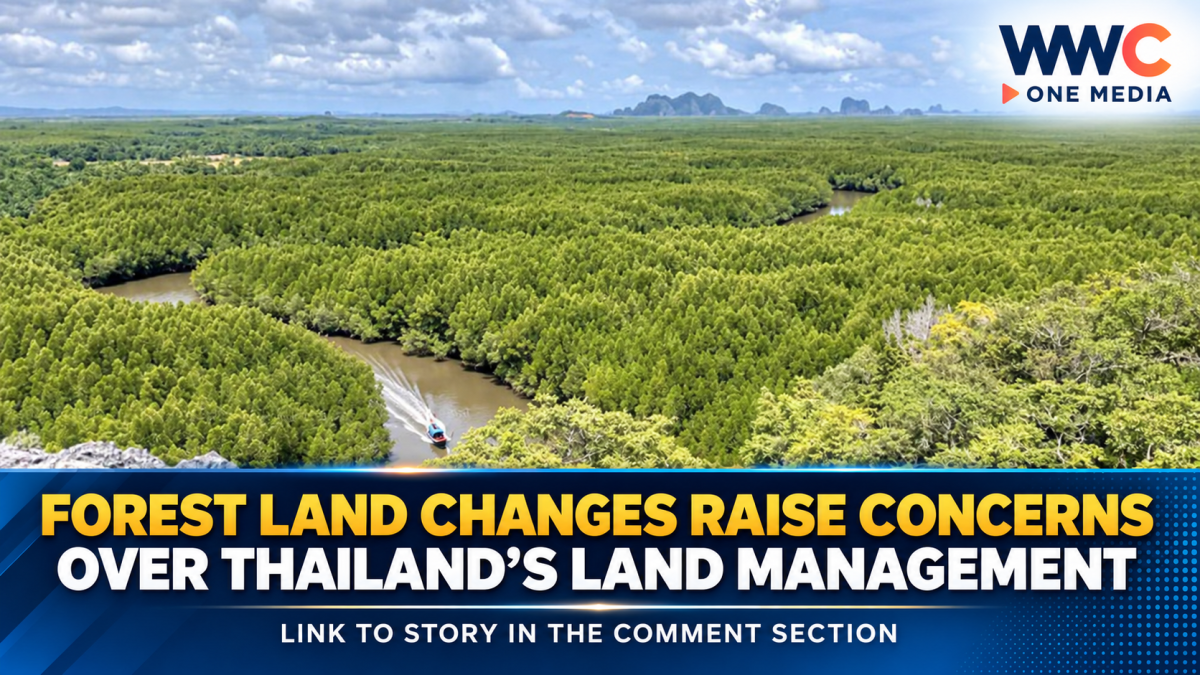
More than 300,000 applications to use forest land in Thailand have raised concerns over how the country manages areas classified as state forest, particularly as government agencies and other organisations seek permission to use land for development and public projects.
The large number of applications has renewed debate over the balance between protecting forests and allowing land to be used for infrastructure, public facilities and other activities.
A significant proportion of the applications comes from state agencies seeking to use forest areas for projects ranging from roads and utilities to public buildings and other government facilities.
The issue is complicated by Thailand’s long-running difficulties in determining who has legal rights to land in areas that overlap with forest reserves and other state-controlled zones.
Forest land has increasingly come under pressure as authorities seek to resolve land-use disputes while also supporting development in rural areas.
Officials face the challenge of distinguishing between legitimate public needs and activities that could result in permanent changes to forest areas. Environmental groups have raised concerns that changes in land-use status could weaken protection for forests and create opportunities for further development.
The process of granting permission to use forest land is therefore closely linked to broader efforts to prevent encroachment and protect remaining natural areas.
Thailand has several categories of protected and state forest land, each governed by different laws and regulations. Overlapping responsibilities among government agencies can make land management particularly complex.
In some cases, communities have lived or worked on land for decades before the areas were formally designated as forest reserves. This has contributed to disputes between residents, government agencies and conservation authorities.
The government has sought to address some of these conflicts through land surveys, zoning and measures aimed at providing clearer rights to people who meet legal requirements.
However, conservation advocates have warned that changes to forest classifications or land-use permissions should be carefully assessed because they can have long-term consequences for watersheds, biodiversity and local ecosystems.
The scale of the applications has also highlighted the need for greater transparency in decisions involving state forest land. Clear criteria and monitoring are important to ensure that approved projects comply with environmental and legal requirements.
As Thailand continues to balance economic development, public infrastructure and environmental protection, the growing number of requests to use forest land is likely to remain a sensitive issue.
The debate reflects a broader question over how the country should manage its remaining forest resources while addressing the needs of communities and government agencies seeking access to land.




Leave a Reply