
SAPPORO, Japan — For decades, Hokkaido had something that many residents considered one of the greatest benefits of living on Japan’s northernmost main island.
The cold kept the cockroaches away.
Or at least, that was what many people believed.
Now, that reputation is being challenged.
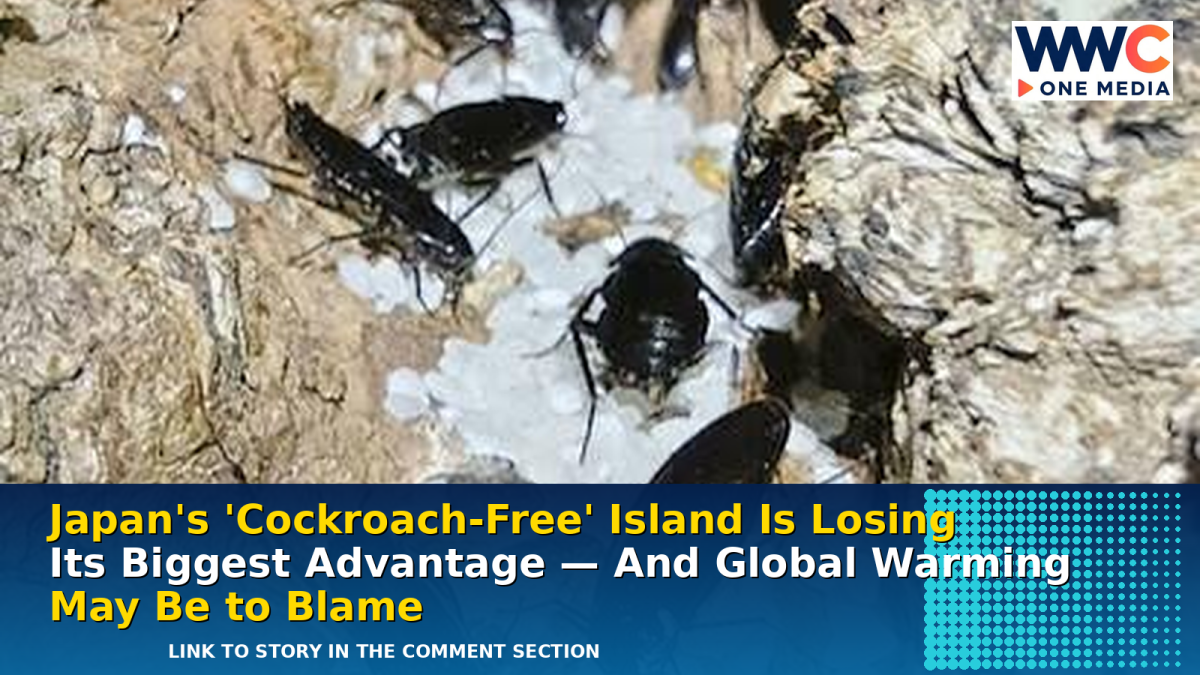
As temperatures rise, winters become milder and homes become warmer and better insulated, experts are warning that cockroaches may be gaining a stronger foothold in Hokkaido — a region once widely considered too cold for large populations of the notoriously resilient pests.
And the change is already causing concern.
Pest-control operators in Hokkaido have reported a sharp increase in requests, while experts say Sapporo and other urban areas are increasingly offering conditions that could allow cockroaches to survive and reproduce more easily.
The uncomfortable question for residents is simple:
If even Hokkaido is no longer too cold for cockroaches, what else could climate change be changing?
A recent South China Morning Post report examined how rising temperatures and increasingly warm artificial environments are helping cockroaches thrive in a part of Japan once considered hostile territory for the insects.
Hokkaido was never completely cockroach-free
First, there is an important fact behind Hokkaido’s famous reputation.
The island was never completely free of cockroaches.
Experts say cockroaches have existed in Hokkaido for decades, with some cold-resistant species established in certain areas for more than 100 years.
However, their numbers were generally much lower than in Japan’s warmer main island of Honshu.
They were also difficult to notice.
Cockroaches are nocturnal.
They often remain hidden.
And residents of Hokkaido simply encountered them far less frequently.
That helped create the widespread belief that Hokkaido was essentially cockroach-free.
According to Hiroshi Nishino, an assistant professor at Hokkaido University, lower population numbers and the insects’ nocturnal behaviour meant many people were simply unaware that cockroach species were already present on the island.
But Hokkaido is getting warmer
The biggest concern now is temperature.
SCMP reported that average daytime summer temperatures across Hokkaido have risen significantly over the past three decades.
Major cities such as Sapporo are experiencing hotter summers, while some localised temperatures have recently reached as high as 35 degrees Celsius.
That would once have been almost unimaginable for many residents.
Winter conditions are changing as well.
January temperatures have become milder compared with previous decades, reducing one of the natural barriers that historically limited the spread of some cockroach species.
The change does not mean every corner of Hokkaido will suddenly become overrun.
But experts warn that warmer conditions can make it easier for insects to survive and establish themselves.
And that is where climate change becomes part of the story.
Global warming is only part of the problem
The growing cockroach issue cannot be blamed on climate change alone.
Experts point to several factors working together.
These include:
- Rising temperatures
- Milder winters
- Better heating systems
- Highly insulated homes
- More airtight buildings
- Shipments arriving from warmer parts of Japan
Modern homes in Hokkaido are specifically designed to keep residents warm during severe winters.
Ironically, those same improvements may also create ideal indoor environments for cockroaches that would struggle to survive outdoors in colder conditions.
Experts say warmer and more insulated buildings can allow cold-sensitive species to remain active and potentially reproduce even when outdoor temperatures fall dramatically.
Your warm home could become their winter refuge
This may be one of the most surprising parts of the story.
Hokkaido’s cold weather has historically acted as a natural defence.
But modern life is changing that environment.
Today’s homes are warmer.
Heating systems are more advanced.
Buildings are better insulated.
And indoor temperatures can remain comfortable throughout winter.
For residents, that is progress.
For cockroaches, it may also be an opportunity.
Experts have specifically identified advanced heating and improved insulation as factors that may help cockroach species sensitive to cold establish themselves in Hokkaido.
Online shopping may also be helping them move north
Another unexpected factor is Japan’s booming delivery economy.
Experts believe cockroach eggs and insects may be arriving in Hokkaido through shipments from warmer regions, including packages and transported goods.
The rapid growth of online shopping means products now move between regions faster and more frequently than ever.
Cardboard boxes and shipping materials can also provide temporary hiding places for insects.
That creates another pathway for species to travel.
An insect that might struggle to move naturally across large distances could potentially hitch a ride with commercial shipments.
Combined with warmer temperatures and more comfortable indoor environments, that could make it easier for populations to establish themselves after arriving.
Experts have cited increased shipments from Honshu and other warmer regions as a possible contributor to the trend.
Three cockroach species are already known in Hokkaido
Cockroaches found in Hokkaido include several species.
According to reporting citing Hokkaido University experts, three commonly identified species include:
- Japanese cockroach
- Smoky brown cockroach
- German cockroach
The Japanese cockroach is considered more tolerant of colder conditions and has been established in parts of Hokkaido for more than a century.
The bigger concern is whether species that are less tolerant of cold can increasingly survive because the climate and indoor environment are changing.
That distinction matters.
The story is not that cockroaches suddenly arrived in Hokkaido for the first time.
The concern is that conditions may now be becoming more favourable for larger and more visible populations.
Pest-control requests are reportedly rising
The trend is also being noticed outside scientific research.
Local Japanese television reporting said pest-control requests involving cockroaches have increased sharply in Hokkaido over recent years.
One pest-control operator reported receiving nearly 50 requests in 2026 alone by late August, while reporting indicated that requests had more than doubled over the previous five years.
Those figures do not represent an official count of every cockroach in Hokkaido.
But they do offer a glimpse into changing public concern and increasing encounters with the pests.
For a region where many residents have spent their entire lives rarely seeing a cockroach, even a relatively small increase can feel dramatic.
The psychological impact may therefore be larger than the raw numbers suggest.
Hokkaido residents are used to many things.
Heavy snow.
Freezing temperatures.
Long winters.
Cockroaches are not supposed to be one of them.
Sales of anti-cockroach products are also climbing
The market appears to be responding too.
Kyodo News reporting cited Earth Corp., a major Japanese manufacturer of pest-control products, as saying sales of products targeting cockroaches in Hokkaido had increased by around 6 per cent annually on average between 2017 and 2025.
That does not necessarily prove the exact size of the cockroach population.
Sales can be influenced by public awareness and consumer behaviour.
But the trend supports reports that more Hokkaido residents are taking the possibility of cockroach infestations seriously.
The business response may also be an early indicator of a larger environmental shift.
When a region once famous for having few cockroaches starts buying more cockroach-control products, something is changing.
Sapporo could be especially vulnerable
Urban areas may face greater risks.
Cities offer cockroaches exactly what they need:
Warm buildings.
Food.
Water.
Shelter.
Waste.
And thousands of interconnected structures.
Sapporo, Hokkaido’s largest city, is therefore one of the areas experts are watching closely.
As urban populations grow and buildings become increasingly energy-efficient, the difference between outdoor and indoor environments can become even more dramatic.
A cockroach may struggle outside in a Hokkaido winter.
But inside a heated apartment building?
The conditions can be completely different.
Experts have warned that cities such as Sapporo may increasingly provide environments suitable for cockroach populations to establish themselves.
This is about more than cockroaches
The story may sound unusual.
But scientists and environmental experts see a much bigger issue.
Cockroaches are one visible example of how climate change can alter ecosystems.
As temperatures rise, animals and insects can move into areas where they were previously uncommon.
That can affect:
- Agriculture
- Public health
- Biodiversity
- Pest control
- Housing
- Food storage
Species are not standing still while the climate changes.
They adapt.
They migrate.
Or they expand into new territory.
Hokkaido’s cockroach problem is therefore part of a much larger global pattern.
Climate change is not only making places hotter.
It is changing which species can survive in those places.
Japan’s insect map could be changing
Across Japan, warmer temperatures are already affecting insect behaviour and seasonal activity.
Recent Japanese reporting has also highlighted concerns that changing temperatures are affecting mosquito populations and extending periods of insect activity.
Hokkaido’s cockroach story fits into that broader discussion.
A warmer climate can change:
When insects reproduce.
How long they remain active.
Where they can survive.
And how far they can spread.
The effects may be gradual.
But once an environmental threshold is crossed, changes can become increasingly noticeable.
A region that once had conditions hostile to a particular species may gradually become suitable.
And once that happens, reversing the process can be difficult.
Climate change meets modern architecture
Perhaps the most fascinating part of the Hokkaido story is that nature and technology are working together.
Global warming is making the outdoor environment warmer.
Modern architecture is making the indoor environment warmer.
Neither factor alone necessarily explains everything.
But together, they can create an entirely new ecosystem.
The cold once kept cockroach populations limited.
Modern homes can now offer protection.
Warmer summers can improve outdoor survival.
Milder winters can reduce environmental pressure.
Commercial shipments can introduce new insects or eggs.
Suddenly, a region once considered naturally protected is no longer as protected as residents believed.
Hokkaido’s famous advantage may be disappearing
For many Japanese residents, Hokkaido has always represented a different kind of lifestyle.
Cooler summers.
Snowy winters.
Wide-open spaces.
And fewer insects.
That last advantage may now be under threat.
The appearance of more cockroaches may seem like a small issue compared with extreme heat, floods or rising sea levels.
But it is also something people notice immediately.
Climate change can feel distant.
A cockroach in your kitchen does not.
That is why this story has captured attention.
It turns an abstract global problem into something deeply personal.
Experts say prevention matters
Pest-control experts are encouraging residents to take practical steps to reduce the risk of cockroach infestations.
These include:
- Avoid leaving food exposed
- Clean dishes and food areas promptly
- Keep kitchens and storage areas clean
- Avoid accumulating unnecessary cardboard boxes
- Reduce clutter that can provide hiding places
- Monitor shipments and packaging brought indoors
These measures do not address the underlying climate problem.
But they can reduce the conditions that allow cockroaches to establish themselves inside homes.
The key message from experts is prevention.
Once cockroaches establish a breeding population inside a warm building, controlling them can become far more difficult.
The uncomfortable warning hidden in Hokkaido’s cockroach problem
The cockroach surge is still developing.
Scientists are not saying Hokkaido will suddenly become identical to tropical regions where cockroaches are common.
And it would be inaccurate to blame every cockroach sighting directly on climate change.
But experts are identifying a clear pattern.
The environment is changing.
The climate is warming.
Homes are becoming more suitable for pests.
And cockroach encounters appear to be increasing.
For a place once famous for being too cold for large cockroach populations, that is a warning worth watching.
Hokkaido’s cold was once its defence.
Now that defence may be weakening.
And the cockroaches could be among the first unwanted signs that the region’s environment is changing faster than many people realise.
The bigger question is what follows.
If Japan’s northernmost island is becoming more welcoming to insects once kept away by the cold, what other changes are already happening that people simply have not noticed yet?
WWC ONE MEDIA J.M.D




Leave a Reply