
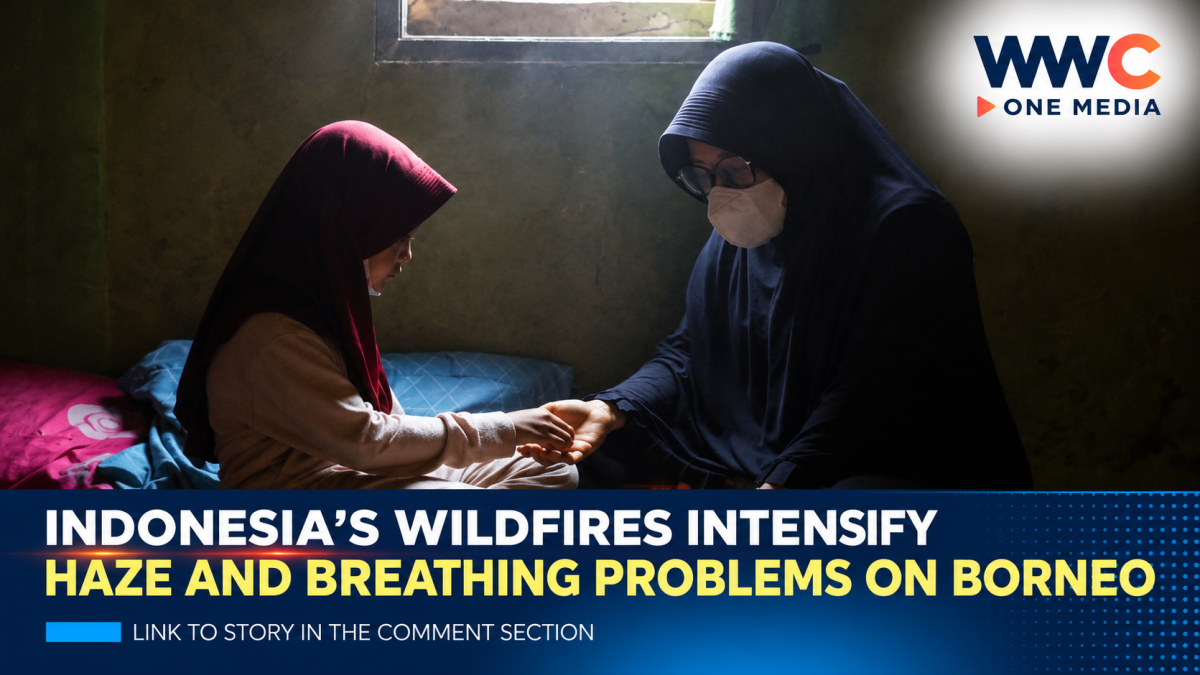
Indonesia is battling its most severe wildfire season in more than a decade, with thick haze blanketing parts of Borneo and causing a sharp increase in respiratory illnesses.
West Kalimantan province, particularly the city of Pontianak, has been among the areas hardest hit as widespread forest and land fires continue to burn. Dry conditions linked to a strong El Niño weather pattern have made it harder to contain the flames.
Residents in Pontianak have reported worsening air quality, with smoke reducing visibility and making outdoor activities increasingly difficult. Some families have struggled with coughing, sore throats, fever and breathing problems as the haze persists.
The health impact has grown rapidly. Indonesia’s Health Ministry reported that the number of people suffering from wildfire-related respiratory illnesses reached 113,336 as of September 9, more than double the 50,891 cases recorded on September 1.
More than 12.5 million people across seven Indonesian provinces have been exposed to smoke and haze, according to health officials. Authorities have distributed nearly one million masks and hundreds of oxygen concentrators, while thousands of medical workers have been deployed to affected communities.
The fires have also created serious challenges for firefighters. Volunteers in West Kalimantan have begun distributing oxygen cylinders directly to residents and emergency workers through a programme known as Rumah Oksigen, or Oxygen House.
Indonesia’s wildfire crisis has been intensified by unusually hot and dry conditions. Officials have described the current fire season as the country’s most intense in 11 years, with the September peak of El Niño expected to make firefighting efforts more difficult.
The scale of the fires has also raised environmental concerns. Government figures show that more than 202,000 hectares of land were burned between January and July, while other estimates indicate that the area affected increased substantially during August.
Smoke from the fires has spread beyond Indonesia, affecting air quality in neighbouring Malaysia and Singapore and contributing to wider concerns about transboundary haze across Southeast Asia.
Indonesia has increased firefighting operations and deployed aircraft to attack fires from the air. International assistance has also arrived, including support from Japan, which has sent helicopters and personnel to help tackle fires in difficult-to-reach areas.
With the dry season continuing and the effects of El Niño expected to remain significant, authorities face continued pressure to contain the fires, protect communities from hazardous pollution and prevent the haze from worsening across the region.




Leave a Reply