
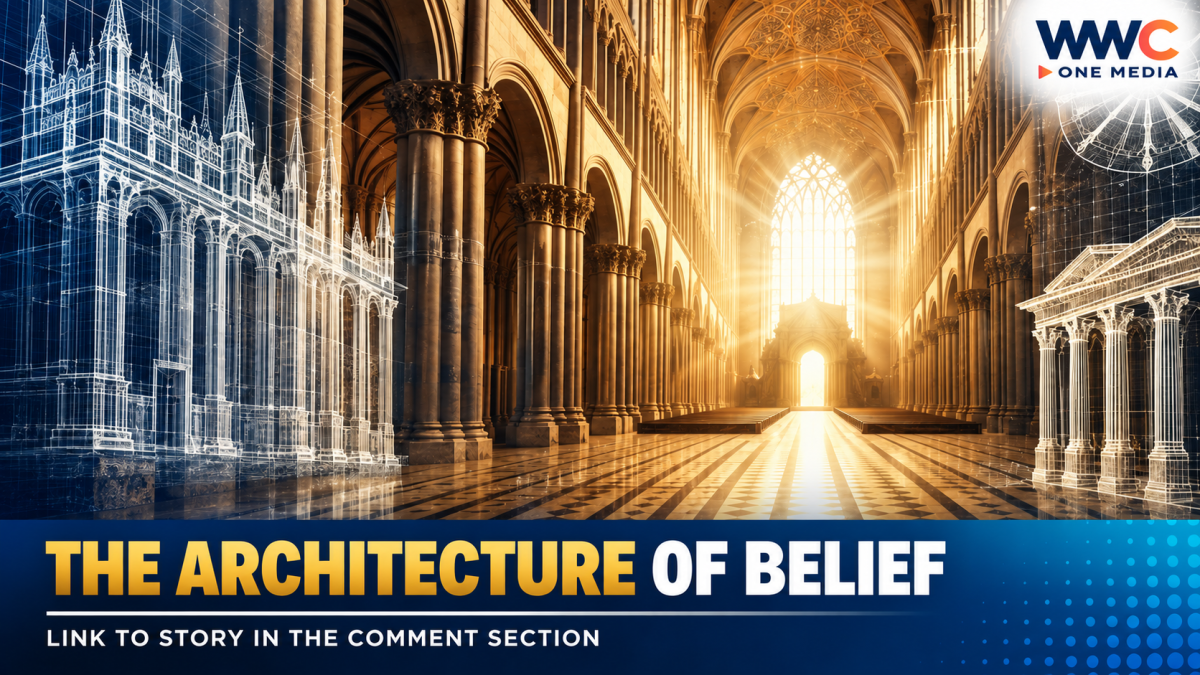
Architecture has long played an important role in shaping how people experience faith, with temples, churches and other sacred spaces serving as places for worship, reflection and community life.
Across cultures, religious buildings demonstrate how architecture can express beliefs through form, materials, light and spatial arrangement. Their designs often reflect the traditions and values of the communities that created them.
Sacred architecture is not simply about constructing a place for religious ceremonies. The arrangement of entrances, courtyards, halls and prayer spaces can influence how visitors move through a building and how they experience moments of contemplation.
Light is also frequently used as an architectural element. Natural light entering through carefully positioned openings can create changing atmospheres throughout the day, while shadows and illuminated surfaces can reinforce the sense of a space being separate from the ordinary world.
Materials carry their own symbolism. Stone, wood, metal and other materials can be selected for their durability, appearance or cultural significance. The craftsmanship involved in religious buildings can also represent the devotion and collective effort of the communities that built them.
Architecture can preserve religious traditions while also adapting to changing societies. Contemporary sacred buildings sometimes combine traditional symbols with modern construction techniques, creating spaces that connect historical beliefs with present-day needs.
The relationship between architecture and belief can also be seen beyond formal places of worship. Memorials, monuments and public spaces may incorporate spiritual or symbolic elements that encourage visitors to remember, reflect or contemplate.
In this way, architecture becomes a physical expression of ideas that are often difficult to communicate through words alone. A building can create an environment in which people experience a sense of identity, belonging and connection.
The continuing evolution of sacred architecture shows how belief and design can influence one another. As communities change, their buildings can evolve too, while still preserving the traditions and meanings that have shaped them over generations.
Ultimately, the architecture of belief demonstrates that buildings are more than structures. They can become lasting expressions of culture, memory and the ways people understand their place in the world.




Leave a Reply