
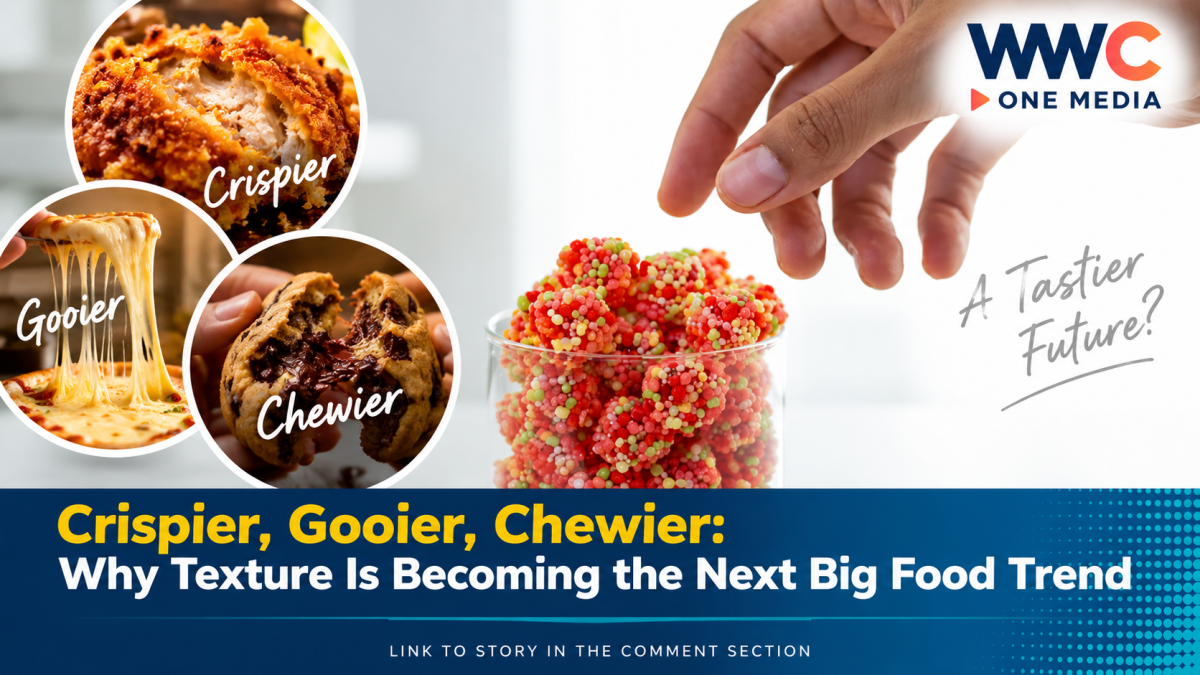
Food companies around the world are increasingly turning their attention to something consumers can feel as much as taste: texture.
From extra-crispy snacks and chewy sweets to gooey desserts and foods designed to crackle, crunch or melt in the mouth, texture is becoming an increasingly important part of how people experience food.
The trend is particularly noticeable among younger consumers, who are seeking foods that offer a more engaging sensory experience. Social media has also helped drive demand, with videos highlighting crunchy, stretchy and molten foods often attracting millions of views.
For food manufacturers, however, creating a distinctive texture that survives processing, packaging, storage and preparation can be considerably more complicated than it looks.
A crisp snack, for example, needs to retain its crunch after sitting on a supermarket shelf. A frozen product may need to remain crisp after reheating, while a confectionery product must deliver a particular degree of chewiness without becoming too hard or sticky.
This has prompted food companies to invest heavily in ingredients and technologies designed specifically to control texture.
Starches, proteins, fibres and hydrocolloids can all be used to alter how a food behaves when it is bitten or chewed. Manufacturers can also adjust processing methods to create layers of contrasting textures within a single product.
The appeal goes beyond novelty. Texture can influence how consumers perceive freshness, quality and even flavour.
A crisp coating surrounding a soft filling, for instance, can create a stronger sensory contrast than a food with a uniform consistency. The combination can make a familiar product feel new without requiring a completely different recipe.
The growing popularity of texture-focused foods has also been fuelled by online food culture. Videos of cheese pulls, crispy fried foods, popping sweets and gooey desserts have made texture itself part of the entertainment.
Food scientists therefore face a growing challenge: developing products that not only taste good but also deliver the exact sensory experience consumers expect.
As competition in the global food industry intensifies, the next product breakthrough may not come from a new flavour at all. It could come from making an old favourite just a little crispier, chewier, softer or gooier.




Leave a Reply