
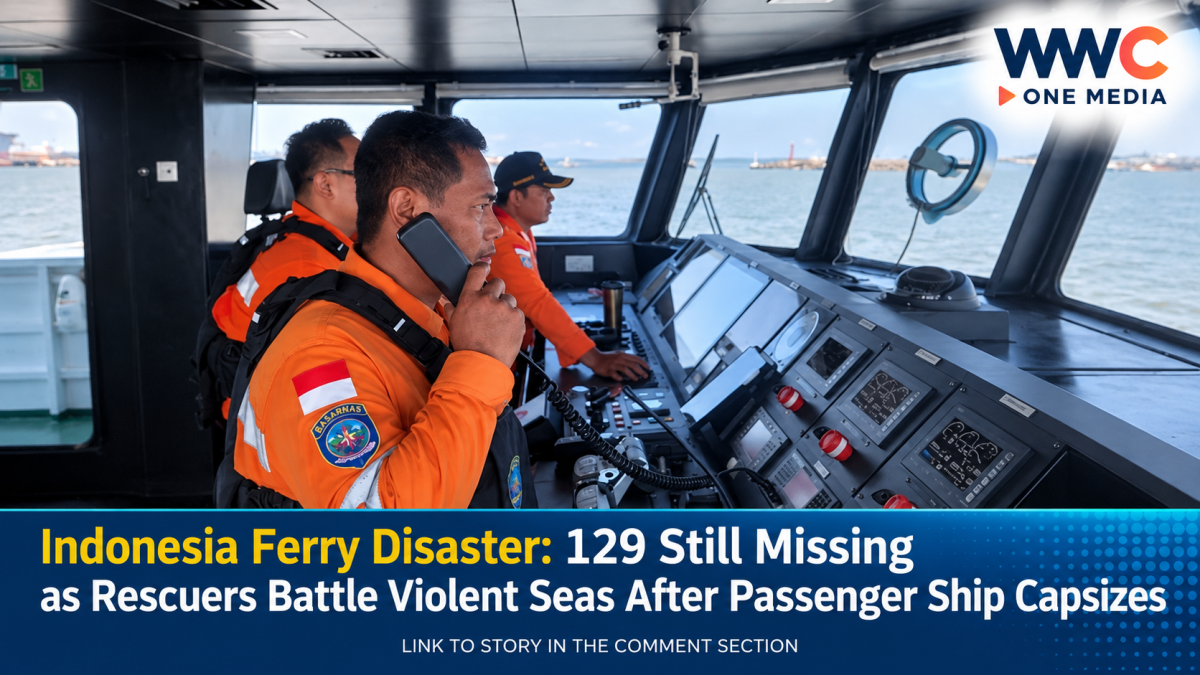
JAKARTA — More than 600 Indonesian rescuers are racing against time to find 129 people still missing after a passenger ship carrying 243 people capsized in the Java Sea during severe weather.
At least six people have been confirmed dead, while 108 people have been rescued from the Virgo Transport 8 as Indonesia launches a massive air and sea search.
But rough seas, powerful winds and waves reaching up to three metres are making the operation increasingly dangerous—and raising fears over how many more survivors can still be found.
What Happened to the Virgo Transport 8?
The Virgo Transport 8 was travelling from Surabaya in East Java to Banjarmasin in South Kalimantan when it encountered severe weather in the Java Sea early on Sunday, Sept 13.
Authorities said the vessel was carrying 213 passengers and 30 crew members, according to its manifest.
Before contact was lost, the captain reportedly warned that the ship was tilting heavily in rough conditions. Authorities later received information that the vessel had overturned.
The ship was about 150 kilometres from the rescue command centre when the disaster unfolded, according to Reuters.
Images and video released during the operation showed the overturned vessel in the Java Sea, with rescuers working urgently to locate people who may have survived the capsizing.
More Than 600 Rescuers Join Massive Search
Indonesia has deployed a huge rescue force involving the coastguard, navy and national search-and-rescue teams.
According to Reuters, the operation includes:
- More than 600 rescue personnel
- At least 17 ships
- Five helicopters
- Aircraft and other search assets
- Navy personnel and underwater rescue teams
Divers are also on standby, but dangerous underwater conditions have prevented them from immediately entering some areas around the overturned vessel.
Rescue crews are continuing to search the surrounding waters while weather conditions remain one of their biggest obstacles.
Rough Seas Could Decide the Fate of the Search
The Java Sea search operation is being severely complicated by strong winds and high waves.
Reuters reported waves of up to three metres, making it difficult for rescue vessels to operate and slowing the search for survivors.
The rough weather has also created serious risks for divers.
Officials are now facing a race against time as the search enters a critical period.
Every hour matters for those who may still be in the water or trapped near the overturned vessel.
Survivors Describe Terrifying Moments as the Ship Overturned
Early reports from the disaster described desperate attempts by passengers to survive after the vessel began listing.
Some survivors reportedly clung to the ship as it overturned while others were rescued from the surrounding waters.
The exact sequence of events that caused the Virgo Transport 8 to capsize is still under investigation.
Authorities have not yet determined whether severe weather alone caused the disaster or whether other factors involving the vessel could have contributed.
Was the Ferry Overloaded?
Authorities said the Virgo Transport 8 was carrying 243 people and was within its reported passenger capacity of 500.
The ship was also carrying 89 vehicles, according to Associated Press reporting.
However, officials are expected to investigate multiple factors, including the vessel’s condition, cargo, weather conditions and the circumstances leading up to the capsizing.
The vessel was reportedly built in Japan in 1987 before being sold to an Indonesian operator.
Those details are also likely to draw scrutiny as investigators work to determine exactly what went wrong.
Families Gather and Wait for News
As the rescue operation continues at sea, families of passengers have gathered in Banjarmasin, anxiously waiting for information.
For many relatives, there has been little certainty about who survived and who remains missing.
The scale of the disaster means authorities are still working to verify passenger information and account for everyone believed to have been on board.
The number of missing people has changed as additional survivors and victims have been located, highlighting the fast-moving and difficult nature of the rescue operation.
Indonesia’s Long History of Maritime Disasters
The latest tragedy has once again placed Indonesia’s maritime safety record under intense scrutiny.
Indonesia is the world’s largest archipelago, with more than 17,000 islands, making ferries and passenger ships essential transportation links for millions of people.
But maritime accidents remain a recurring problem.
International reports have repeatedly pointed to dangerous weather, vessel conditions and inconsistent safety enforcement as continuing risks across the country’s vast network of sea routes.
The Virgo Transport 8 disaster also comes amid a series of recent maritime emergencies in Indonesia, adding to concerns over the safety of sea travel during severe weather.
The Search Is Now a Race Against Time
For now, Indonesia’s rescue teams are focused on one priority: finding the 129 people who remain missing.
More than 100 people have already been pulled to safety.
But six have died, and the dangerous conditions mean the search could become even more difficult.
With hundreds of personnel, ships and aircraft now deployed across the Java Sea, rescuers are continuing their search despite waves and strong winds.
A ship carrying 243 people overturned in violent weather. Six people are dead. More than a hundred survived. But 129 people are still missing.
The biggest question now is becoming increasingly urgent:
Can Indonesian rescuers find more survivors before the violent seas make the search even more dangerous?



Leave a Reply