
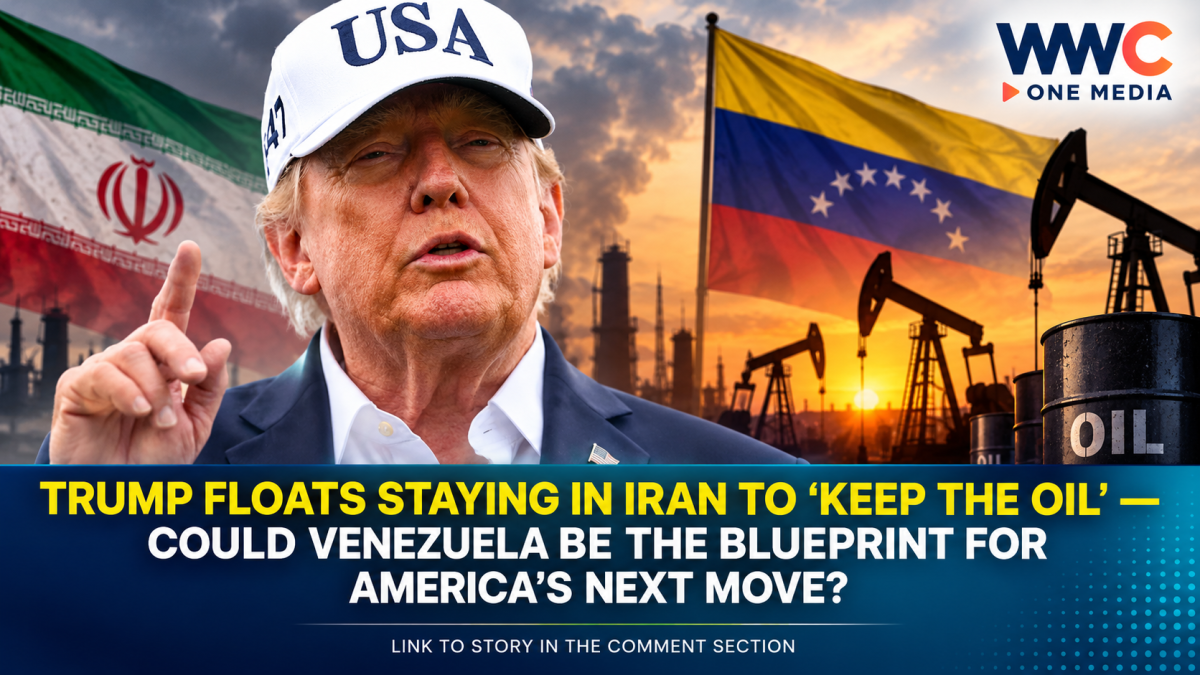
WASHINGTON/DOONBEG — US President Donald Trump has raised the possibility that the United States could maintain a presence in Iran and “keep the oil,” drawing a direct comparison to Washington’s recent oil arrangement in Venezuela.
The remarks come as the conflict involving the United States, Israel and Iran continues to shake global energy markets, push oil prices higher and fuel growing uncertainty over whether a diplomatic solution is anywhere in sight.
Speaking during a visit to Ireland on Sunday, Trump said the United States could eventually leave Iran — unless Washington decided otherwise.
“We’ll ultimately get out, unless we decide to stay and keep the oil like Venezuela,” Trump said, according to Reuters.
The comments immediately put fresh attention on the Trump administration’s strategy in both Iran and Venezuela, where Washington has recently secured a major position connected to the South American country’s oil industry.
Venezuela Deal Now at the Center of Trump’s Iran Comments
Trump’s comparison refers to a major US-backed oil arrangement in Venezuela that has given Washington significant economic interests in the country’s energy sector.
Reuters reported earlier this month that the US government structured a 35 per cent position in North American Blue Energy Partners through warrants, while also securing preferential access to part of the venture’s oil production.
The company was granted long-term rights to 17 oil fields estimated to contain about 65 billion barrels of reserves. Under the arrangement, the Pentagon also obtained the right to purchase 20 per cent of the venture’s crude output at a price tied to production costs, according to a US official cited by Reuters.
The deal has become a key example of the Trump administration’s broader push to strengthen American influence over strategic energy resources.
Trump claimed that revenue connected to Venezuela had already paid for the war “many times” over, though the broader financial and political implications of both the Venezuela arrangement and the Iran conflict remain heavily debated.
Trump Still Predicts Iran War Will End This Year
Despite floating the possibility of a continued US presence, Trump said he still expects the Iran war to end before the end of 2026.
He suggested that a resolution could come after the US midterm elections in November and predicted that gasoline prices would fall sharply once the conflict ends.
But the situation on the ground remains highly uncertain.
Trump has also claimed that Iran is repeatedly seeking peace talks. Tehran has previously rejected similar assertions, creating another major question over whether serious negotiations are actually underway.
For now, there appears to be no confirmed breakthrough capable of ending the conflict.
Reuters reported that Trump said he would only accept what he considers the “right deal,” while leaving open the possibility of continued US involvement if negotiations fail.
Oil Prices Surge as Conflict Spreads Across the Region
Trump’s remarks come at a critical moment for global oil markets.
The prolonged conflict has disrupted energy flows through the Middle East, including around the Strait of Hormuz, one of the world’s most strategically important shipping routes.
The Associated Press reported that Brent crude recently surged above US$100 a barrel as tensions intensified, while diesel prices have also climbed sharply.
The economic consequences are being felt far beyond the Middle East, with higher energy prices threatening to increase transportation costs, consumer prices and inflation around the world.
AP reported that the United States has made progress in loosening Iran’s control over the Strait of Hormuz and increasing non-Iranian oil exports. However, the conflict itself remains far from resolved.
Iran’s oil exports have been heavily disrupted, while the United States has maintained a major military deployment in the region. Analysts have warned that the conflict could become prolonged because economic pressure has not yet produced a clear political outcome.
No Clear Exit Strategy?
One of the biggest questions now facing Washington is whether the United States has a clear plan for ending its involvement.
The Associated Press reported that the war, launched by the United States and Israel in February, has continued far longer than initially expected.
A previous agreement reached in June quickly collapsed, and low-level fighting has continued.
Analysts cited by AP warned that Iran has shown little sign of backing down and could instead escalate pressure through direct military action or regional allies.
The Strait of Hormuz remains especially important because a significant share of global oil and gas shipments normally pass through the waterway.
Any prolonged disruption could send another shock through global markets.
Trump’s Oil Strategy Faces Bigger Questions
Trump’s suggestion that the United States could remain in Iran and “keep the oil” has added a new and potentially controversial dimension to the conflict.
The comparison with Venezuela suggests that energy resources could play an increasingly visible role in Washington’s broader geopolitical strategy.
But Iran presents a dramatically different challenge.
Unlike Venezuela, Iran remains at the center of a major regional conflict involving strategic shipping lanes, military operations and competing international interests.
A prolonged US presence could also increase pressure on Washington to explain its long-term objectives.
For Trump, the stakes are growing.
He is facing pressure to bring down fuel prices while also trying to demonstrate progress in a conflict that has already disrupted global energy markets.
The president has insisted that gasoline prices will eventually fall once the war ends.
However, with oil markets remaining volatile and diplomatic efforts still uncertain, the biggest question may be whether the United States can actually secure a deal that ends the conflict — or whether Washington is preparing for a much longer stay.
And after Trump’s latest comments, another question is now impossible to ignore:
Is Venezuela merely an oil deal — or is it becoming the blueprint for America’s future strategy in Iran?


Leave a Reply