
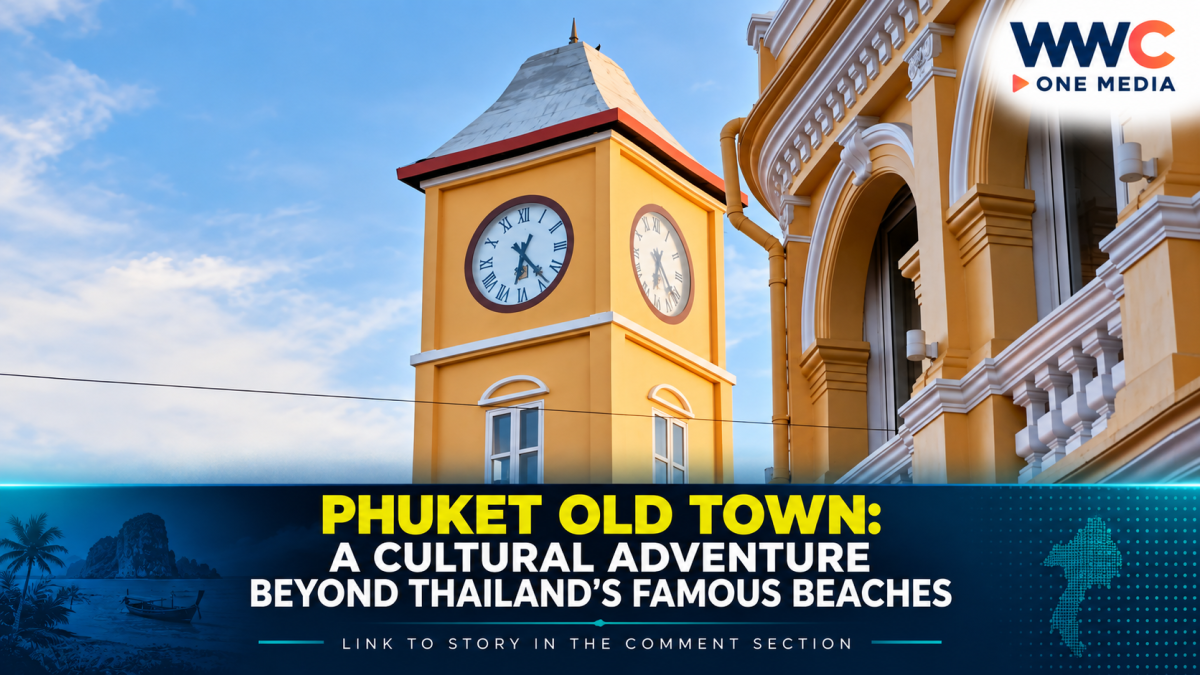
Phuket is often associated with turquoise waters, resort-lined beaches and island-hopping adventures. But away from the coastline, Phuket Old Town offers a very different side of the island — one shaped by Chinese, Thai, Indian, European and Muslim influences, centuries of trade and the legacy of the tin-mining industry.
The historic quarter is compact enough to explore on foot, making it an easy change of pace from Phuket’s beach resorts. Its streets are lined with colourful Sino-European shophouses, old mansions, cafés, restaurants, museums and small local businesses. The distinctive architecture reflects the multicultural communities that settled in Phuket when the island’s tin-mining economy was flourishing.
Start with the architecture
Thalang Road, Dibuk Road, Phang Nga Road, Yaowarat Road, Krabi Road and Soi Romanee form the heart of the Old Town area. Rather than rushing between attractions, one of the best ways to experience it is simply to walk, look up and take in the details of the old buildings.
Many of the historic shophouses have been preserved or adapted into modern cafés, restaurants, accommodation and shops, allowing everyday life to continue within the old streetscape.
The area is also known for its street art, with murals and creative installations adding a contemporary layer to the historic neighbourhood. The combination makes almost every turn a potential photo stop.
Dig into Phuket’s Chinese-Thai heritage
For a deeper understanding of the Old Town, the Phuket Thai Hua Museum on Krabi Road is one of the key stops. The building was originally established as a Chinese-language school and now explores the history and heritage of Phuket’s Chinese community.
Another option is Chinpracha House, a historic mansion that offers a glimpse into the lifestyle of one of Phuket’s prominent families during the island’s tin-mining era. The Tourism Authority of Thailand includes both attractions in its recommended Phuket cultural itineraries.
Eat your way through the old quarter
Food is another reason to spend more than a quick afternoon in the neighbourhood.
Phuket Old Town’s cuisine reflects the same cultural mixture found in its architecture, with Chinese and Thai influences appearing in everything from noodles and dim sum to local desserts and snacks. Traditional favourites include Hokkien-style noodles, kanom jeen and a-pong, a local crispy pancake.
For a more local experience, start early. Traditional dim sum shops can be particularly lively in the morning, while restaurants and cafés become busier later in the day.
Look beyond the postcard streets
The Old Town experience is not limited to its best-known roads. Smaller lanes, historic houses and community-run experiences offer a closer look at how residents have preserved the neighbourhood’s traditions.
A recent Tourism Authority of Thailand cultural itinerary, for example, combines a ceramic-painting workshop with a locally guided walking tour, traditional Hokkien noodles and visits to smaller heritage sites. The itinerary also highlights Phuket’s Baba-Nyonya culture and the kebaya, reflecting the island’s wider Peranakan heritage.
Visit on a Sunday if you can
Sunday is particularly lively on Thalang Road, when the Lat Yai walking street takes over the area. The weekly market brings together local food, handicrafts and street performances, giving visitors a chance to experience the Old Town after the daytime sightseeing crowds have started to thin.
The Tourism Authority of Thailand lists the Sunday walking street as one of the area’s main attractions, with the market traditionally running from late afternoon into the evening.
Stay until after sunset
Phuket Old Town takes on a different atmosphere after dark, when the colourful façades and historic streets are illuminated and restaurants and cafés begin filling up.
The area has also become a setting for cultural events that reinterpret Phuket’s Peranakan heritage through contemporary performances, music and visual displays. In August 2026, the Tourism Authority of Thailand staged a heritage programme featuring projection mapping, traditional Khon performances, live jazz and a workshop centred on the Peranakan red tortoise cake.
Why Phuket Old Town deserves a place on your itinerary
The biggest appeal of Phuket Old Town is that it shows a side of the island that can easily be missed if a trip revolves entirely around beaches and resorts.
Here, Phuket’s history is not confined to a museum. It appears in the architecture, food, clothing, religious traditions, family businesses and streets where old buildings continue to serve modern purposes.
For travellers willing to swap a few hours beside the pool for a walking tour through the historic centre, Phuket Old Town offers a slower, more immersive way to understand the island — and a reminder that Phuket’s story stretches well beyond its famous coastline.




Leave a Reply