
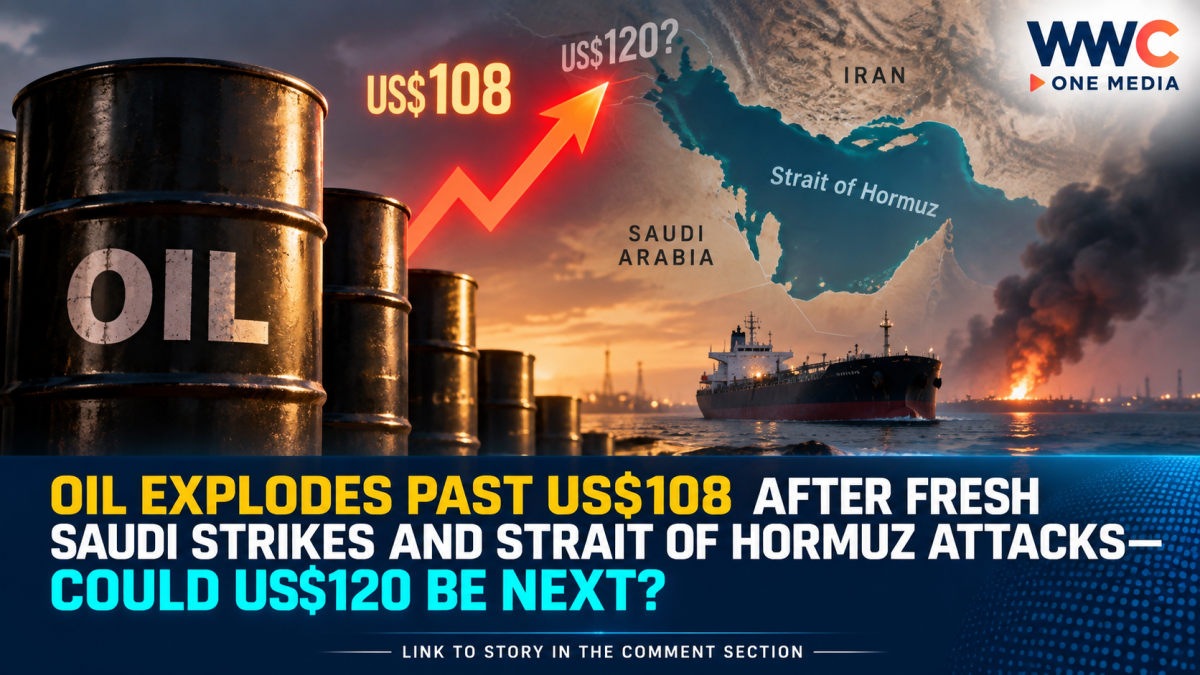
Oil prices surged sharply at the start of trading on Monday, September 14, after fresh attacks on Saudi Arabia and commercial vessels in the Gulf intensified fears of a deeper disruption to global energy supplies.
Brent crude jumped US$3.62, or 3.46 percent, to US$108.23 per barrel, while US West Texas Intermediate crude climbed US$3.15, or 3.15 percent, to US$103.20 per barrel, according to the latest Reuters market data carried by Channel NewsAsia.
The dramatic move came after a weekend of escalating violence across some of the world’s most strategically important energy and shipping routes.
Fresh Attacks Put Saudi Arabia Back at the Center of Oil Crisis
Saudi Arabian state media released footage on Sunday showing damage to homes and a mosque in the southern Jazan province following what authorities described as a Houthi attack.
The Iran-aligned Houthi movement also said it had targeted a Saudi military base in a neighboring province.
The attacks have added fresh pressure to an already fragile oil market following the shutdown last week of Saudi Arabia’s crucial East-West oil pipeline.
The pipeline is especially important because it allows Saudi crude to travel from eastern oil fields to the Red Sea port of Yanbu, providing an alternative export route that bypasses the Strait of Hormuz.
Its closure has therefore raised fears that Saudi Arabia could face greater difficulty rerouting oil exports if regional shipping disruptions worsen.
Reuters has reported that the outage threatens a significant portion of global oil supply and has become one of the key factors driving crude prices above US$100 per barrel.
Ships Attacked in the Strait of Hormuz
Tensions also escalated dramatically at sea.
The British maritime security agency UKMTO said a vessel in the Strait of Hormuz was struck by a projectile, triggering a fire and forcing its crew to evacuate.
Iran also reported that one person was killed and four crew members were wounded when an Iranian commercial vessel was struck off its coast.
The Associated Press separately reported that an Iranian cargo ship was attacked near Qeshm Island, once again putting global attention on the Strait of Hormuz and the growing dangers facing commercial shipping in the region.
The Strait of Hormuz remains one of the world’s most important maritime chokepoints for energy supplies, making any attack or disruption there a major concern for oil traders and governments around the world.
Saudi Pipeline Shutdown Raises Supply Fears
Oil markets were already bracing for another volatile trading week after Saudi Arabia shut its East-West pipeline following a drone strike last week.
According to Reuters reporting, the closure has reduced Saudi Arabia’s ability to redirect oil exports away from the increasingly dangerous Strait of Hormuz.
The Financial Times and other international outlets have also highlighted the strategic importance of the roughly 1,200-kilometer pipeline, which connects eastern Saudi oil fields to Yanbu on the Red Sea coast.
The situation has created a dangerous combination for global energy markets:
- Major oil infrastructure has been disrupted.
- Commercial ships are facing new attacks.
- The Strait of Hormuz remains under intense pressure.
- Violence involving the Houthis has expanded regional risks.
- Diplomatic efforts have suffered a fresh setback.
Oman Talks Postponed as Diplomacy Stumbles
Hopes for a possible diplomatic breakthrough also weakened over the weekend.
Omani Foreign Minister Badr Albusaidi announced that a planned meeting between Iran and Gulf countries to discuss the Strait of Hormuz had been postponed.
The talks had been closely watched by markets because any progress toward securing shipping routes could have helped ease concerns about future oil supply disruptions.
Instead, the postponement added another layer of uncertainty to an already volatile situation.
Reuters reported that the delay in diplomacy came as fresh attacks increased pressure on shipping and energy infrastructure across the region.
Could Oil Climb Toward US$120?
Analysts are now watching whether oil prices could continue climbing.
IG market analyst Tony Sycamore said crude could potentially move toward the US$119.48 high reached earlier this year if the Saudi East-West pipeline remains offline and no meaningful progress emerges from diplomatic efforts.
Oil prices have already posted major gains as traders price in the possibility of prolonged supply disruptions.
Other recent reports have warned that continued attacks on infrastructure, further disruptions to shipping routes or an expansion of the conflict could keep crude prices elevated and increase inflationary pressure around the world.
Why the Oil Surge Could Affect Everyone
The impact of higher crude prices could eventually extend far beyond energy markets.
If oil remains above US$100 per barrel for an extended period, consumers and businesses could face increased costs for:
- Gasoline and diesel
- Air travel
- Shipping and transportation
- Food production and delivery
- Manufacturing
- Consumer goods
Rising energy costs could also make it more difficult for central banks to control inflation.
Reuters reported that the latest oil surge has already contributed to concerns in global financial markets about inflation and the possibility of higher interest rates.
Global Markets Now Watching the Next Attack—and the Next Diplomatic Move
For now, the oil market is caught between two powerful forces: the growing threat of additional military escalation and the fading hope of an immediate diplomatic breakthrough.
With Saudi oil infrastructure under pressure, ships facing attacks in the Gulf and talks over the Strait of Hormuz postponed, traders are preparing for another period of extreme volatility.
Brent crude has already surged above US$108, but the bigger question now is whether the latest crisis will remain contained—or push oil closer to US$120 and beyond.
As the situation develops, every new attack, shipping incident or diplomatic announcement could trigger another sharp move in global energy markets.
Source reporting: Channel NewsAsia/Reuters, Reuters and Associated Press.




Leave a Reply