
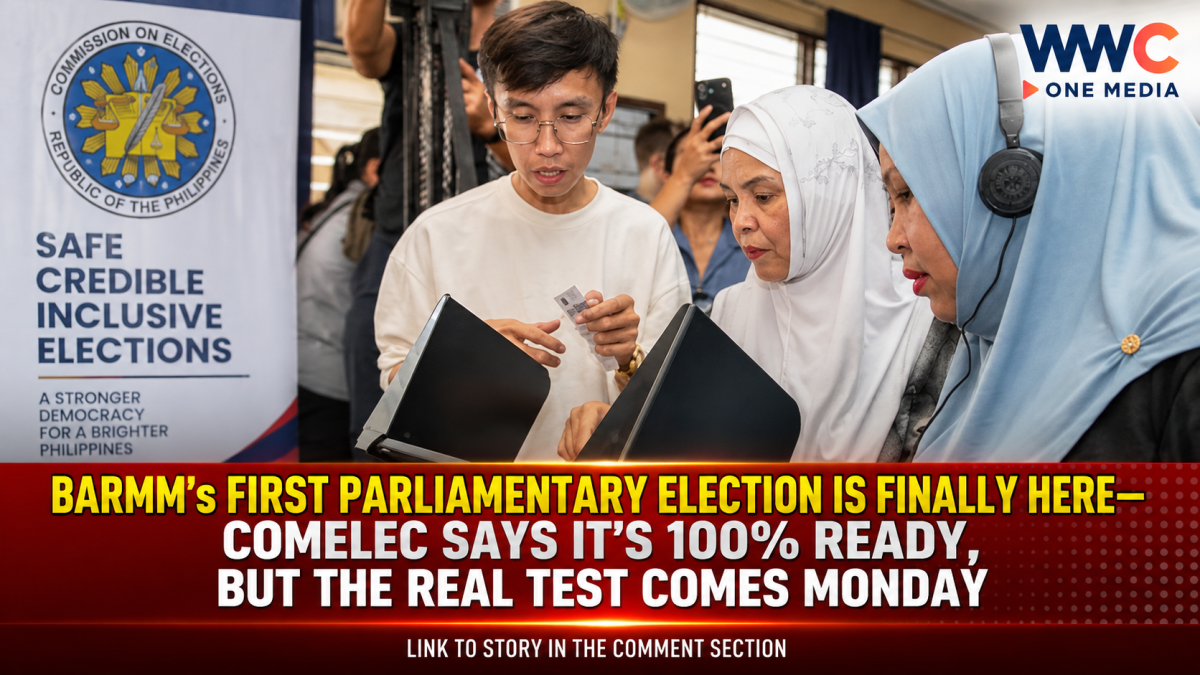
MANILA — The Commission on Elections (Comelec) says it is fully prepared for the first-ever parliamentary elections in the Bangsamoro Autonomous Region in Muslim Mindanao (BARMM), with millions of voters set to make a historic choice that could shape the region’s political future.
The BARMM parliamentary elections are scheduled for September 14, 2026, marking a major milestone in the decades-long effort to establish a functioning autonomous political system in the region.
The poll body’s declaration of readiness comes just as the election enters its final stretch, with election materials deployed, voting machines undergoing final preparations and security forces placed on heightened alert.
The election is being closely watched not only in Mindanao but across the Philippines because it represents one of the most important stages yet in the country’s peace process with the Moro Islamic Liberation Front (MILF).
Nearly 2.4 million voters will decide BARMM’s first Parliament
According to Comelec figures reported in previous updates, 2,393,202 registered voters are eligible to participate in the election.
The poll will involve 5,212 clustered precincts in 1,186 voting centers, covering BARMM’s five provinces, Cotabato City and the Special Geographic Area.
Voters will elect representatives to an 80-member Bangsamoro Parliament.
The seats include 40 party representatives, 32 district representatives and eight sectoral representatives, according to an Associated Press explainer published ahead of the election.
The election therefore goes beyond simply choosing individual politicians. It will establish the first elected parliamentary leadership of the autonomous region under the Bangsamoro political framework.
Comelec has been preparing for the vote for months
The readiness announcement follows weeks of increasingly intensive preparations.
Comelec Chairperson George Erwin Garcia said earlier this month that deployment of ballots and other election equipment to municipalities was nearing completion. The commission also planned final testing and sealing of automated counting machines across all 5,212 precincts before Election Day.
GMA News likewise reported that Comelec had already deployed election paraphernalia to local hubs and was working to deliver materials to 105 municipalities and two cities in BARMM.
Earlier preparations included testing thousands of automated counting machines, with Comelec emphasizing that the equipment had to undergo acceptance and verification procedures before deployment.
The Commission on Elections also launched voter education efforts to explain the region’s new parliamentary electoral system and encourage participation.
Comelec spokesperson John Rex Laudiangco said the commission hoped to achieve at least an 80% voter turnout, citing BARMM’s historically strong participation in previous elections.
Why this election is so important
The September 14 vote is widely regarded as a critical milestone in the implementation of the 2014 peace agreement between the Philippine government and the MILF.
The agreement paved the way for the creation of a more autonomous Bangsamoro political entity and the transition away from decades of armed separatist conflict.
The new parliamentary system is intended to give the Bangsamoro population greater control over regional legislation, governance and development while keeping the region within the Philippine Republic.
But the significance of the election also raises the stakes.
The region has a long history of armed conflict, clan rivalries and political violence, making security one of the central concerns surrounding the polls.
Security will be a major test
President Ferdinand R. Marcos Jr. previously ordered security and law-enforcement agencies to ensure that the elections are peaceful, orderly and credible.
The Palace said the Philippine National Police would deploy 8,299 personnel in BARMM, with the AFP and Philippine Coast Guard also supporting election security efforts. Authorities were instructed to maintain political neutrality while focusing on armed groups and other potential threats.
The Associated Press reported that more than 20,000 security personnel are expected to be deployed for the election, underscoring the government’s concern over possible violence in a region with a history of conflict.
Authorities are also paying particular attention to areas identified as having elevated security risks.
For the Bangsamoro peace process, keeping the election peaceful could prove almost as important as the results themselves.
A historic vote—but challenges remain
The first parliamentary election comes after years of delays and political developments surrounding the transition to the Bangsamoro system.
The election is expected to test whether parliamentary politics can successfully replace armed confrontation and help institutionalize self-governance in the region.
But analysts and observers have also pointed to continuing challenges, including political rivalries, clan-based politics, questions surrounding the pace of MILF decommissioning and persistent security concerns.
That means Monday’s vote will carry implications well beyond the candidates appearing on the ballot.
It will be a test of whether the political institutions created through the peace process can gain a strong democratic mandate from the people they are intended to serve.
What happens after the votes are counted?
The immediate goal is straightforward: conduct a credible election and determine the 80 members of the Bangsamoro Parliament.
The larger question is much more consequential.
Can the first elected Bangsamoro Parliament turn the region’s historic peace agreement into a functioning system of democratic self-governance?
For nearly 2.4 million voters, that question will begin to be answered when they cast their ballots on September 14.
This is more than BARMM’s first parliamentary election. It is a major test of whether decades of peace negotiations can translate into lasting political stability.




Leave a Reply