
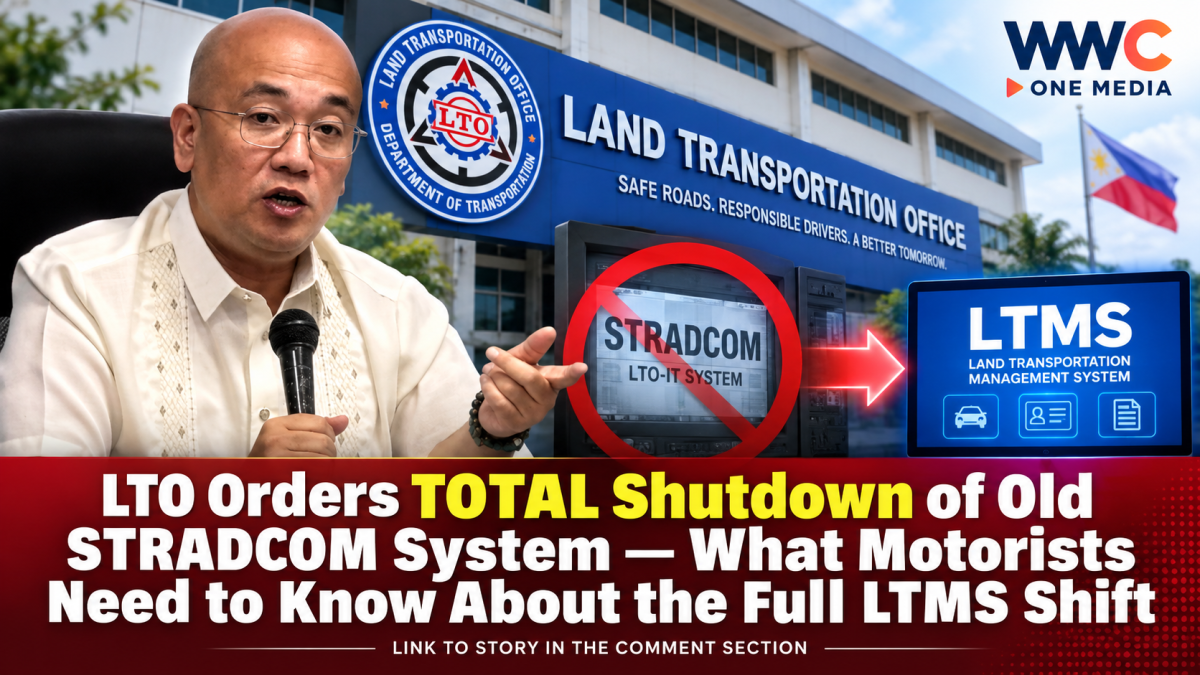
MANILA, Philippines — The Land Transportation Office (LTO) has ordered a complete halt to the use of its old information technology system, marking one of the agency’s biggest digital transitions yet as it moves all covered transactions to the Land Transportation Management System (LTMS).
LTO chief Assistant Secretary Markus V. Lacanilao directed concerned offices to stop using the legacy STRADCOM LTO-IT System and shift exclusively to LTMS, according to the latest reports. The move is part of the government’s push to finally end years of parallel operations between the old and newer digital platforms.
What Transactions Are Affected?
Under LTO Memorandum Nos. MVL-2026-207 and MVL-2026-208, the order covers Enhanced Driver’s License System pilot sites and 42 designated Temporary Offsite Printing Offices nationwide.
Transactions moving exclusively to LTMS include Certificate of Stock Reports, new motor vehicle registrations, registration renewals, driver’s license applications, renewals, duplicate or replacement licenses, changes in personal information and other miscellaneous transactions.
For motorists, the most important message is clear: the LTO is consolidating its services under one main digital platform.
Why Is the LTO Finally Pulling the Plug on the Old System?
The latest directive follows earlier action by the Office of the Ombudsman, which ordered the LTO to stop using the STRADCOM-operated legacy system and fully transition official transactions to the government-owned LTMS.
The issue surrounding the old system has also become part of a wider controversy involving the continued use of the legacy platform and computer fees paid by motorists.
In August, the Ombudsman announced preventive suspensions involving former LTO officials in connection with the controversy over the continued use of the old IT system and billions of pesos in computer fees.
The controversy has intensified pressure on the government to complete a transition that had been discussed and implemented in stages for years.
Why Was STRADCOM Still Being Used in the First Place?
The answer lies in the LTO’s long and complicated digital transition.
Government records show that the LTMS was designed as an integrated platform for major LTO services, including driver’s licensing, motor vehicle registration, law enforcement, revenue collection and online applications.
However, the agency previously allowed the old LTO-IT system and LTMS to operate in parallel because of backlogs, system enhancements and operational concerns.
An earlier LTO memorandum authorized the parallel use of the systems while improvements to LTMS were still ongoing, particularly to prevent disruptions and address transaction backlogs.
That temporary arrangement, however, eventually became one of the biggest issues surrounding the agency’s digital operations.
LTO Promises Smooth Transition — But System Reliability Will Be Closely Watched
Lacanilao has instructed affected offices to coordinate with the LTO Central Office on system configurations, user access and other operational requirements.
Technical problems, system limitations and other transition issues are also supposed to be immediately reported to the LTO’s Management Information Division for action.
The goal is to prevent motorists from being caught in the middle of another system transition.
That could prove crucial.
The LTMS was introduced as a major modernization project intended to bring LTO transactions into a more centralized digital environment. But previous LTO issuances acknowledged reports of system performance concerns and the need for further improvements, which was one reason the legacy system had earlier remained available as support.
What This Means for Motorists
The full transition could potentially simplify LTO transactions by bringing more services under a single system.
Instead of relying on separate or parallel platforms, the LTO is aiming for a more unified process covering vehicle registration, driver’s licensing and related services.
But the transition also raises a major question:
Can LTMS now handle the volume of transactions nationwide without major delays or technical disruptions?
That question will likely be answered in the coming weeks as LTO offices, pilot sites and temporary offsite printing facilities complete the transition away from the old system.
For now, one thing is certain: the decades-old STRADCOM-based system is being pushed out of frontline LTO operations, and the government is moving toward a future where LTMS becomes the single digital backbone for millions of Filipino motorists.
The shutdown of the old system may be the end of one chapter in the LTO’s long-running digital transformation.
But the real test is only beginning: when every major transaction depends on LTMS, will the new system finally deliver the faster and more reliable service motorists have been waiting for?




Leave a Reply