
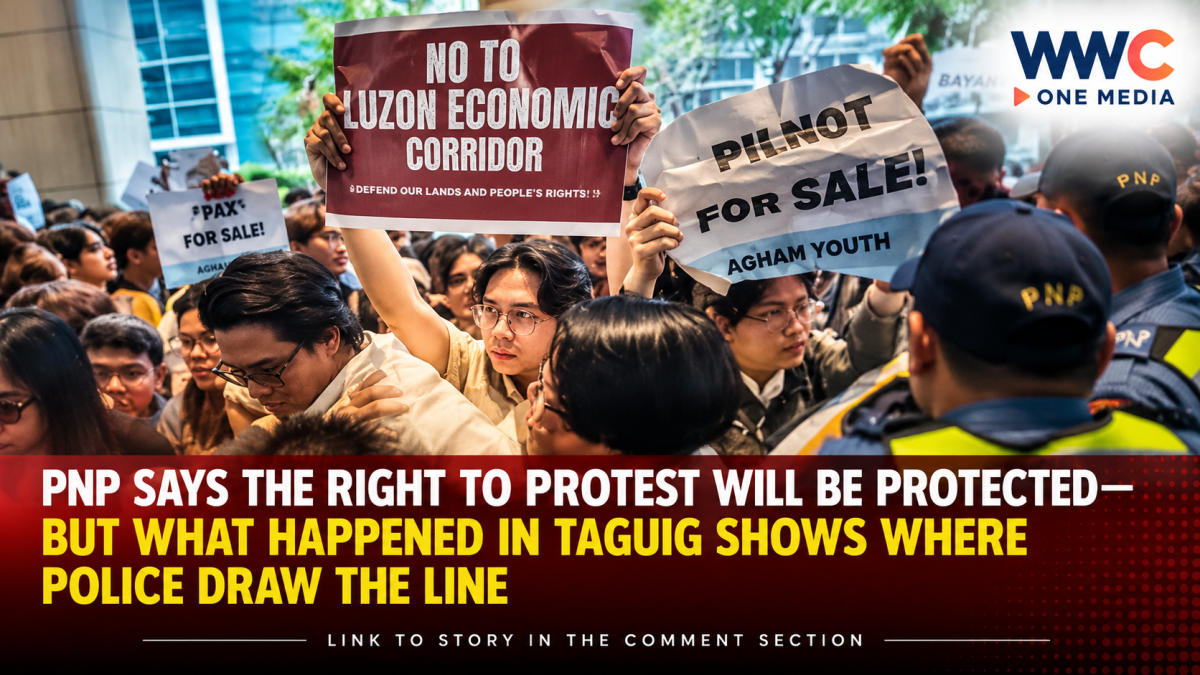
MANILA, Philippines — The Philippine National Police has reaffirmed that Filipinos have a constitutional right to peaceful assembly and protest, but warned that demonstrations must remain within the bounds of the law following a violent confrontation between police and activists in Taguig City.
The statement came after an anti-Pax Silica protest disrupted the Luzon Economic Corridor Investment Forum outside the Grand Hyatt Manila in Bonifacio Global City on September 10.
According to ABS-CBN News, the PNP said it respects the public’s right to peaceful assembly but stressed that protesters must exercise that right responsibly and in accordance with existing laws. The incident has since intensified debate over the delicate balance between protecting civil liberties and maintaining public order.
What Happened During the Taguig Protest?
Reports from other Philippine news outlets provided more details about the confrontation.
The Philippine Star reported that around 300 activists joined the protest, which opposed the Luzon Economic Corridor and the proposed Pax Silica initiative. Police said some protesters attempted to breach a security barricade outside the hotel, leading to a confrontation between demonstrators and law enforcement personnel.
The clash left 43 people injured, according to figures cited in the report. Sixteen police officers reportedly suffered bruises, wounds and lacerations, while protest organizers said 27 protesters were also injured during the confrontation.
The PNP maintained that the situation could have been avoided if the demonstration had remained peaceful and within legal limits.
PNP: Protesters Are Not Above the Law
PNP chief Gen. Jose Melencio Nartatez Jr. urged activist groups to pursue their causes through lawful and peaceful means, emphasizing that the right to protest does not give anyone unrestricted authority to endanger public safety or violate the law.
Police officials said the incident is being reviewed, including whether proper procedures were followed during the response to the protest. The PNP has also maintained that its personnel exercised maximum tolerance while handling the demonstration, according to reports from the Daily Tribune.
Five paralegal officers associated with the protesting groups were reportedly arrested following the incident. Police said potential charges include alarm and scandal, resistance and disobedience to a person in authority, direct assault, tumult and other disturbances of public order, as well as possible violations of Batas Pambansa Blg. 880, or the Public Assembly Act.
The Bigger Issue: Where Is the Line?
The Taguig clash has brought renewed attention to one of the most sensitive issues in Philippine democracy: how far does the right to protest extend, and when can authorities legally intervene?
The Philippine Constitution protects freedom of speech and the right of the people to peacefully assemble and petition the government for redress of grievances. However, demonstrations are also subject to laws governing public assemblies, public safety and order.
The PNP’s latest position is clear: peaceful protests remain protected, but authorities say actions involving violence, attempts to breach security barriers or conduct that threatens public safety may trigger police intervention and possible criminal charges.
The issue is particularly significant as the PNP is also strengthening security preparations for possible rallies on September 21, the anniversary of the declaration of Martial Law in 1972. Police across the country are preparing for potential large-scale demonstrations while again emphasizing the need to respect both civil liberties and public safety.
A Test for Both Protesters and Police
The Taguig incident is now shaping up as more than just another clash between activists and authorities.
For protest groups, it is a reminder that demonstrations can quickly become legally complicated when confrontations erupt. For the police, it also puts renewed scrutiny on how officers enforce the law while respecting the constitutional rights of citizens.
With more major rallies expected in the coming days, the biggest question may no longer be whether Filipinos have the right to protest.
They clearly do.
The question now is whether protesters and authorities can both exercise restraint before the next demonstration turns into another confrontation.




Leave a Reply