
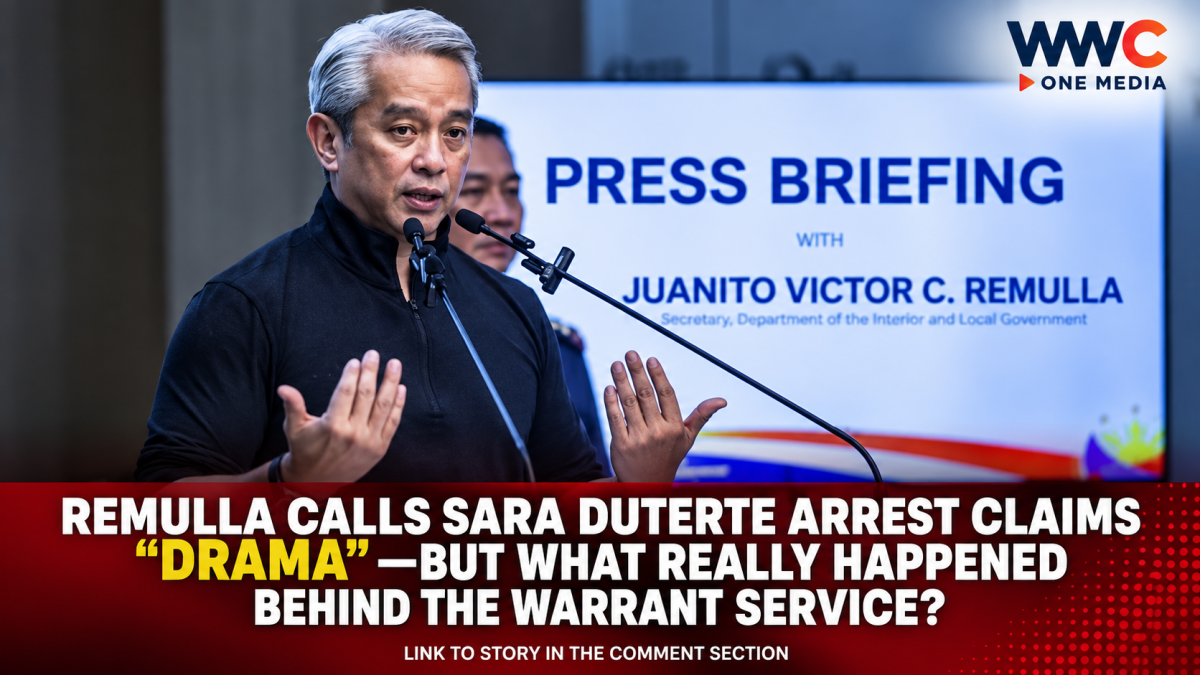
MANILA, Philippines — Interior Secretary Jonvic Remulla is standing by his controversial characterization of Vice President Sara Duterte’s arrest-warrant episode as “drama,” insisting that he was only laying out what authorities say happened during the government’s handling of the case.
Remulla’s remarks came amid a widening political dispute over the September 4 arrest warrant issued against Duterte in connection with three counts of grave threats. The warrant stemmed from her November 2024 remarks about allegedly arranging the killing of President Ferdinand Marcos Jr., First Lady Liza Araneta-Marcos and then-House Speaker Martin Romualdez if she herself were killed. Duterte has denied the allegations against her.
The controversy intensified after Duterte said she did not feel safe and accused authorities of harassment and surveillance while she was being served the warrant.
Remulla, however, rejected the accusation.
At a September 7 briefing at Camp Crame, the Department of the Interior and Local Government chief said authorities did not use an armed tactical team when the warrant was served. He said the police personnel involved were women and were unarmed, arguing that the operation was conducted with consideration for Duterte’s position as vice president.
“There was no SWAT. There was no armed component.”
Remulla also challenged Duterte and her camp to produce CCTV footage that would substantiate allegations of harassment during the service of the warrant.
The “high drama” allegation
One of the most contentious parts of Remulla’s account involved what he said Duterte’s camp initially wanted to happen after authorities coordinated with her security detail.
According to Remulla and Criminal Investigation and Detection Group chief Maj. Gen. Robert Alexander Morico II, Duterte’s camp initially indicated that she wanted to be detained rather than immediately post bail.
Remulla claimed the camp wanted Duterte to be seen in handcuffs and behind bars, describing the scenario as “high drama.” Authorities, he said, declined to accommodate that request and instead opted to follow court procedures while giving the vice president appropriate consideration because of her office.
Morico separately said authorities had been informed that Duterte did not want to post bail and instead wanted to be incarcerated. He said police offered to accommodate her temporarily at the CIDG headquarters because of limitations involving the existing detention facility.
The situation later changed.
Duterte ultimately went to the Quezon City Regional Trial Court Branch 98, where she posted ₱360,000 in bail, or ₱120,000 for each of the three grave-threat charges.
Duterte’s side raises safety concerns
The dispute, however, did not end with the posting of bail.
Duterte had expressed distrust of police authorities and said she did not feel safe in custody. Her concerns came as the government faced criticism over the manner in which the warrant was being implemented.
Remulla maintained that authorities had actually exercised restraint. In an earlier statement, he said the government already knew Duterte’s whereabouts but chose not to forcibly implement the warrant at that point.
The PNP also defended its handling of the situation. Police chief Gen. Jose Melencio Nartatez Jr. said there was no order or effort to harass or surveil Duterte and stressed that police operations involving the vice president should remain lawful, professional and impartial.
A political fight that goes beyond the arrest warrant
The latest confrontation is unfolding against the backdrop of an increasingly bitter Marcos-Duterte political feud.
Duterte faces not only the criminal case involving the grave-threat allegations but also an impeachment case that could have major consequences for her political future. The arrest warrant and subsequent bail proceedings have therefore become another flashpoint in the continuing conflict between the Duterte and Marcos camps.
The case has also drawn international attention because the political dispute involves the country’s sitting vice president and a possible criminal prosecution arising from statements made against the president and other senior officials.
For Remulla, however, the issue is straightforward: authorities say they followed established procedures and gave Duterte the courtesies due to her position.
For Duterte and her allies, the episode raises questions about whether government institutions are being used to pressure the vice president.
And that is where the “drama” controversy becomes more than a war of words—it is now part of the larger political battle surrounding Sara Duterte’s legal and political future.


Leave a Reply