
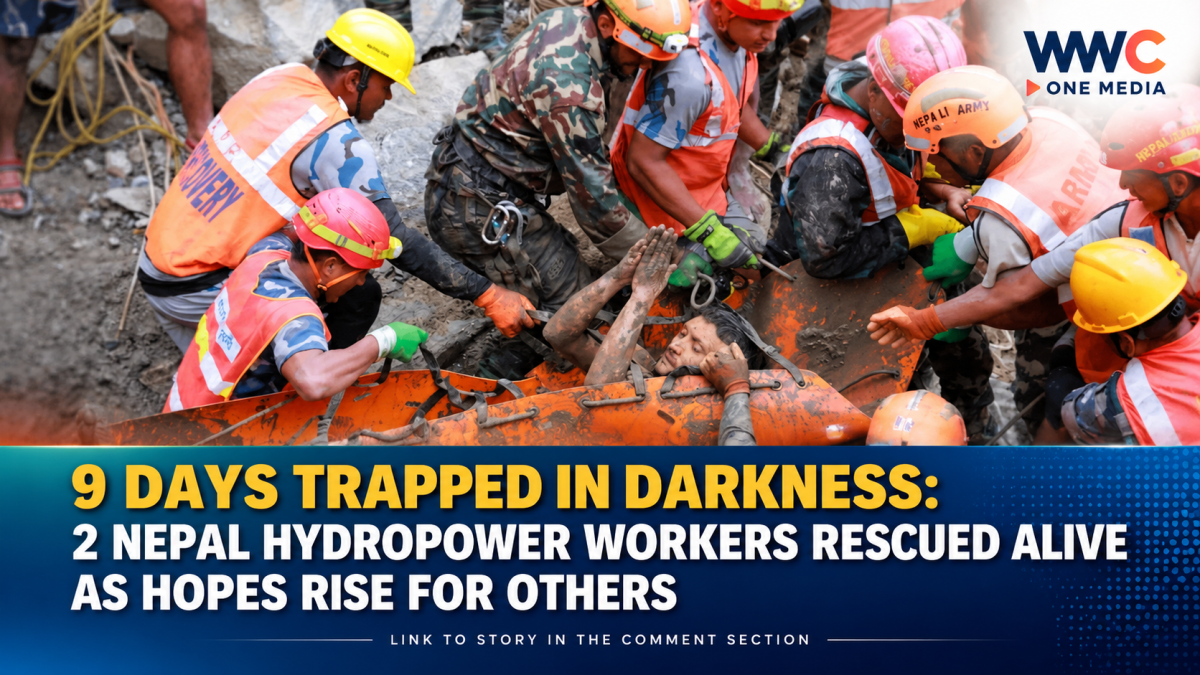
KATHMANDU, Nepal — In a dramatic breakthrough after days of uncertainty, two hydropower workers have been rescued alive from a tunnel in Nepal, nine days after a devastating flood and landslide disaster swept through the Trishuli River valley.
The two men, identified as Sanjay Sah, a mechanical foreman, and Kabir Maharjan, a mechanical supervisor, were pulled from the Upper Trishuli 3A Hydropower Station on Friday, September 4, according to Nepalese officials and reporting by Reuters.
Their rescue has provided a powerful boost to efforts to locate hundreds of other people still missing following the disaster.
Rescuers heard voices inside the tunnel
The breakthrough came as rescue teams worked through enormous amounts of mud, rock and debris blocking the hydropower tunnels.
According to reports, rescuers heard voices coming from inside the tunnel, prompting them to intensify efforts to reach the trapped workers.
The two men were eventually found approximately 170 metres inside the tunnel and brought out alive.
Images from the rescue showed one survivor being carried from the site by rescuers after spending more than a week underground.
The workers were subsequently taken for medical treatment in Kathmandu.
Reuters reported that Sah’s injuries were not considered critical, while Maharjan was reportedly unable to move his hands and legs at the time of rescue.
A disaster that devastated Nepal’s hydropower sector
The rescue comes after an enormous natural disaster struck Nepal’s mountainous northern region on August 26.
A surge of water, ice, rocks and mud swept through valleys near the Nepal-China border after the collapse of a glacier in the upper reaches of the Trishuli River.
The resulting floods and debris devastated communities, damaged roads and bridges and severely affected several hydropower facilities.
More than 1,200 people have been reported dead in the disaster, while thousands remain missing, according to the latest reports cited by Reuters and AP.
The scale of the destruction has made the rescue operation exceptionally difficult, particularly around hydropower projects where tunnels have been buried or blocked by massive quantities of debris.
Hundreds of workers still missing
The rescue of Sah and Maharjan has also renewed attention on the fate of other hydropower workers who remain unaccounted for.
Authorities estimate that around 900 workers from 12 hydropower projects remain missing, with roughly 500 believed to be trapped inside tunnels.
Those figures are estimates and remain subject to change as rescue teams continue identifying survivors and victims.
At the Upper Trishuli 3A project alone, rescuers had been working through thick mud and debris to gain access to underground areas where workers could potentially have survived.
Officials previously expressed hope that people might remain alive in enclosed sections of the tunnels where air and other supplies could have been available.
Why the rescue matters
The survival of two workers after nine days underground is significant because it demonstrates that some people may have survived inside protected sections of the damaged hydropower facilities.
Earlier reports said rescue teams were searching for possible survivors in underground chambers and tunnel sections, while specialist teams from Nepal and other countries were assisting with the operation.
AP reported that rescue teams have been using increasingly sophisticated equipment, including drones, while facing major challenges caused by the narrow, debris-filled tunnels.
At one of the other affected facilities, the Rasuwagadhi hydropower project, officials had previously said they believed dozens of workers could be inside a room-like structure and might have access to food and water.
Rescue operation continues
The successful rescue at Upper Trishuli 3A has therefore brought renewed hope—but officials have not indicated that the wider search is over.
Rescue teams continue to clear blocked tunnel entrances and search underground areas for people who may still be alive.
The operation remains extremely dangerous because of unstable debris, damaged infrastructure and the enormous volume of material deposited by the floods.
For families waiting for news, however, the rescue of two workers after nine days offers a crucial message: survival underground is possible, and the search is continuing.
The coming hours and days could be critical as rescuers push deeper into the damaged hydropower tunnels in the hope of finding more survivors.
WWC ONE MEDIA J.M.D

Leave a Reply