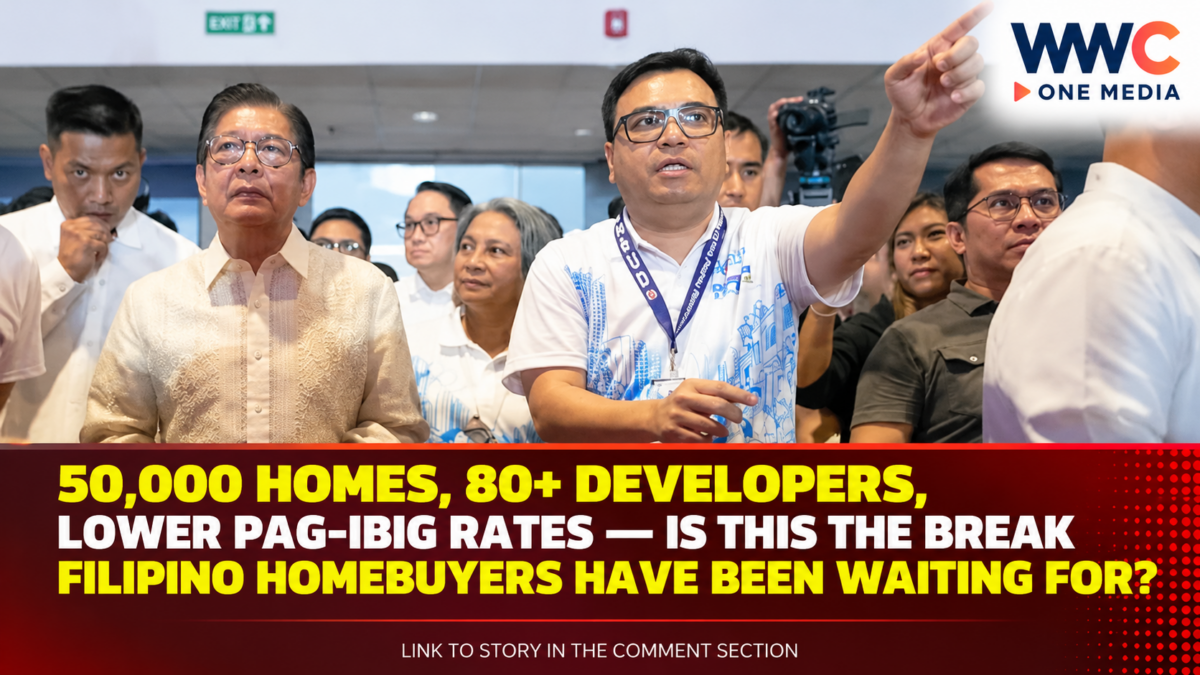
MANILA, Philippines — More than 50,000 housing units were showcased as the country’s biggest-ever National Housing Expo brought together leading property developers, government agencies and prospective homebuyers in a renewed push to make homeownership more accessible to Filipino families.
The two-day event opened on October 19, 2026, at the SMX Convention Center in Pasay City. Organized by the Department of Human Settlements and Urban Development (DHSUD) and Pag-IBIG Fund, the expo featured more than 80 private developers offering ready-for-occupancy homes, condominiums and other housing options under the government’s Expanded Pambansang Pabahay para sa Pilipino (4PH) Program.
The gathering comes as many Filipino households continue to face the challenge of finding homes that match their income, preferred location and ability to manage long-term loan payments.
More than 80 developers offer housing choices
The expo brought together some of the country’s major property companies, including SM Development Corp. (SMDC), Amaia Land, Avida Land, DMCI Homes, Filinvest Land, Megaworld, PH1 World Developers, Robinsons Land and Rockwell Land.
Other participating firms included Megawide Construction Corp. and Federal Land, broadening the selection available to visitors.
Organizers positioned the expo as a one-stop venue where prospective buyers could compare developments, ask questions directly of developers and receive guidance on financing and loan applications.
President Ferdinand Marcos Jr. visited the event during its opening, alongside housing officials led by DHSUD Secretary and Pag-IBIG Fund board chairman Jose Ramon Aliling.
According to the Philippine News Agency, more than 80 developers offered approximately 50,000 housing units at the expo. Pag-IBIG Fund also reported that more than 45,700 home seekers had preregistered for the event.
Pag-IBIG financing offers lower interest rates
One of the expo’s major attractions was access to housing financing options through Pag-IBIG Fund.
For qualified buyers, the financing arrangements included:
- 3% annual interest for eligible socialized housing loans under the applicable program.
- 4.5% annual promotional interest for qualifying housing loans above the applicable socialized housing ceiling and up to ₱4.9 million.
- 5.75% annual promotional interest for qualifying loans above ₱4.9 million and up to ₱10 million.
The 4.5% and 5.75% promotional rates applied to eligible applications submitted from July 1 through December 31, 2026, and were fixed for the first three years of the loan, subject to the program’s terms and conditions.
Lower interest rates can reduce borrowing costs during the promotional period, potentially making monthly payments more manageable. However, a buyer’s actual payment will depend on the loan amount, repayment period, eligibility and applicable financing terms.
Prospective borrowers were encouraged to assess their loanable amounts and repayment capacity before committing to a property.
Foreclosed properties and buyer incentives add options
The expo also featured Pag-IBIG Fund acquired assets, with discounts of up to 30% on winning bid prices for eligible properties.
Participating developers offered special prices and buyer incentives, while solar energy providers and home essentials retailers presented additional products and packages.
These offers gave visitors more opportunities to compare the upfront costs of different properties and consider expenses beyond the purchase price.
For homebuyers, the crucial step is to check the full terms of each offer, including reservation fees, down payments, taxes, association dues, insurance and other charges that may apply.
Expanded 4PH seeks to bring homes within reach
The expo supports the government’s Expanded 4PH Program, which aims to expand access to decent and affordable housing through cooperation between public agencies and private developers.
The program seeks to connect home seekers with available housing projects while making financing assistance more accessible.
Housing officials have emphasized that partnerships with developers are essential to increasing the number of homes available to Filipino workers and families across different income levels.
The participation of major developers also reflects the role of private-sector investment in delivering housing projects, including condominium developments intended to bring residents closer to workplaces and essential services.
Still, the number of units displayed at an expo does not automatically mean every home is affordable or suitable for every applicant. Buyers must check the actual selling price, location, construction status, eligibility requirements and financing conditions of individual projects.
The affordability question remains
Despite the large number of homes presented, the central question for many families is whether they can sustain the cost of owning a property over the long term.
A home loan involves more than the advertised interest rate. Household income, existing debts, transportation costs, utilities, maintenance and other daily expenses all affect a family’s ability to make regular payments.
For workers considering homes farther from their jobs, commuting costs and travel time may also affect the overall value of a property.
Financial advisers generally encourage borrowers to calculate their full housing expenses and maintain enough room in their budgets for emergencies and other essential needs.
A major housing showcase, with results still to come
The National Housing Expo provided a platform for home seekers to explore thousands of options, meet developers and learn about government-backed financing.
Its long-term impact, however, will depend on how many interested families are ultimately able to qualify for loans, complete purchases and move into suitable homes.
For the government and its private-sector partners, the challenge extends beyond showcasing tens of thousands of units. It is making sure that housing supply, financing and household purchasing power come together to help more Filipinos secure homes they can realistically afford.
For aspiring homeowners, the expo may open a door—but careful comparison, loan assessment and a clear understanding of the terms remain essential before signing a housing agreement.