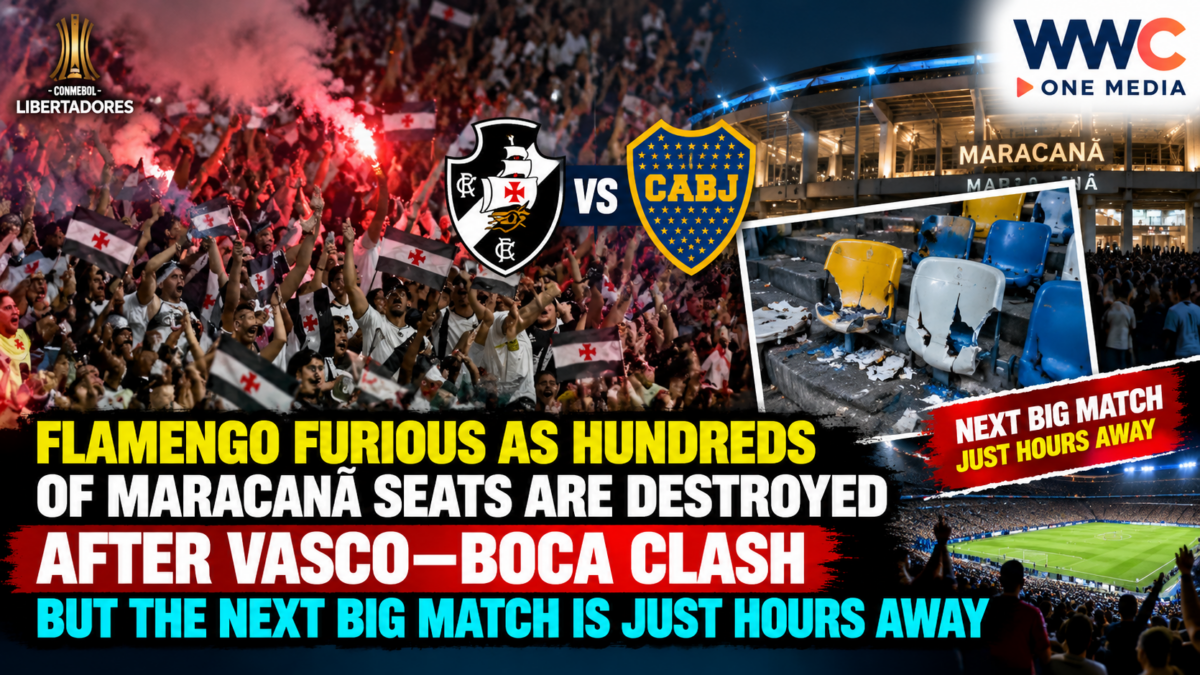
RIO DE JANEIRO, BRAZIL — October 22, 2026 — Brazil’s world-famous Maracanã Stadium has become the center of a major football controversy after extensive vandalism was reported following Vasco da Gama’s crushing 3–1 defeat to Argentina’s Boca Juniors in the Copa Sudamericana semifinals.
Brazilian football giant Flamengo condemned the destruction, revealing that hundreds of stadium seats were damaged and several facilities were vandalized following Tuesday night’s high-stakes encounter.
The incident has sparked renewed concerns about supporter violence, stadium security and the protection of one of football’s most historic venues.
With Flamengo scheduled to host Argentina’s Estudiantes in a sold-out Copa Libertadores fixture just two days after the incident, stadium officials have been racing to repair the damage before another massive crowd arrives.
Hundreds of Seats Destroyed as Stadium Suffers Extensive Damage
According to an official statement released by Flamengo on Wednesday, October 21, the club received a detailed damage report from the Maracanã Consortium, which operates the stadium.
The report identified widespread destruction across several areas of the venue, including:
- Hundreds of damaged or broken stadium seats.
- Vandalized restrooms and bathroom fixtures.
- Damage to bars and concession facilities.
- Destruction affecting access ramps and handrails.
- Damaged signs and other stadium infrastructure.
Brazilian sports outlet ge, part of Globo, provided further details, reporting that the damaged facilities included drinking fountains, toilets, faucets and soap dispensers.
Flamengo blamed a section of supporters present at the match for the destruction.
The club strongly condemned the incident, describing it as unacceptable conduct that showed disregard for the heritage of the legendary football stadium.
However, the reporting did not establish that all Vasco supporters participated or identify every individual responsible.
Boca Juniors’ Victory Ends Vasco’s Copa Sudamericana Dream
The damage followed an emotionally charged Copa Sudamericana semifinal between Vasco da Gama and Boca Juniors on October 20.
Vasco entered the second leg with a narrow advantage after winning the opening encounter 1–0 in Argentina.
But Boca Juniors delivered a decisive comeback at the Maracanã, winning 3–1 to overturn the first-leg deficit and advance to the continental final.
The result ended Vasco’s hopes of winning the tournament and gave Boca an opportunity to pursue another major South American trophy.
Argentine newspaper Buenos Aires Times reported that Leandro Paredes played a pivotal role in Boca’s dramatic victory, scoring a late goal as the Argentine club completed its turnaround.
For Vasco supporters, the defeat was a bitter ending to an important continental campaign.
Yet the aftermath quickly shifted attention away from the football result and toward the scale of destruction discovered inside the stadium.
Flamengo Faces Urgent Race to Repair Maracanã Before Estudiantes Match
For Flamengo, the damage presents a particularly serious logistical challenge.
The club is scheduled to face Estudiantes in the Copa Libertadores on Thursday, October 22, with more than 70,000 supporters expected at the Maracanã.
Flamengo confirmed that tickets for the fixture had sold out.
That left stadium operators with a narrow window to repair damaged seating, restore facilities and ensure the venue could safely accommodate another enormous crowd.
Maintenance and operational teams worked overnight following the Vasco–Boca Juniors encounter.
Flamengo expressed confidence in the professionals handling the repairs and praised their efforts to restore the stadium.
Nevertheless, the incident highlights how destructive conduct by a small section of a crowd can create operational and financial consequences for clubs, stadium staff and thousands of other spectators.
As of the reports reviewed, the final cost of repairs had not been publicly established.
Stadium Dispute Adds Another Layer to the Controversy
The damage also comes against the backdrop of a previous dispute involving the Maracanã’s use for the Vasco–Boca Juniors match.
Before the game, Flamengo and Fluminense-linked stadium management interests had attempted to challenge arrangements for hosting the fixture.
Reports from Brazilian and international football outlets said the matter reached Brazil’s Superior Court of Justice, which did not grant the requested intervention.
The match subsequently proceeded at the Maracanã.
Although the earlier venue dispute and the subsequent vandalism are separate developments, their proximity has intensified scrutiny of stadium management, scheduling and responsibility for the damage.
The incident also raises important questions about how clubs and operators should allocate liability when a stadium is used by competing teams.
Why the Maracanã Matters to World Football
The Maracanã is more than an ordinary football ground.
Located in Rio de Janeiro, it has hosted some of the most memorable moments in the sport’s history, including matches at the 1950 and 2014 FIFA World Cups.
It has also staged major continental finals, historic Brazilian domestic encounters and international sporting events.
Its cultural significance makes the destruction especially troubling.
Damage to the venue affects not only maintenance budgets and match preparations but also the preservation of an important symbol of Brazilian and international football.
Could Clubs or Supporters Face Consequences?
The incident could lead to further questions concerning accountability, compensation and security procedures.
Depending on the findings of stadium operators, police and football authorities, possible follow-up measures could include identifying those responsible, pursuing financial compensation or reviewing matchday security arrangements.
However, no specific disciplinary sanctions, arrests or compensation orders had been confirmed in the sources reviewed for this report.
It would therefore be premature to claim that Vasco, Boca Juniors or individual supporters have already been officially sanctioned for the reported damage.
What Happens Next?
The immediate priority is the condition of the Maracanã ahead of Flamengo’s Copa Libertadores match against Estudiantes.
Stadium authorities must establish whether repairs have restored the affected areas to safe operating conditions.
Beyond the urgent restoration effort, major questions remain over the full financial cost of the damage, who will ultimately be held responsible and whether stadium access and security measures will change.
For Flamengo, the situation is particularly frustrating: the club must prepare for one of its biggest continental matches while dealing with the consequences of an incident following another team’s fixture.
The most pressing question is whether the Maracanã can be fully restored for its next major showdown — and who will eventually pay for the destruction left behind.