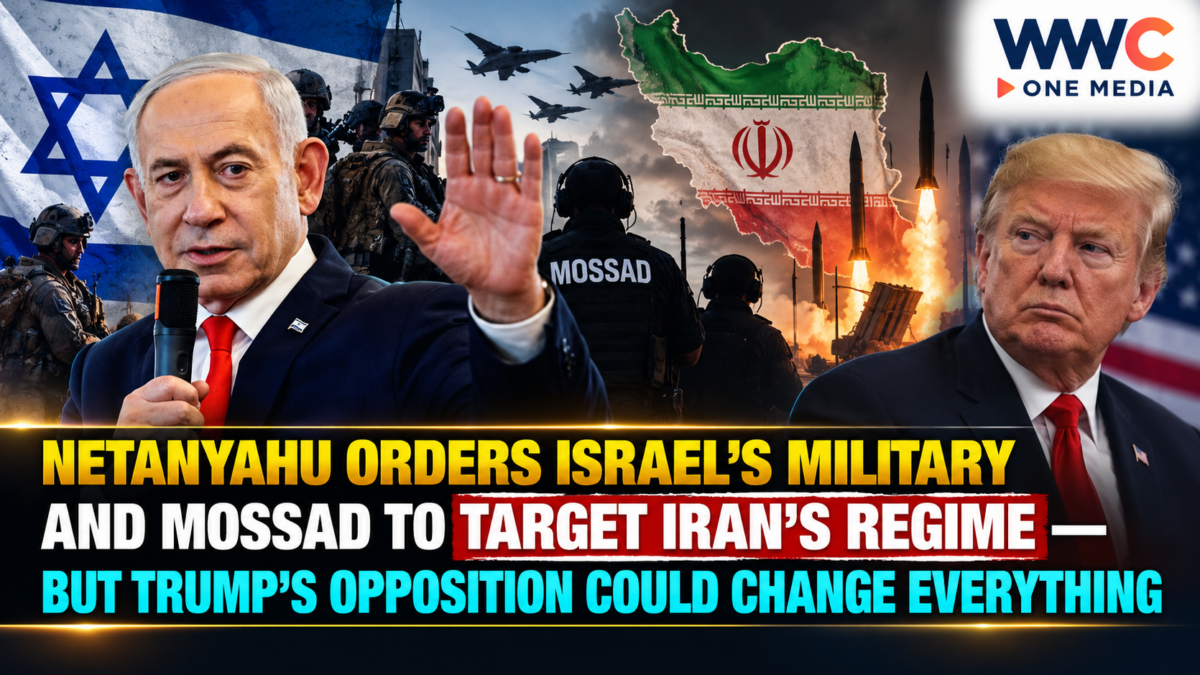
DIMONA, ISRAEL — October 22, 2026 — Israeli Prime Minister Benjamin Netanyahu has delivered one of his strongest warnings against Iran, declaring that removing Tehran’s government is the only way to permanently eliminate what he describes as an existential threat to Israel.
Speaking at an election campaign rally in the southern Israeli city of Dimona on Wednesday, October 21, Netanyahu revealed that he had directed Israel’s military, intelligence agencies and security establishment to pursue the objective of bringing down Iran’s leadership.
The remarks have intensified concerns about another major confrontation in the Middle East, particularly as reports suggest US President Donald Trump has opposed Israeli proposals to resume large-scale attacks against Iran ahead of America’s November midterm elections.
Netanyahu Declares Regime Change the Only Solution
Netanyahu argued that previous military operations had failed to eliminate the long-term danger posed by Iran’s leadership.
He claimed Israel had prevented Iran from achieving its nuclear ambitions, but warned that Tehran remained determined to threaten Israeli security.
“Therefore, there is only one way to end this: by toppling this regime,” Netanyahu told supporters.
He added that the objective had already been communicated to the Israel Defense Forces, Mossad intelligence agency and other security bodies.
However, Netanyahu did not disclose a timetable, operational strategy or specific measures for achieving regime change.
His declaration represents a significant escalation in political rhetoric, moving beyond attacks on Iran’s military and nuclear capabilities toward an explicitly stated objective of removing the government itself.
Trump Reportedly Opposes Renewed Israeli Strikes
The prime minister’s warning comes amid reports of disagreements between Israel and the United States over the timing of another military offensive.
According to an October 21 Financial Times report, Netanyahu instructed Israeli military officials earlier this month to prepare for renewed large-scale strikes against Iran.
Sources indicated that plans for an operation around October 10 did not proceed after Trump objected to a renewed offensive.
The American president has publicly signaled reluctance to restart the war before the US midterm elections in early November.
The disagreement highlights the difficult balance between Israel’s security ambitions and Washington’s political and strategic calculations.
Despite those apparent differences, Netanyahu recently thanked Trump for endorsing him ahead of Israel’s parliamentary election and suggested that the two leaders still had unfinished business concerning Iran.
Israeli Defence Minister Issues Another Warning
Israel’s Defence Minister Israel Katz reinforced the government’s confrontational position during a military graduation ceremony on October 21.
Katz described Iran’s leadership as being at an exceptionally vulnerable point, but warned that weakness could make Tehran more dangerous.
He threatened severe consequences if Iran launched another attack against Israel.
The defence minister also alleged that Iran and its regional allies were attempting to advance attacks that could interfere with Israel’s election.
Those allegations were presented by Israeli officials; independent evidence establishing the alleged election-related plans was not provided in the reports reviewed.
Israeli Election Adds a New Layer of Uncertainty
Netanyahu’s latest comments arrive just days before Israel’s October 27 parliamentary election, placing national security and the confrontation with Iran at the center of the political campaign.
The prime minister is battling to retain power while defending his handling of several years of regional conflict.
Opposition figures, including Gadi Eisenkot and Yair Lapid, have criticized aspects of Netanyahu’s security leadership.
However, a Reuters analysis published October 21 suggests that even a change in Israel’s government might not fundamentally alter the country’s approach toward Iran.
Regional analysts believe Israel’s strategic emphasis on military deterrence, countering Iranian influence and preventing emerging threats has become deeply entrenched.
As a result, the question facing voters may be less about whether Israel should confront Iran and more about how aggressively its next government should pursue that strategy.
Why Another Israel–Iran War Could Affect the World
A renewed conflict between Israel and Iran would have consequences extending far beyond the Middle East.
Iran occupies a strategically important position near the Strait of Hormuz, one of the world’s most critical routes for transporting crude oil and liquefied natural gas.
Any major escalation threatening shipping through the waterway could disrupt global energy supplies, raise insurance and freight costs, and increase volatility in oil markets.
For energy-importing countries across Asia, including the Philippines, higher international oil prices could eventually translate into increased fuel and transportation costs.
A prolonged confrontation could also complicate diplomatic relations among Washington, Gulf governments and other regional powers attempting to contain the conflict.
Nevertheless, higher energy prices or a broader regional war are potential consequences, not confirmed outcomes of Netanyahu’s latest remarks.
Could Israel Actually Overthrow Iran’s Government?
Although Netanyahu has publicly embraced the objective of regime change, achieving it would be considerably more complicated than conducting targeted military strikes.
Iran maintains established political, military and security institutions. Damaging its strategic infrastructure would not necessarily produce a leadership collapse or a stable successor government.
Analysts also warn that foreign military pressure can produce unpredictable results, including political fragmentation, retaliation and prolonged instability.
Whether Washington would support a broader effort to remove Iran’s government remains another major uncertainty.
For now, Netanyahu has announced his objective, but neither a confirmed operational timetable nor an imminent invasion has been established by the reporting.
What Happens Next?
With Israel’s parliamentary election scheduled for October 27 and the US midterm elections approaching in November, political developments in both countries could influence the timing and scale of future military decisions.
Three major uncertainties remain: whether Israel will carry out renewed attacks, whether Trump will continue resisting another offensive, and how Iran might respond to Netanyahu’s increasingly explicit threats.
The central question is no longer simply whether Israel considers Iran a threat. It is whether Netanyahu will attempt to turn his promise of regime change into military action — and whether Washington will support or oppose that decision.