
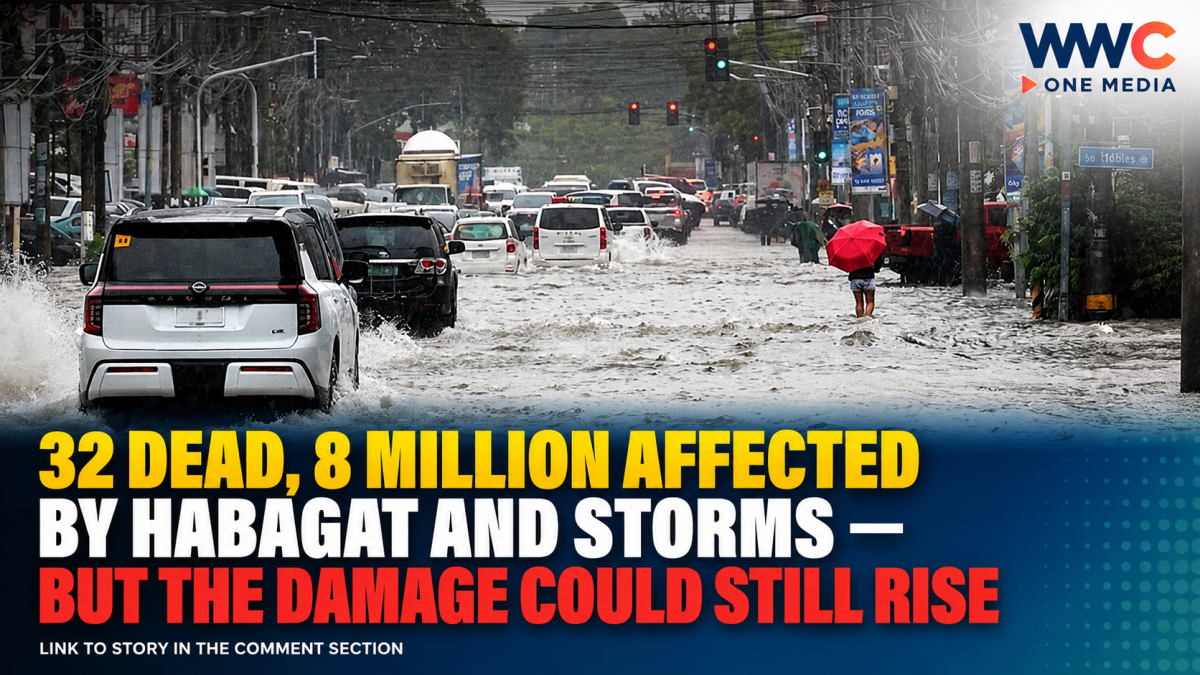
MANILA, Philippines — The combined effects of the Southwest Monsoon or Habagat and tropical cyclones Luis, Maymay and Neneng have left at least 32 people dead and around 8 million others affected across the Philippines, according to the latest situation report from the Office of Civil Defense (OCD).
The figures highlight the growing scale of the weather crisis, with flooding, landslides, rockslides, drowning incidents and electrocution reported in several provinces and cities.
According to the OCD report cited by GMA News, the affected population is equivalent to about 2.3 million families nationwide. At least 25,800 people remain in evacuation centers as authorities continue responding to communities hit by the prolonged rains.
32 reported deaths across several areas
The fatalities have been recorded in multiple parts of the country.
Benguet recorded the highest number, with 15 deaths attributed to landslides. Other reported fatalities involved drowning, rockslides, falling trees, landslides and electrocution.
Among the areas with reported deaths were:
- Benguet — 15, mainly due to landslides
- La Union — 1, drowning
- Rizal — 4, involving rockslide, falling tree and drowning incidents
- Batangas — 4, involving drowning, electrocution and landslides
- Quezon — 1, drowning
- Oriental Mindoro — 1
- Occidental Mindoro — 2
- Negros Occidental — 1, drowning
- Caloocan — 2, drowning
The OCD continues to validate disaster-related reports, meaning casualty figures can still change as assessments are completed.
Billions of pesos in damage
The human toll has been accompanied by substantial damage to homes, infrastructure and agriculture.
The OCD estimated ₱6.11 billion in infrastructure damage, while agricultural losses have reached approximately ₱2.32 billion.
Nearly 3,000 houses have also been damaged, including 349 that were completely destroyed.
With the infrastructure and agricultural figures alone reaching roughly ₱8.43 billion, the economic impact of the prolonged weather disturbance is already significant.
117 areas declare state of calamity
The scale of the disaster has prompted 117 local government units to declare a state of calamity, according to the OCD.
The national government has meanwhile released approximately ₱1.65 billion in assistance as authorities continue relief and response operations.
The latest figures come after the number of people affected had already climbed into the millions earlier in the month. Previous OCD reports showed the affected population rising steadily as Habagat rains combined with tropical disturbances, underscoring how prolonged rainfall can magnify flooding and landslide risks.
Why Habagat has become a major threat
Unlike a tropical cyclone, Habagat is a seasonal southwest monsoon that can produce prolonged periods of heavy rain, particularly when atmospheric conditions and nearby weather disturbances enhance the monsoon flow.
In this case, the monsoon was strengthened amid the presence of a low-pressure area in the Philippine Area of Responsibility, contributing to widespread rainfall and flooding.
The continuing combination of saturated ground, swollen waterways and additional rainfall has also increased the risk of landslides and other rain-induced disasters in vulnerable communities.
Reports from the Philippine Daily Inquirer likewise placed the latest disaster toll at 32 deaths and more than 8 million people affected, reinforcing the scale of the crisis reflected in the OCD figures.
The danger may not be over
For communities already hit by flooding and landslides, the biggest concern is whether additional rainfall could worsen existing conditions.
Authorities continue to urge residents in vulnerable areas to monitor official weather and disaster advisories, especially those living near rivers, steep slopes and other landslide-prone locations.
For now, the numbers tell a sobering story: 32 reported deaths, around 8 million people affected, tens of thousands displaced, thousands of homes damaged and more than ₱8 billion in reported infrastructure and agricultural losses.
And with the rainy season still capable of producing additional weather disturbances, disaster officials face the difficult task of preventing an already severe crisis from becoming even worse.



Leave a Reply