
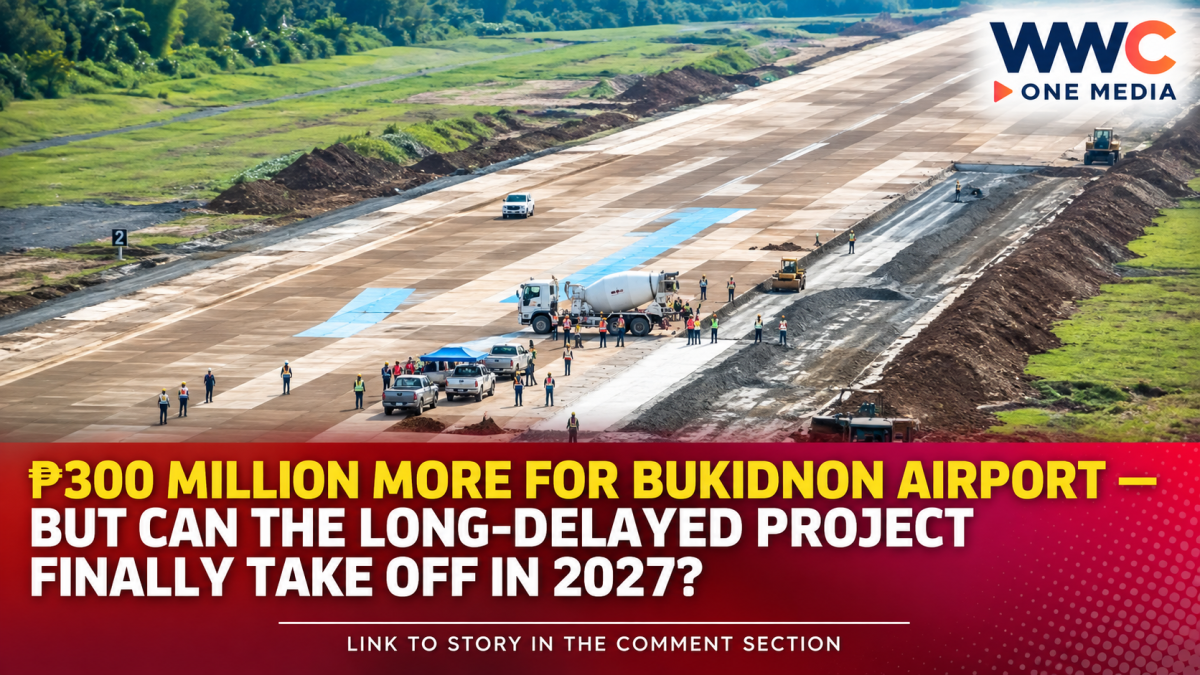
MANILA, Philippines — The Marcos administration is seeking an additional ₱300 million under the proposed 2027 national budget to push the long-awaited Bukidnon Airport toward completion and operation next year, as the government looks to turn the project into a major gateway for travel, trade and investment in Northern Mindanao.
The proposed funding was disclosed after Executive Secretary Ralph Recto inspected the ongoing airport construction in Barangay Maraymaray, Don Carlos, Bukidnon, on September 4.
Recto said President Ferdinand Marcos Jr. has directed the government to complete the airport and put it into operation by 2027.
But the ₱300-million figure is important to clarify: it is a proposed allocation under the 2027 national budget, not yet an approved or released amount. If approved, it would increase the Marcos administration’s funding for the project to approximately ₱1.66 billion, from ₱1.36 billion allocated since 2022. Total government funding for the airport has reached about ₱3.17 billion, according to the Office of the Executive Secretary as reported by the Philippine News Agency.
A major airport project for Mindanao
The Bukidnon Airport is being built in Don Carlos, with the government positioning it as more than simply another provincial airport.
Officials say the facility could improve connections between Bukidnon and other parts of the Philippines while making it easier for agricultural products to reach wider markets.
Bukidnon is a major producer of pineapples, bananas, corn, coffee, sugar and livestock, and improved air connectivity could potentially give businesses another transportation option for reaching customers and markets.
Recto said the airport is expected to help bring Bukidnon and the rest of Mindanao closer to major economic and tourism centers.
Bigger aircraft could mean more flights
One of the project’s major selling points is its ability to accommodate larger commercial aircraft.
The airport is designed with a 2,100-meter-long and 45-meter-wide runway, two stub taxiways and a 43,050-square-meter apron capable of accommodating six aircraft. Its passenger terminal is planned at approximately 3,600 square meters, with capacity for up to 425 passengers.
The runway is designed to accommodate aircraft such as the Airbus A320, a common aircraft type for domestic commercial operations.
The government hopes that the airport’s ability to handle larger aircraft will help attract additional airlines and routes.
More airlines and flights could, in turn, create greater competition and potentially help bring down fares — although actual ticket prices will ultimately depend on airline decisions, passenger demand, operating costs and route economics.
From farm products to tourism
The economic argument behind the project extends beyond passengers.
Bukidnon’s agricultural industry is one of the areas officials expect to benefit from better transportation links.
Faster and more convenient connections could help businesses move products and connect with markets outside the province, while improved access could also support tourism and investment.
The government is also framing the airport as a jobs and investment catalyst.
Recto said the administration wants the facility operating by 2027 so it can begin creating jobs, attracting investments and bringing more tourists to Bukidnon.
The project has been receiving government funding for years
The latest proposed ₱300-million allocation is not the first major government investment in the airport.
Under the Marcos administration, the project received ₱1 billion in 2022, followed by ₱310 million in 2024 and ₱50 million in 2025, according to the Office of the Executive Secretary.
Earlier government budget documents also show that Bukidnon Airport has been part of the national government’s broader effort to develop regional aviation infrastructure. The Department of Budget and Management listed ₱120 million for Bukidnon Airport under the DOTr’s 2024 aviation infrastructure program.
The project’s scale and funding have evolved over time as construction and development phases progressed.
A crucial 2027 deadline
The latest push puts the spotlight squarely on 2027.
Earlier reporting from the Mindanao Times indicated that the Department of Transportation had been targeting commercial turboprop operations before moving toward jet operations, underscoring the government’s effort to bring the facility online in stages.
The current administration, however, is now publicly emphasizing completion and operation of the airport by next year.
That makes the proposed ₱300-million allocation potentially critical to finishing the remaining work and getting the facility ready for commercial service.
Zubiri joins inspection
Recto was joined during the September 4 inspection by Senator Juan Miguel Zubiri, who has longstanding ties to Bukidnon.
The inspection comes as the government seeks to accelerate the project and ensure that the additional funding, if approved, supports the 2027 completion target.
What comes next?
The biggest immediate hurdle is funding.
The ₱300 million remains part of the proposed 2027 national budget, meaning it still has to go through the budget process before it becomes an actual appropriation available for the project.
If the allocation is approved and construction stays on schedule, Bukidnon could be much closer to having a modern airport capable of handling larger commercial aircraft and connecting the province more directly with major Philippine destinations.
For travelers, farmers, businesses and tourism operators, however, the real test will come after construction: Can the new airport attract enough airlines, passengers and cargo activity to deliver the economic transformation officials are promising?
That may ultimately determine whether Bukidnon’s long-awaited airport becomes simply another infrastructure project — or a genuine new gateway for Mindanao.
WWC ONE MEDIA M.J.E




Leave a Reply