
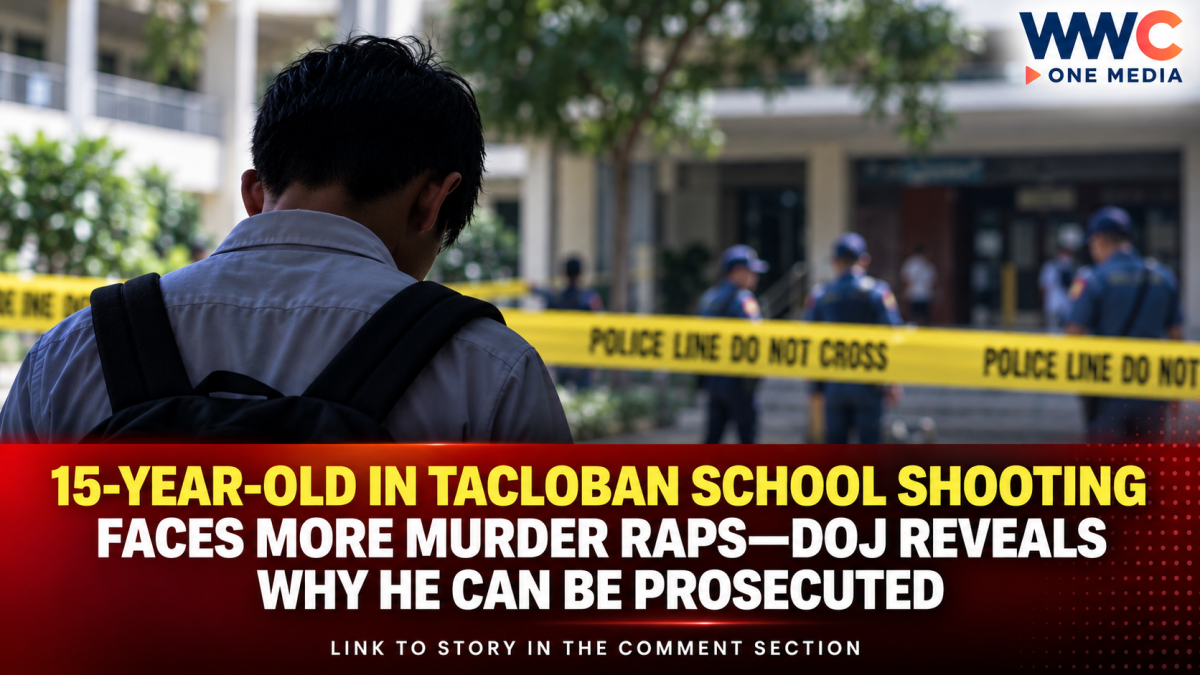
TACLOBAN CITY, Philippines — The 15-year-old student accused in the deadly shooting at San Jose National High School in Tacloban City is facing additional criminal charges after prosecutors found that he allegedly acted with “discernment” when the June 22 attack was carried out.
The Department of Justice (DOJ) said Tacloban City prosecutors have moved to pursue additional cases against the teenager, including frustrated murder and attempted murder charges, following their review of the evidence surrounding one of the country’s most shocking school violence incidents this year.
The deadly shooting left three students dead and around 20 others injured, sending shockwaves through Tacloban and raising urgent questions about school security, gun access, juvenile accountability and the possible influence of online communities on young people.
DOJ: Teen Allegedly Knew Right From Wrong
Justice Undersecretary Ian Norman Dato said prosecutors determined that the 15-year-old allegedly acted with discernment and in conspiracy with another minor.
Under the Philippines’ Juvenile Justice and Welfare Act, the issue of discernment is crucial in determining whether a child above 15 but below 18 may be held criminally liable.
In simple terms, authorities assess whether the minor was capable of understanding the nature and consequences of the alleged act and distinguishing between right and wrong.
The DOJ’s finding means the 15-year-old may face criminal proceedings despite being a minor, subject to the special procedures and protections provided under Philippine juvenile justice laws.
More Cases on Top of Earlier Murder Charges
The latest development comes on top of earlier murder-related cases filed against the 15-year-old in connection with the June 22 shooting inside San Jose National High School.
Recent reports from the Philippine Daily Inquirer, Philstar.com, GMA News and OneNews said prosecutors have pursued additional frustrated murder and attempted murder cases based on the other victims of the attack.
The cases are expected to proceed before the appropriate court handling the matter in Tacloban, with the DOJ emphasizing that the teenager’s age does not automatically remove the possibility of criminal liability when discernment is established.
What About the 14-Year-Old Suspect?
The second suspect, who is 14 years old, faces a different legal process.
Under the Juvenile Justice and Welfare Act, children aged 15 and below are generally exempt from criminal liability and are instead subject to intervention and rehabilitation mechanisms.
DOJ officials have said the younger suspect will undergo intervention through the juvenile justice and social welfare system rather than the regular criminal process. Both minors have been placed under government-supervised care and rehabilitation programs.
Police Officer’s Aunt Also Faces Charges
The case has also expanded beyond the two teenage suspects.
Authorities previously recommended charges against the aunt of the 14-year-old suspect, a police officer whose government-issued firearm was allegedly accessed and used during the school shooting.
She faces allegations related to reckless imprudence resulting in multiple homicide and physical injuries, while administrative proceedings have also been pursued separately.
School Safety Now Under National Spotlight
The Tacloban tragedy has intensified the national conversation on school safety.
The Philippines recently conducted broader school safety and emergency preparedness drills following recent shooting incidents, with authorities emphasizing lockdown procedures, coordination with law enforcement, evacuation, first aid and psychosocial support for students and teachers.
Investigators have also previously examined whether online influences or possible outside actors may have played a role in radicalizing or encouraging violence among young people. However, those aspects remain subject to continuing investigation and should not be treated as established fact unless confirmed by authorities.
A Case That Could Shape the Debate on Juvenile Justice
The Tacloban school shooting is now becoming more than just a criminal case.
It has reopened difficult questions about how far the law should go in holding minors accountable, how firearms are stored and accessed, whether schools are adequately prepared for violent threats, and how online spaces may influence vulnerable young people.
For the families of the victims, the latest charges represent another step in the search for accountability.
But as the case moves through the justice system, one question remains at the center of the national debate:
Can the Philippine legal system deliver justice for the victims while still following the special protections guaranteed to children in conflict with the law?
WWC ONE MEDIA J.M.S



Leave a Reply