
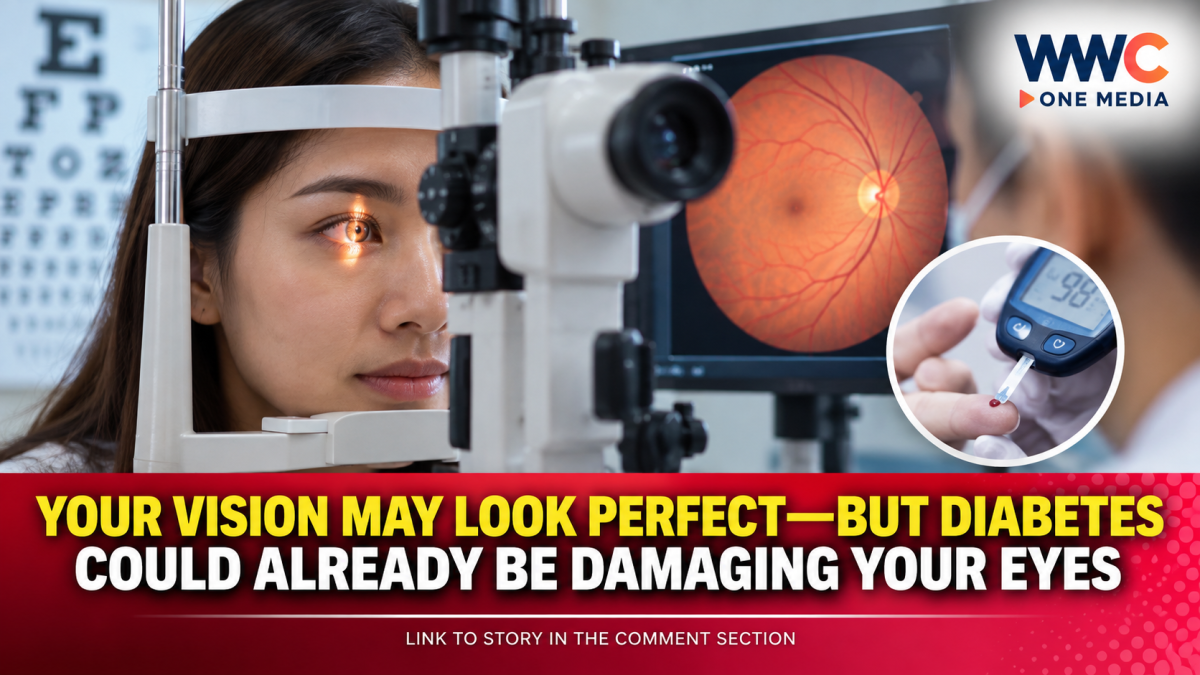
ILOILO CITY — People living with diabetes are being urged not to wait for blurred vision or other eye problems before getting checked, as diabetic retinopathy can develop and worsen without noticeable symptoms in its early stages.
Ophthalmologists at the Western Visayas Medical Center (WVMC) are emphasizing the importance of early eye screening after the hospital recorded 726 consultations for diabetic retinopathy over an 18-month period—559 in 2025 and another 167 from January through June 2026.
The warning is particularly important because the absence of symptoms does not necessarily mean the eyes are healthy.
According to WVMC Department of Ophthalmology head Dr. Mary Katherine Francia, diabetes can gradually damage the tiny blood vessels supplying the retina—the light-sensitive tissue at the back of the eye—even while a patient still has apparently normal vision.
THE DANGEROUS PART: YOU MAY NOT FEEL ANYTHING
Diabetic retinopathy occurs when prolonged high blood sugar damages retinal blood vessels.
In its early stages, the condition can produce little or no noticeable change in vision. As damage progresses, however, blood vessels can leak fluid or blood, potentially affecting the macula and eventually causing significant vision loss.
Possible warning signs include:
- Blurred or distorted vision
- Dark spots or strings, commonly called floaters
- Flashes of light
- Changes in color vision
- Dark or empty areas in the field of vision
- Partial or severe vision loss
But doctors stress that waiting for these symptoms is precisely the problem.
By the time vision noticeably deteriorates, retinal damage may already be advanced.
TYPE 2 DIABETES? DON’T WAIT FOR YOUR EYES TO WARN YOU
The American Diabetes Association’s 2026 Standards of Care recommends that people with type 2 diabetes receive a comprehensive, dilated eye examination at the time of diagnosis. For adults with type 1 diabetes, the initial comprehensive eye examination is generally recommended within five years after diabetes begins.
The screening schedule afterward depends on the patient’s eye findings, blood-sugar control and other risk factors.
If no retinopathy is found and diabetes is well controlled, the ADA says screening every one to two years may be considered. If retinopathy is present, examinations should generally occur at least annually, with more frequent monitoring when the disease is progressing or threatens sight.
The World Health Organization likewise recommends screening for diabetic retinopathy together with prompt treatment when necessary to help prevent vision impairment and blindness.
HIGH BLOOD SUGAR ISN’T THE ONLY FACTOR
Managing diabetes is not simply about checking glucose.
The CDC identifies high blood pressure and high cholesterol, in addition to high blood sugar, as factors that can increase the risk of diabetic eye complications.
That means diabetes management should involve a broader approach—including appropriate blood-sugar control, blood-pressure management, cholesterol management, prescribed medications and regular medical follow-up.
Dr. Francia also emphasized that controlling blood sugar can significantly slow the progression of diabetic retinopathy.
WHEN DAMAGE BECOMES SERIOUS
As diabetic retinopathy advances, abnormal and fragile blood vessels can develop and bleed.
Significant bleeding into the vitreous—the gel-like substance inside the eye—can cause sudden darkening or severe clouding of vision. Advanced disease can also involve diabetic macular edema, in which fluid accumulation affects the macula, the area responsible for detailed central vision.
Treatment depends on the severity and type of disease and can include laser treatment, injections and, in advanced cases, vitrectomy surgery. Early detection is important because treatment can prevent or reduce further vision loss, although advanced retinal damage cannot always be completely reversed.
THE MESSAGE FROM DOCTORS IS SIMPLE
For people with diabetes, clear vision should not be treated as proof that the retina is healthy.
A comprehensive eye examination can detect changes that a person cannot see or feel yet. The earlier those changes are identified, the greater the opportunity for doctors to monitor the condition and intervene before serious vision loss occurs.
So if you have diabetes, don’t wait for your eyesight to become blurry before making an appointment.
The damage may already be happening long before you notice it.



Leave a Reply