
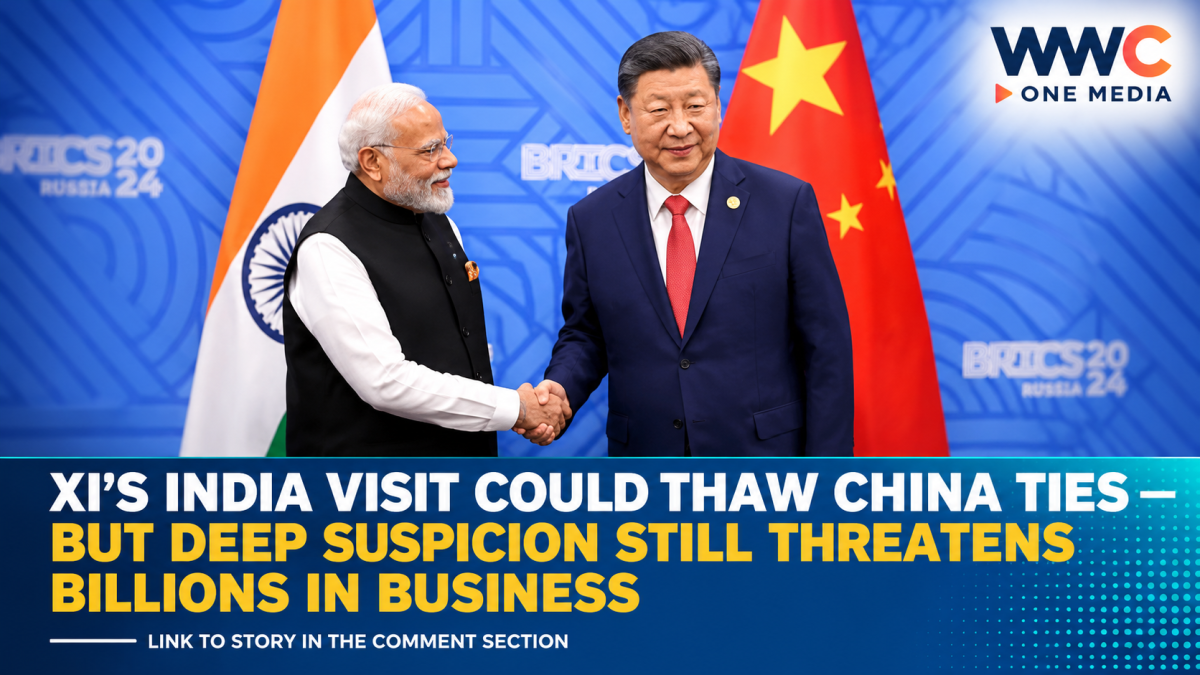
NEW DELHI/BEIJING — Chinese President Xi Jinping’s upcoming visit to India could mark the most significant diplomatic breakthrough between Asia’s two biggest powers in years, but a thaw in political relations may not be enough to unlock the full potential of their massive business relationship.
Xi is expected to visit India for the BRICS summit — his first trip to the country in seven years — as Beijing and New Delhi cautiously attempt to rebuild relations damaged by years of border tensions, economic restrictions and growing strategic rivalry.
The problem is that while diplomacy may be warming up, business remains trapped in a web of suspicion, security concerns and regulatory barriers. (Reuters)
A Historic Opportunity for Xi and Modi
A face-to-face meeting between Xi and Indian Prime Minister Narendra Modi could help accelerate a diplomatic reset between the world’s two most populous countries.
Relations have shown signs of improvement after years of hostility, with both governments taking steps toward greater engagement. Trade between China and India reached a record US$155 billion last year and reportedly rose another 23% in the first seven months of this year, highlighting the extraordinary economic relationship that continues despite political tensions. (Financial Times)
But the relationship remains deeply complicated.
The deadly border clash in 2020 shattered trust and triggered a wave of restrictions on Chinese investment and businesses in India. While some barriers have since been eased, the legacy of that confrontation continues to shape government decisions and corporate investment. (Reuters)
Trade Is Growing — But Chinese Investment Faces a Wall
China remains a major supplier of industrial goods, electronics, machinery and other critical products to India.
Yet Chinese companies hoping to invest directly in India continue to face intense scrutiny.
Major Chinese firms including BYD and Great Wall Motor have reportedly abandoned or withdrawn planned investments amid heightened regulatory and security concerns. Other Chinese-linked proposals have also faced delays or rejection. (Reuters)
The message to Beijing is increasingly clear:
India wants Chinese goods — but remains far more cautious about Chinese capital, technology and influence.
That distinction could become one of the biggest obstacles to improving commercial relations.
India Blocks Alipay+ Link Over Security Concerns
One recent example shows how deep the distrust remains.
India has reportedly stalled a proposal to link its Unified Payments Interface, or UPI, with Alipay+, citing concerns related to national security, customer data, money laundering and cyber fraud.
The proposed connection could have made cross-border payments easier for Indian travelers and eventually foreign visitors.
But the China-linked nature of the business raised concerns among Indian authorities, demonstrating how even potentially beneficial commercial projects remain vulnerable to geopolitical suspicion. (Reuters)
Xiaomi Now Faces Fresh Scrutiny
The pressure on Chinese businesses has also intensified in other areas.
India’s Serious Fraud Investigation Office has recommended a detailed investigation into smartphone giant Xiaomi’s operations, including possible foreign investment law violations and corporate fraud concerns.
Xiaomi has said it complies with Indian laws and reported that it had not received formal communication regarding the recommendation.
Still, the timing is politically significant.
The latest scrutiny comes just as Xi prepares for a potentially important diplomatic engagement with India, underlining the gap between improving political dialogue and unresolved business tensions. (Reuters)
China Also Has Its Own Concerns
The distrust is not flowing in only one direction.
Beijing has reportedly placed restrictions on the sharing of some critical technologies with India, while Chinese officials remain cautious about India’s efforts to build itself into a major manufacturing rival.
India’s ambition to become an alternative global production hub could increasingly put it into direct competition with China for investment, supply chains and technology leadership.
That creates a difficult reality.
China and India need each other economically — but they are also competing for the same global factories, capital and strategic influence. (Reuters)
A Diplomatic Thaw Is Already Underway
Despite the tensions, both countries have taken steps toward normalization.
Diplomatic engagement has increased, while border-related discussions have continued. India and China also recently held their first Corps Commander-level talks in the eastern sector, with India’s foreign ministry saying relations were gradually moving in a positive direction. (The Times of India)
The improvements have created cautious optimism that the two Asian giants may be moving away from confrontation.
But analysts warn that a diplomatic handshake does not automatically rebuild trust.
The border remains a sensitive issue.
Security concerns remain unresolved.
And both countries continue to view the other’s growing geopolitical influence with caution.
Xi and Modi Could Change the Tone — Not the Reality
That is why Xi’s visit could be important even if it does not produce dramatic new trade agreements.
Simply bringing Xi and Modi together could help establish new political guardrails and prevent future tensions from spiraling out of control.
For businesses, that alone could matter.
A more stable relationship could eventually encourage investment, improve visa procedures, reduce supply disruptions and make cross-border commerce easier.
But expectations for an immediate business breakthrough should remain cautious.
The political ice may be melting — but the economic distrust beneath it is still frozen solid.
The World Is Watching the Two Asian Giants
The stakes extend far beyond China and India.
Together, the two countries represent nearly 2.8 billion people and are central to global manufacturing, trade, technology and energy markets.
Their relationship could also influence the future balance of power in Asia.
China is seeking to strengthen regional partnerships as geopolitical competition intensifies, while India continues expanding its strategic relationships with the United States, Europe, Japan and other partners.
That makes the Xi-Modi relationship one of the most important — and unpredictable — relationships in global politics.
A stronger China-India relationship could reshape Asian trade.
A new breakdown could disrupt supply chains and deepen geopolitical divisions.
The Bottom Line
Xi Jinping’s upcoming India visit could help deliver the biggest diplomatic thaw between China and India in years — but rebuilding trust in business may take much longer.
Trade is booming, diplomatic contacts are increasing and both governments appear interested in preventing another major confrontation.
Yet Chinese companies still face heavy scrutiny in India, investment proposals remain vulnerable to security concerns, and disputes over technology, data and strategic influence continue to cast a shadow over the relationship. (Reuters)
Xi and Modi may be ready to shake hands again. But the real test will come after the cameras are gone: can the world’s two biggest populations turn diplomatic goodwill into business trust — or will suspicion remain the invisible border neither side can cross?
WWC ONE MEDIA J.M.D

Leave a Reply