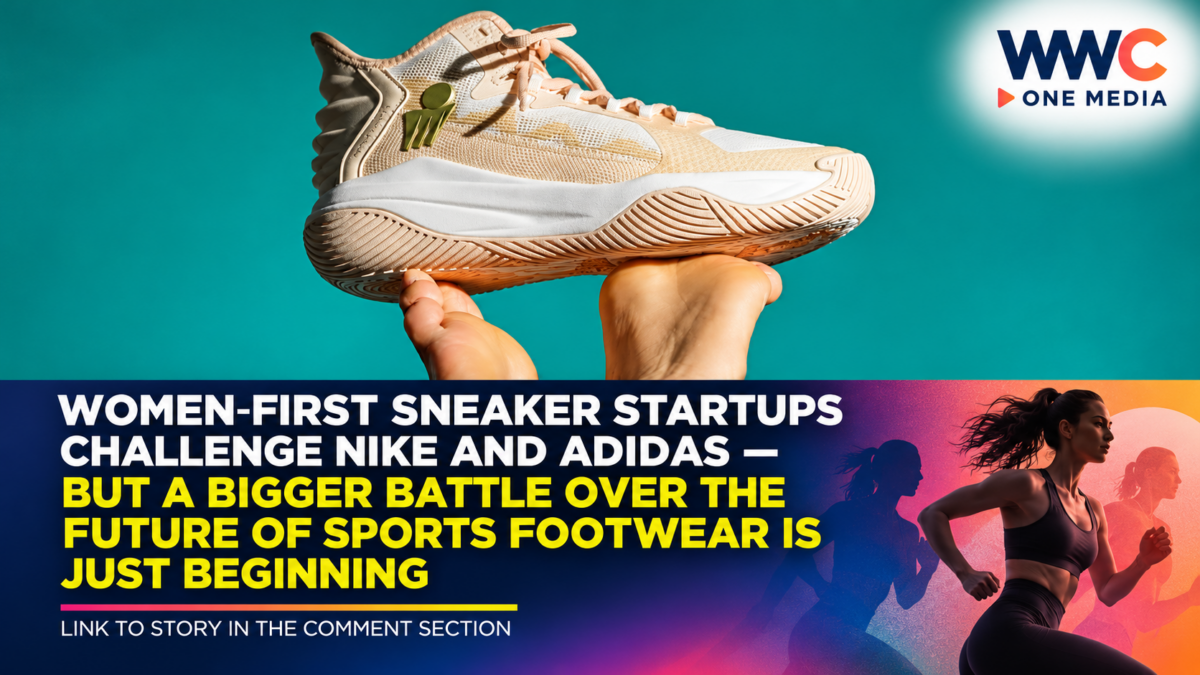
NEW YORK — October 14, 2026 — A growing wave of women-focused athletic footwear startups is challenging global sportswear giants Nike and Adidas, betting that a more personalized approach to performance, comfort and fit can win over female athletes in one of the world’s most competitive consumer industries.
From basketball courts to soccer fields and running tracks, emerging brands are questioning traditional athletic shoe development and creating products around the needs of women rather than adapting existing designs for men.
Companies including Moolah Kicks, IDA Sports, Saysh and Hettas are gaining attention as participation and commercial investment in women’s sports continue to grow.
Their rise is creating a new competitive battleground for an industry long dominated by companies with enormous marketing budgets, global distribution networks and high-profile athlete endorsements.
But the challenge extends beyond selling fashionable sneakers.
These startups are arguing that better footwear begins with a more detailed understanding of athletes, including differences in foot shape, individual fit preferences, sport-specific movements and changing physical needs.
For Nike and Adidas, the trend raises an important question.
Can the industry’s biggest brands defend their dominance while smaller competitors seek to redefine what performance footwear should look and feel like for women?
The Startups Challenging the Sportswear Giants
The women’s athletic footwear market has traditionally been dominated by large brands with extensive product portfolios covering both men and women.
Yet smaller competitors argue that female athletes have not always received the same level of specialized attention in product development.
That perceived gap has created opportunities for a new category of women-first businesses.
Moolah Kicks develops basketball shoes specifically for women and girls.
IDA Sports specializes in soccer cleats designed around feedback from female players.
Saysh, co-founded by Olympic champion Allyson Felix, offers footwear and customer policies developed around women’s experiences.
Hettas focuses on women’s performance running shoes.
The companies serve different sports, but their business strategies share a common principle: design for the intended athlete from the beginning.
That approach differs from simply offering a smaller size or a new colorway of an existing model.
For consumers, the potential benefits include a wider range of fit options, different performance characteristics and products developed for specific activities.
However, the effectiveness of any individual shoe ultimately depends on the athlete and the product’s actual performance.
Moolah Kicks Takes on the Women’s Basketball Market
One of the most prominent challengers is Moolah Kicks, founded in 2020 by former college basketball player Natalie White.
White identified a commercial opportunity after observing that many female basketball players continued wearing shoes originally designed and marketed for men.
The company developed its products using feedback from women basketball players and consultations with footwear specialists.
Its designs emphasize fit and stability during basketball movements such as jumping, cutting, turning and accelerating.
Moolah Kicks has expanded into major American sporting goods retail channels.
Reporting by The Information previously placed its distribution at more than 600 Dick’s Sporting Goods locations.
The company has also developed relationships with professional and college basketball athletes.
Those partnerships provide opportunities to test products and build brand recognition in a market traditionally influenced by major footwear endorsement contracts.
Investor Mark Cuban has supported Moolah Kicks, reflecting interest in its specialized approach.
However, the startup remains far smaller than Nike or Adidas.
Its presence in national retail chains demonstrates commercial progress but does not establish that it is close to overtaking either company in overall sales.
A New Generation of Female Basketball Stars Strengthens the Market
The commercial growth of women’s basketball is providing footwear companies with new opportunities.
Rising audiences, prominent athletes and greater investment in the sport have increased demand for women’s basketball merchandise.
The WNBA has become an increasingly important platform for product launches and endorsements.
Athletes such as Sabrina Ionescu and Caitlin Clark have helped bring greater attention to signature basketball footwear.
But the major sportswear brands are not standing still.
Nike has established a successful signature-shoe business around Ionescu, whose footwear is worn by both male and female basketball players.
In October 2026, the rapid sellout of a Caitlin Clark signature shoe highlighted the strong commercial interest surrounding women’s basketball.
These developments demonstrate that female athletes can play a central role in driving footwear sales.
They also reveal a distinction between competing strategies.
Some large brands market signature shoes across genders, while smaller women-first brands emphasize products designed specifically around female fit preferences and sports participation.
Neither approach is automatically superior for every athlete.
The competition will increasingly be decided by fit, performance, price and consumer loyalty.
IDA Sports Wants to Change Women’s Soccer Footwear
IDA Sports was founded after Laura Youngson became frustrated by the limited availability of soccer boots designed specifically for women.
Youngson’s interest developed after participating in a high-altitude soccer initiative and observing the discomfort experienced by female players using footwear developed around men’s or boys’ sizing.
Together with co-founder Ben Sandhu, she began developing soccer cleats with women’s feedback at the center of the design process.
IDA’s products incorporate features such as different heel proportions, toe-box dimensions and stud configurations.
The company’s goal is to provide players with boots better suited to their individual fit needs and the demands of soccer.
The rise of professional women’s soccer has strengthened the relevance of these efforts.
Women’s leagues are attracting greater commercial investment, while players and teams increasingly seek equipment designed for high-level performance.
However, footwear design alone cannot eliminate the risk of sports injuries.
Factors such as training, strength, playing surfaces, previous injuries and athlete-specific biomechanics also influence safety.
Claims that particular footwear can prevent injuries require rigorous evidence rather than marketing alone.
Allyson Felix’s Saysh Turns Athlete Experience Into a Business
Saysh represents another approach to disrupting the footwear industry.
The company was co-founded by American track and field star Allyson Felix following her widely publicized dispute with Nike over maternity protections and athlete sponsorship.
Felix became one of the most recognizable athletes to challenge conventional expectations surrounding women’s participation in sports.
Her footwear brand seeks to combine performance, design and policies responsive to women’s changing needs.
One of Saysh’s most distinctive features is its maternity-related exchange policy, which allows eligible customers to replace shoes when their size changes during pregnancy.
The policy reflects a broader strategy of developing customer relationships around experiences that traditional footwear programs may not fully address.
Felix’s involvement gives Saysh a strong connection to elite athletic performance.
But building a sustainable footwear company requires more than celebrity recognition.
The business must also compete on product quality, distribution, pricing, inventory management and repeat customer purchases.
The challenge is turning an authentic founding story into long-term commercial success.
Hettas Focuses on Performance Running Shoes for Women
Hettas, founded by Lindsay Housman, is another business attempting to serve women’s performance footwear needs.
The company has concentrated on running shoes developed with women as the primary intended customers.
Its approach reflects a wider industry trend toward gathering more detailed information about fit, comfort and athletic performance.
Running footwear can vary considerably in cushioning, stability, flexibility, weight and geometry.
Different athletes may require different combinations of these characteristics depending on their training, running mechanics and personal preferences.
A shoe that works exceptionally well for one runner may not be suitable for another.
This creates room for specialized brands offering distinctive product designs and customer experiences.
But the running shoe market is especially competitive.
Startups must compete not only against Nike and Adidas but also against established specialist brands such as Brooks, Asics, Hoka and On.
That makes sustainable differentiation essential.
Why Women’s Footwear Design Has Become a Bigger Issue
A central argument made by women-first footwear startups is that athletic footwear has often been developed around research and design assumptions that do not fully reflect the diversity of women’s needs.
Historically, some footwear products offered to women were adaptations of men’s models.
However, the industry has also developed women’s-specific shoe lasts and designs for decades.
Adidas, for example, has stated that it developed running footwear using a women’s last as early as 1978.
Therefore, it would be inaccurate to claim that every women’s athletic shoe from the major brands is simply a smaller men’s shoe.
The more credible criticism is that some sports and product categories have lacked enough research, fit diversity or investment specifically focused on women.
Sports Business Journal reported in 2025 that women-only research accounted for a relatively small share of sports science studies.
Specialist footwear brands argue that better research and athlete testing can create products more closely matched to consumer needs.
But women’s feet are not identical, just as men’s feet are not identical.
Designing effective performance footwear requires accounting for variation within each group rather than assuming one foot shape fits everyone.
Nike and Adidas Are Responding to the Competition
The growth of women-first brands does not mean Nike and Adidas have ignored the market entirely.
Both companies have developed women’s-specific products and sponsored leading female athletes.
Adidas has invested in soccer boots and running footwear designed around women’s needs.
Nike has expanded its women’s basketball portfolio and developed signature products with leading players.
The larger companies possess advantages that are difficult for startups to replicate.
They have global manufacturing networks, research facilities, extensive retail relationships and multibillion-dollar marketing operations.
These resources allow them to develop and distribute products at enormous scale.
Nevertheless, their size can also create challenges.
Large organizations must manage complex product portfolios and may move more slowly when pursuing highly specialized consumer segments.
Smaller companies can sometimes respond more quickly to feedback from narrow customer communities.
The commercial opportunity for startups lies in serving those customers well enough to build loyalty before the larger competitors strengthen their offerings.
Nike Remains a Giant but Faces Pressure From Challengers
Nike remains an influential leader in global sportswear, but its business has encountered difficult conditions.
Its recent turnaround efforts include renewed investment in performance products, stronger relationships with athletes and changes to its distribution strategy.
The company has also faced intense competition in markets including China.
An October Financial Times report described how domestic Chinese sportswear companies and international challengers have pressured Nike’s market share.
In the United States, research firm Consumer Edge reported in early October that women accounted for a smaller share of Nike spending than the broader athletic footwear and apparel industry’s average.
The gap narrowed modestly in the third quarter, but the research suggests opportunities remain.
Nike’s position demonstrates the complexity of the industry.
A company can remain a leading brand while still losing customers or market share in particular categories.
For smaller competitors, those shifts create opportunities.
But winning attention is different from building enough scale to challenge Nike’s overall business.
Women’s Athletic Footwear Is Becoming a Crowded Battleground
The competition is no longer limited to Nike, Adidas and small independent startups.
Brands such as Hoka, On, Brooks, New Balance and Asics are also strengthening their positions in performance footwear.
A 2026 L.E.K. Consulting consumer brand study found Nike remained the leading brand in women’s athletic footwear overall.
Hoka ranked just ahead of On in the next positions, while Adidas remained among the industry’s prominent competitors.
The research also identified important differences across generations.
On performed particularly strongly among Generation Z women, while Hoka stood out among Generation X consumers.
These findings suggest customer preferences are becoming increasingly fragmented.
Different buyers may prioritize racing performance, everyday comfort, style, price, specialized fit or brand identity.
That creates opportunities for niche players, but also increases competition for consumer attention.
The companies capable of turning product differentiation into repeat purchases may be best positioned for long-term growth.
Rising Women’s Sports Revenues Strengthen the Investment Case
The growth of women’s professional sports provides a powerful backdrop for the footwear industry’s transformation.
According to figures cited by the Associated Press, global revenues from women’s elite sports exceeded US$1.88 billion in 2024 and were projected to reach approximately US$2.35 billion in 2025.
The figures reflect increasing commercial activity across sponsorship, broadcasting, events and other revenue sources.
They do not represent the size of the women’s athletic footwear market.
Nevertheless, greater commercial interest in women’s sports can create opportunities for footwear manufacturers.
More visible athletes and competitions give brands additional platforms for marketing and product development.
Investors may also become more willing to finance businesses that previously struggled to attract attention.
But startups still need sustainable financial models.
Higher industry visibility does not automatically generate profits.
Successful brands must manage production costs, inventory, marketing spending and customer acquisition while competing against much larger companies.
The Injury-Prevention Debate Requires Caution
One argument frequently associated with women-specific footwear concerns injury prevention.
Female athletes may experience different rates of certain injuries, including anterior cruciate ligament injuries, depending on the sport and other factors.
Footwear can influence comfort, traction and movement mechanics.
However, differences in injury rates cannot be attributed solely to shoe design.
Strength, training, anatomy, playing conditions and workload all contribute.
A shoe designed around women’s fit characteristics may offer benefits for some athletes, but it should not be marketed as automatically preventing serious injuries unless that claim is supported by rigorous testing.
This distinction matters for consumers.
The strongest case for specialized footwear is that it can expand the range of available fit and performance options.
Whether a particular product improves comfort, performance or safety must be evaluated based on evidence and individual experience.
What the Trend Means for Asian Sportswear Markets
The rise of women-first footwear brands may also influence consumers and retailers across Asia.
Women’s participation in running, fitness, basketball, soccer and other sports creates demand for a broader selection of athletic products.
Markets including Japan, South Korea, India and Southeast Asia already support major international sportswear brands.
Retailers in countries such as the Philippines may eventually benefit from greater variety in specialized women’s performance footwear.
However, the expansion of any particular startup into Asian markets depends on commercial decisions, distribution partnerships and local demand.
The presence of strong international brands also creates barriers for new entrants.
Startups must consider consumer purchasing power, fit preferences, logistics costs and brand recognition.
For Asian manufacturers, increased competition in specialized footwear could also create opportunities to supply technical materials and production services.
But these potential effects remain business opportunities rather than announced or guaranteed developments.
Can the Startups Really Beat Nike and Adidas?
The most important question is whether women-first footwear startups can scale successfully.
Their advantages include specialized product development, founder credibility, community engagement and the ability to focus on narrower customer needs.
But they face major obstacles.
Footwear manufacturing requires technical expertise and investment in molds, materials, testing and quality control.
Retail expansion can tie up substantial capital in inventory.
Marketing costs can increase rapidly as brands attempt to reach larger audiences.
Established companies can also introduce competing products once they identify commercially attractive trends.
As a result, smaller brands do not need to overtake Nike or Adidas globally to become successful businesses.
They may establish profitable positions in specialized sports, customer groups or distribution channels.
The larger competitive impact may come from influencing how the entire industry develops products for women.
What Happens Next?
The women’s athletic footwear market is likely to experience continued product innovation and intensified competition.
Startups will seek to expand distribution, introduce new footwear models and strengthen their relationships with athletes.
Nike and Adidas will continue investing in performance footwear and female athlete partnerships.
Specialist running brands will compete for consumers increasingly interested in fit, comfort and technical design.
For investors, the challenge will be identifying businesses capable of translating consumer enthusiasm into sustainable revenue and profits.
For athletes, greater competition could mean more product choices and stronger incentives for brands to improve fit and performance.
And for the global sportswear industry, the shift raises a fundamental question about the future of innovation.
Women-first sneaker startups may still be tiny compared with Nike and Adidas, but their rise is forcing the athletic footwear industry to confront a much bigger competitive test: Will tomorrow’s winning sports brands be defined by the size of their logos—or by how well their products actually serve the athletes wearing them?