
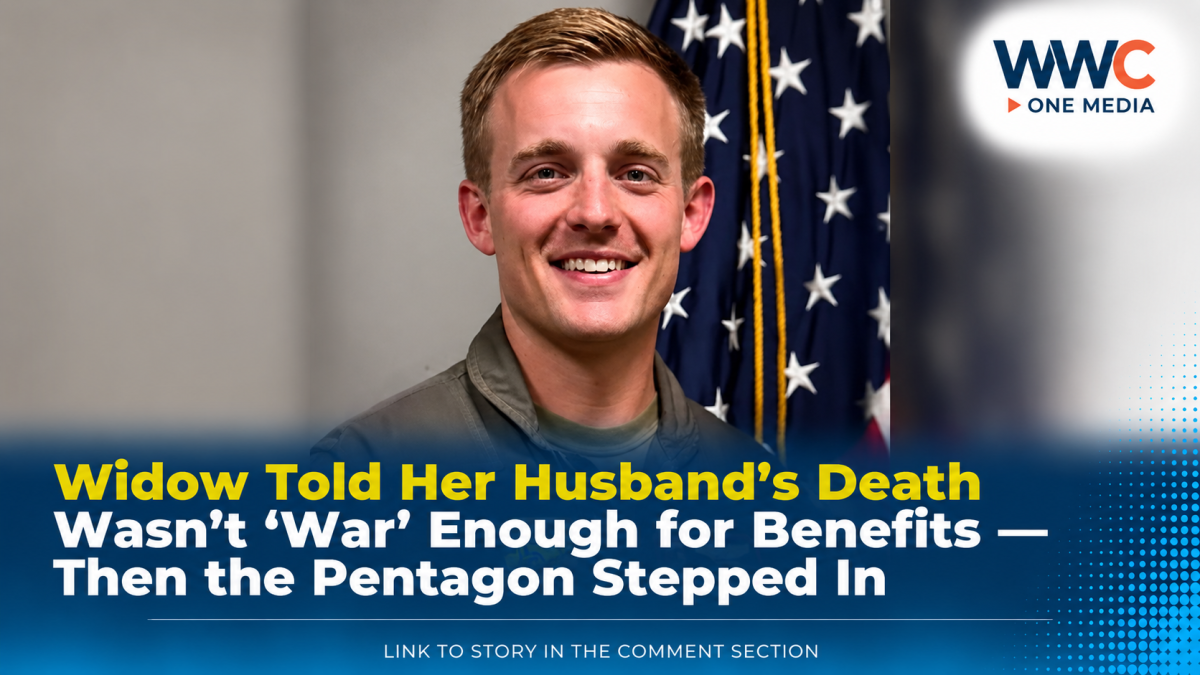
WASHINGTON — The widow of a US Air Force major killed during a combat mission in Iraq says she was left stunned after being told that certain combat-related benefits were not available to her family because the United States had not officially declared its military operations against Iran a war.
But after her story spread online and drew national attention, the Air Force reviewed the case and confirmed that all eligible combat-theater benefits had in fact been included in her late husband’s pay.
The episode has nevertheless sparked questions about how military terminology, benefit rules and government classifications can collide with the reality faced by families who lose loved ones in combat operations.
Her husband was killed during an Iran-related mission
Libby Klinner’s husband, Maj. John “Alex” Klinner, 33, was one of six crew members killed when a KC-135 aerial refueling aircraft crashed in western Iraq on March 12 while supporting US operations against Iran.
Klinner, an eight-year Air Force veteran from Birmingham, Alabama, was serving on a mission connected to the US military campaign against Tehran.
According to the Air Force Times, he had accumulated hundreds of hours of combat and combat-support flying during his military career and had received several military decorations.
His death left Libby Klinner caring for their three young children.
The benefits dispute began after his death
While handling her late husband’s affairs, Klinner said she was told by a military officer assigned to assist her that her family would not qualify for certain combat-related benefits because the United States was “not at war.”
That explanation deeply upset her.
She subsequently took to social media to describe the experience, arguing that the distinction between a formally declared war and an ongoing military conflict should not obscure what service members and their families had experienced.
Her post quickly gained attention.
Vice President JD Vance was asked about the situation during a White House briefing and said the administration would work to ensure Klinner received everything to which she was entitled.
Then the Air Force reviewed her case
The Air Force subsequently contacted Klinner and reviewed her husband’s pay.
The result was significant: officials confirmed that the family had received all eligible combat-theater benefits, including applicable imminent-danger or hostile-fire pay and combat-zone tax-exclusion benefits.
Klinner later clarified that the viral discussion had created an impression that her family’s military benefits had broadly been denied or withheld.
She said that was not actually the case.
Instead, the problem involved confusing or inaccurate information about how the benefits were classified and reflected in her husband’s final pay.
The Air Force likewise said officials had spoken with Klinner to ensure her questions were addressed and confirmed that all eligible benefits had been included.
The word ‘war’ became the heart of the controversy
The dispute unfolded against an unusual political backdrop.
The Trump administration has resisted describing the ongoing US military confrontation with Iran as a formal “war.”
Vance recently rejected the term when questioned about the conflict, while President Donald Trump described the US military action as a “military conflict.”
At the same time, US forces have continued conducting military operations against Iranian targets, while Iran has retaliated against US allies and interests in the region.
The fighting has already resulted in US military casualties.
That difference between political terminology and the reality of military operations became particularly painful for Klinner.
Her husband had been killed while supporting combat operations, yet she was initially confronted with an explanation centered on whether the conflict technically qualified as a war.
Combat-related pay isn’t simply dependent on a formal declaration of war
One important detail emerged from the controversy: certain forms of military combat-related compensation do not require Congress to formally declare war.
According to military guidance cited by AP, hostile-fire or imminent-danger pay can apply when service members are operating in designated areas where they face grave danger or hostile-fire risks.
Hostile-fire pay is generally $225 per month, while imminent-danger pay can reach the same monthly maximum depending on the circumstances. Eligible service members may also qualify for combat-zone tax exclusions.
That means the absence of a formal congressional declaration of war does not automatically eliminate these benefits.
Eligibility depends on the applicable military rules and the service member’s circumstances.
A broader problem for grieving military families
For Klinner, the issue ultimately became larger than the money.
She said grieving families should not have to become experts in government terminology just to understand what benefits they are entitled to after losing a loved one.
That concern is especially significant because military compensation can change according to deployment location, duty status and other factors, making pay records complicated even under normal circumstances.
Military pay errors are also not unheard of, particularly when service members move between assignments or become eligible for different forms of compensation.
Her message after the case was resolved
After the Air Force review, Klinner expressed appreciation for those who helped clarify her family’s situation.
She also said the experience showed how difficult it can be for a grieving family to navigate classifications, terminology and government procedures at the very moment they are least prepared to deal with bureaucracy.
Her family had also received substantial public support following Alex Klinner’s death. A GoFundMe campaign launched for Klinner and her children had raised more than $1.5 million, according to AP.
For Klinner, however, the most important outcome was ensuring that other military families would not have to endure similar confusion.
The controversy may be over — but the question remains
The Pentagon has now confirmed that the Klinner family received the benefits for which they were eligible.
But the episode has exposed a striking disconnect between how governments classify military operations and how families experience them.
For a widow whose husband was killed on a combat mission, the distinction between “war” and “military conflict” is hardly academic.
And that may be the lasting significance of Libby Klinner’s decision to speak out: not that her family ultimately lost its benefits, but that a grieving military family had to go public before the answers became clear.
Editorial accuracy note
The strongest and most accurate framing is not that the Pentagon permanently denied Klinner’s family combat benefits because the Iran conflict was not officially declared a war. The Air Force later confirmed that all eligible combat-theater benefits had already been included in her husband’s pay. The initial information provided to her was acknowledged as inaccurate or misleading, and the case was subsequently reviewed.
Likewise, descriptions of the US-Iran fighting should distinguish between the ongoing military conflict and the administration’s decision not to characterize it as a formally declared war.
WWC ONE MEDIA J.M.D




Leave a Reply