OMAHA, Neb. — One of the most closely watched leadership transitions in corporate America has reached another historic milestone.
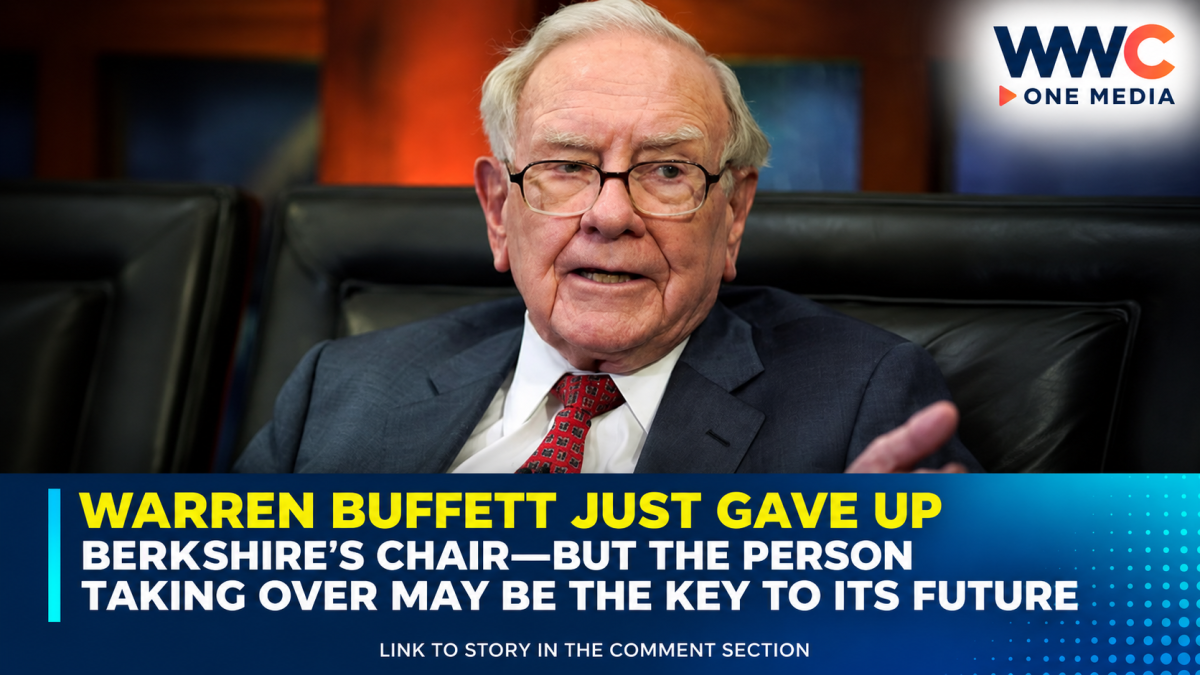
Warren Buffett has stepped down as chairman of Berkshire Hathaway after more than six decades at the helm, handing the board chair to his eldest son, Howard Buffett.
The 96-year-old investing legend has been named chairman emeritus and will remain a member of Berkshire Hathaway’s board of directors.
Meanwhile, Greg Abel, who took over as Berkshire’s chief executive officer in January, remains in charge of the company’s day-to-day operations.
The change took effect immediately on September 18, Berkshire said in an official announcement.
And while the headline may look like the end of the Buffett era, the structure of the transition tells a more complicated story.
Warren Buffett is stepping away from the chair—but his influence, his family and the culture he built remain deeply embedded in Berkshire.
Howard Buffett takes the chair
Howard G. Buffett, 71, has been a Berkshire director since 1993, giving him more than three decades of experience on the company’s board.
He is not, however, taking over as Berkshire’s CEO.
That distinction is crucial.
Howard Buffett’s new position is primarily focused on the company’s board and the preservation of Berkshire’s corporate culture and values. Greg Abel remains the executive responsible for operating the conglomerate.
Berkshire itself described Howard as the person who will serve as a guardian of the culture Warren Buffett built.
Warren Buffett also framed the division of responsibilities in his letter to shareholders, distinguishing Abel’s operational role from Howard’s responsibility for protecting Berkshire’s culture.
Reuters similarly reported that Howard’s role is expected to be non-executive, rather than a return to the traditional model in which the chairman also runs the business.
Warren Buffett is not leaving Berkshire
For investors who interpreted Friday’s announcement as Buffett’s complete departure, there is an important qualification.
He remains a Berkshire Hathaway director.
As chairman emeritus, Buffett will continue to provide his judgment and perspective to the board, according to the company.
That means the transition is less about an immediate disappearance of Buffett from Berkshire and more about a formal separation of his historic chairman role from the company’s active leadership structure.
The move follows Buffett’s earlier decision to surrender the CEO position to Abel at the beginning of 2026.
After spending decades simultaneously serving as the public face, chairman and chief executive of Berkshire, Buffett has now relinquished another major corporate role.
The man now running Berkshire is Greg Abel
While Howard Buffett becomes chairman, Greg Abel is the person running Berkshire Hathaway.
Abel became CEO in January 2026 after spending decades inside the Berkshire organization.
He joined the Berkshire family in 2000 following the company’s acquisition of MidAmerican Energy, which later became Berkshire Hathaway Energy.
He became a Berkshire vice chairman in 2018 and was responsible for overseeing the company’s non-insurance operations, including businesses spanning energy, railroads, manufacturing and retail.
Reuters describes Abel as having spent years preparing for the top executive role.
The distinction between Abel and Howard is therefore central to understanding Berkshire’s succession.
Abel runs the business. Howard guards the culture.
That structure is designed to separate operational leadership from the stewardship of the principles that Buffett established.
Why Howard Buffett?
Howard Buffett’s appointment might initially look like a traditional family succession story.
But Berkshire’s arrangement is different.
Howard has not been installed as CEO, nor has he been placed in charge of Berkshire’s investment portfolio or daily operations.
Instead, his decades on Berkshire’s board make him deeply familiar with the company’s governance and management philosophy.
Berkshire’s official announcement says Howard has also served as chairman and CEO of the Howard G. Buffett Foundation since 1999.
He has held positions on the boards of several major companies, including Coca-Cola, Archer Daniels Midland, ConAgra Foods and Lindsay Corporation.
His background extends well beyond corporate boardrooms.
He has been a farmer, former sheriff and philanthropist, and has worked extensively on food security and humanitarian issues.
Fortune reported that his work has included farming, conservation, photography and humanitarian efforts in conflict-affected regions.
That background is considerably different from his father’s career as one of the world’s best-known investors.
What exactly is the “Berkshire culture”?
This may be the most important part of Howard Buffett’s new assignment.
Berkshire Hathaway has developed a management structure that differs from many large corporations.
Its operating companies have traditionally enjoyed considerable autonomy, while Berkshire’s corporate headquarters has remained relatively small compared with the enormous size of the businesses it owns.
The company has also emphasized long-term investment, decentralized management, disciplined capital allocation and relationships with managers.
Howard Buffett has previously described the culture as keeping things simple, treating people fairly, respecting managers and shareholders, and being straightforward about bad news.
Reuters reported that his responsibility as chairman is centered on preserving those principles rather than directing Berkshire’s daily operations.
Berkshire is entering a very different era
The leadership transition comes as Berkshire moves beyond the period in which Warren Buffett personally dominated the company.
Buffett took control of Berkshire in 1965, eventually transforming what had been a struggling textile company into a conglomerate with businesses spanning insurance, railroads, energy, manufacturing, services and retail.
Today, Berkshire is valued at roughly $1.1 trillion, according to Reuters.
Its holdings and businesses include GEICO, BNSF Railway, Berkshire Hathaway Energy and Dairy Queen, alongside a huge investment portfolio.
That scale makes succession especially consequential.
The company is no longer simply an investment vehicle built around Buffett’s stock-picking reputation.
It is an enormous collection of operating businesses that must continue functioning regardless of who occupies the chairman’s seat.
Buffett’s legacy is still visible on Berkshire’s balance sheet
The transition is also taking place while Berkshire retains an enormous financial cushion.
At the end of the second quarter, Berkshire held approximately $364.7 billion in cash and cash equivalents, according to Reuters.
That gives Abel considerable financial flexibility as he decides how Berkshire deploys capital in the years ahead.
The company has already demonstrated that the post-Buffett era does not necessarily mean Berkshire will simply sit still.
Abel has been overseeing the company’s capital allocation and strategic decisions since becoming CEO.
That could eventually produce a Berkshire that operates differently from the company investors knew under Buffett—even while retaining many of the same principles.
Investors are watching the “Buffett premium”
One of the biggest questions surrounding the transition is how investors will value Berkshire without Buffett serving as chairman.
For decades, Buffett’s reputation for capital allocation, financial discipline and shareholder communication became part of Berkshire’s identity.
Reuters reported that Berkshire’s price-to-book ratio has declined since Buffett announced his CEO succession, although the company remains one of the world’s largest publicly traded businesses.
That does not establish that investors have lost confidence in Berkshire.
Rather, it highlights the challenge of moving from a company whose identity was closely associated with one individual toward an institution that must increasingly stand on its own.
A carefully planned transition—but not without questions
Berkshire has spent years preparing for Buffett’s eventual departure.
Abel’s promotion to CEO was announced well before he formally assumed the role, while Howard Buffett has been a Berkshire director since 1993.
The company’s latest announcement therefore represents the next stage of a succession process rather than an unexpected change in management.
Still, Reuters reported that some analysts have raised questions about Howard Buffett’s lack of experience running a large public company.
That concern is partly addressed by the fact that he is not being asked to run Berkshire’s operations.
That responsibility belongs to Abel.
The board also retains Susan Decker as lead independent director.
The Buffett name remains inside the boardroom
There is an intriguing element to the transition.
Warren Buffett is leaving the chair, but his son is taking it.
At the same time, Buffett himself remains a director.
So Berkshire’s next chapter is not a clean break from the family.
Instead, the company is creating a structure in which the Buffett family remains connected to governance while a longtime Berkshire executive leads the business.
That arrangement could provide continuity while allowing Abel greater freedom to shape the company’s future.
What happens next?
The immediate leadership structure is now clear:
Howard Buffett — Chairman of the Board
Greg Abel — Chief Executive Officer
Warren Buffett — Chairman Emeritus and Director
Susan Decker — Lead Independent Director
The bigger question is what Berkshire looks like several years from now.
Will Abel gradually reshape Berkshire’s capital allocation strategy?
Will the company continue its unusually decentralized management structure?
Will investors continue to place the same value on the Berkshire brand without Warren Buffett at the center of every annual meeting and shareholder letter?
And perhaps most importantly:
Can Berkshire preserve the culture that made it extraordinary while allowing the next generation to build something of its own?
That is the real test of the Buffett succession—and the answer will take years, not a single boardroom announcement, to become clear.