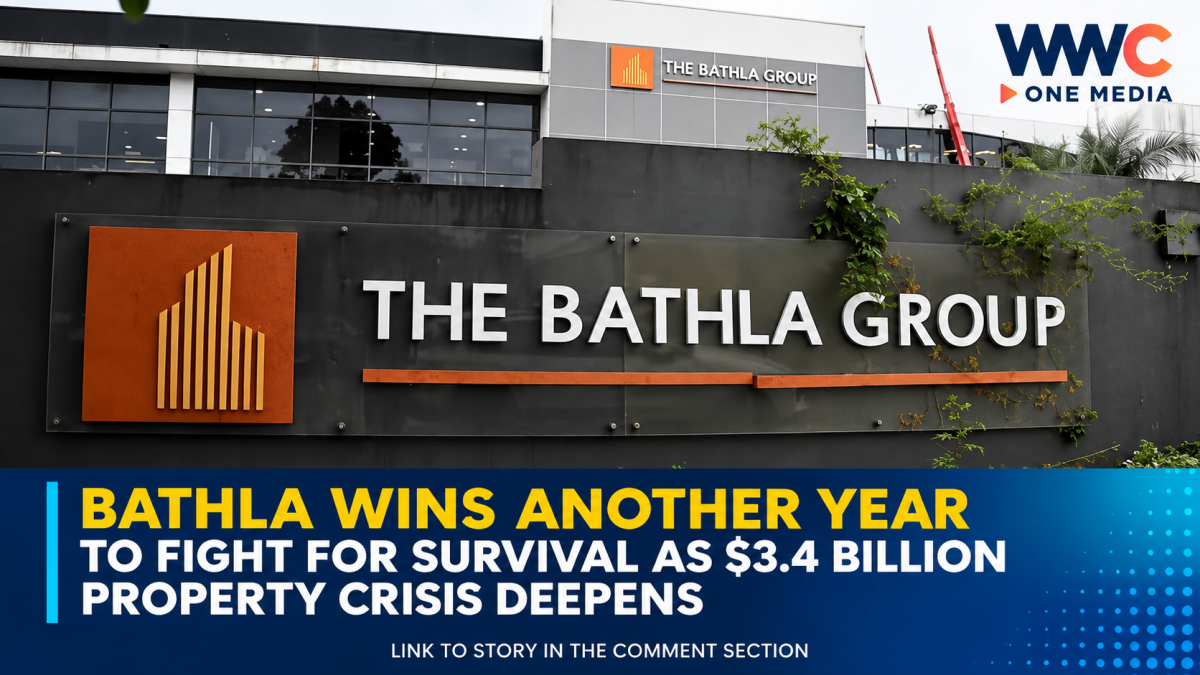
Australian property developer Bathla Group has been given more time to try to stabilize its sprawling property empire after the Supreme Court of New South Wales extended the company’s voluntary administration period until September 13, 2027.
The court decision gives administrator Teneo Australia additional time to investigate Bathla’s finances, negotiate with lenders and work through hundreds of residential projects caught in the developer’s financial collapse.
But the extension is not a guarantee that Bathla will survive — and it does not mean all of its projects are now fully funded.
Teneo has warned that continued construction depends on securing additional financing from lenders.
That distinction is critical for thousands of buyers, contractors, lenders and investors with money tied to the Sydney-based developer.
Bathla’s Debt Crisis Is Massive
Bathla entered voluntary administration in August after becoming unable to meet its financial obligations.
The group is facing about A$3.4 billion in creditor claims, according to administrators and Australian media reports.
AAP reported that about A$3.08 billion is owed to secured lenders, while the Australian Taxation Office is owed approximately A$145 million. Other unsecured creditors are owed around A$130 million, with employee entitlements estimated at about A$4 million.
The scale of the debt makes Bathla one of the most closely watched property failures in Australia’s current construction downturn.
And because much of the group’s financing came from private lenders, the consequences extend well beyond the company itself.
The Court Gave Administrators More Time — Not a Bailout
Under Australia’s voluntary-administration system, administrators normally have a relatively short period to investigate a company’s affairs and present creditors with options for its future.
The Supreme Court’s latest order gives Teneo until September 13, 2027 to convene the next major creditors’ meeting.
The additional time is intended to allow the administrators to assess the group’s numerous projects, negotiate financing and determine which developments can realistically be completed or otherwise dealt with.
Importantly, Teneo can still convene the creditors’ meeting earlier if circumstances warrant it.
So the September 2027 date should not be interpreted as a deadline guaranteeing that Bathla remains operational until then.
It is primarily an extension of the administration process.
Bathla Has Nearly 220 Current Projects
The numbers illustrate why administrators asked for more time.
AAP reported that Bathla has about 219 current projects, with a preliminary combined value of approximately A$4.87 billion and about A$3.13 billion in associated debt.
Around 660 lots already have pre-sale contracts, while approximately 1,974 lots remain available for sale, according to information cited by AAP.
ABC News reported similar preliminary figures and said administrators are examining hundreds of individual projects and working through the group’s financial records.
That means Bathla’s problems are not confined to a single stalled development.
The administrator is dealing with a vast portfolio at different stages — from completed properties and active construction sites to undeveloped land.
Only A$4.7 Million in Initial Funding Has Been Secured
One of the most important details surrounding the court extension is the company’s immediate cash position.
Teneo has secured approximately A$4.7 million in initial funding from six lenders to keep critical operations going.
But administrators are still negotiating longer-term financing.
Teneo’s Stephen Longley said securing additional funding remains an immediate priority because the extension alone does not provide the money required to complete projects.
That means Bathla effectively has something extremely valuable — time — but still needs the financing required to turn that time into completed homes.
More Than 200 Employees Were Stood Down
The financial crisis has already resulted in substantial job losses.
Bathla had approximately 350 employees, and more than 200 were stood down after the developer entered administration.
ABC previously reported that only a limited number of sites were able to continue operating under short-term funding arrangements, with administrators warning that substantially more financing would be needed to maintain operations.
The impact also extends to subcontractors and tradespeople working across Bathla’s developments.
A company of Bathla’s size can have a much wider economic footprint than its direct workforce because each construction project involves builders, engineers, suppliers, consultants and other contractors.
The Collapse Has Put Thousands of Homes in Limbo
Bathla has been one of Sydney’s major developers of relatively affordable residential housing, particularly in western and northwestern parts of the city.
ABC reported that the collapse placed more than 2,000 apartments under construction in uncertainty and put a further 14,000 homes in the development pipeline at risk of delays or changes.
Those figures are important because Australia is already dealing with a housing-supply shortage.
A developer collapse at this scale therefore creates a problem that goes beyond creditors and shareholders.
If projects are delayed, buyers can face longer waiting periods, while the eventual completion or sale of sites may depend on whether another developer or lender steps in.
Bathla’s Problems Reflect Wider Construction Pressure
The company’s collapse is not happening in isolation.
Australia’s construction industry has been under pressure from higher construction costs, financing expenses, labor shortages and changing property-market conditions.
ABC reported that 3,472 Australian construction companies became insolvent in the financial year ending June 30, 2026, accounting for about one-quarter of company insolvencies nationally.
Construction costs have also remained substantially above pre-pandemic levels.
For developers operating on relatively thin margins, higher material and labor costs can make projects that looked viable several years ago considerably harder to complete profitably.
Higher interest rates have added another layer of pressure by increasing borrowing costs.
Bathla Also Highlights the Growing Role of Private Credit
Perhaps the most significant financial question surrounding Bathla’s collapse is the group’s reliance on non-bank lenders.
The developer owes billions of dollars to private lenders, rather than relying exclusively on Australia’s major banks.
That has attracted attention from financial regulators because private credit has become an increasingly important source of financing for property and other businesses.
ABC reported that Australian Securities and Investments Commission chair Sarah Court had identified developments in the private-credit sector, including the Bathla collapse, as an area of concern.
The issue matters because private-credit exposure can extend indirectly to superannuation funds and other institutional investors.
A large corporate failure therefore has the potential to reveal risks outside the conventional banking system.
Administrators Are Also Investigating Bathla’s Books
The financial investigation is proving complicated.
ABC reported that administrators have identified approximately A$736 million in potentially overstated intercompany receivables and payables in a preliminary review.
The group’s bank accounts had reportedly not been reconciled for some time, adding another layer of complexity to the administration.
That does not mean A$736 million has been established as missing money or fraud.
It refers to preliminary accounting issues identified during the administrators’ review and remains subject to further investigation and reconciliation.
The distinction is important as Teneo works to determine Bathla’s actual financial position.
Some Properties Could Be Sold
Administrators are also examining which assets can be sold to generate cash.
ABC reported that roughly A$400 million worth of completed property was either for sale or under contract at the time of its latest report.
Proceeds from those sales are expected to be applied first according to the relevant security arrangements, with the ultimate distribution depending on the legal and financial position of the individual Bathla entities.
Bathla’s undeveloped land bank is also being assessed.
ABC reported that administrators had identified approximately 167 undeveloped sites, with some potentially being marketed for sale in their current condition.
The strategy could therefore involve a combination of completing selected projects, selling assets and restructuring or winding down other parts of the group.
Lenders Are Already Managing Their Exposure
Bathla’s collapse has also forced lenders to reassess their positions.
Business News Australia reported that 360 Capital had appointed receivers across 162 Bathla-linked properties representing approximately A$31.7 million of exposure.
The same report said Centuria Capital had disclosed approximately A$4.5 million in direct exposure to Bathla.
These individual exposures are much smaller than Bathla’s overall debt, but they illustrate how the developer’s collapse is spreading through Australia’s private lending and property-investment ecosystem.
The One-Year Extension Could Become a Critical Test
The court’s decision gives Teneo something the administrator previously lacked: enough time to work through Bathla’s extraordinarily complicated portfolio.
But time alone will not solve the problem.
The administrators still need to:
- Secure additional lender financing
- Determine which projects can be completed
- Assess the value of Bathla’s assets and liabilities
- Resolve outstanding accounting issues
- Negotiate with secured and unsecured creditors
- Protect value for buyers and other stakeholders
- Determine the future of projects that cannot be economically completed
And creditors ultimately retain an important role in determining Bathla’s future.
The company could still be restructured, parts of the business could be sold, or some entities could ultimately enter liquidation.
Bathla Has Bought Time — But the Hard Part Is Still Ahead
The NSW Supreme Court’s decision represents a reprieve for Bathla, but it should not be mistaken for a rescue.
The developer remains burdened by approximately A$3.4 billion in creditor claims, while administrators have secured only an initial A$4.7 million funding package and continue negotiating for additional financing.
At the same time, hundreds of projects must be assessed and thousands of homes remain tied to decisions that have yet to be made.
For Bathla’s buyers, lenders, contractors and creditors, the next year could therefore be decisive.
The company has been given more time to find a path forward.
What it has not yet been given is certainty.