
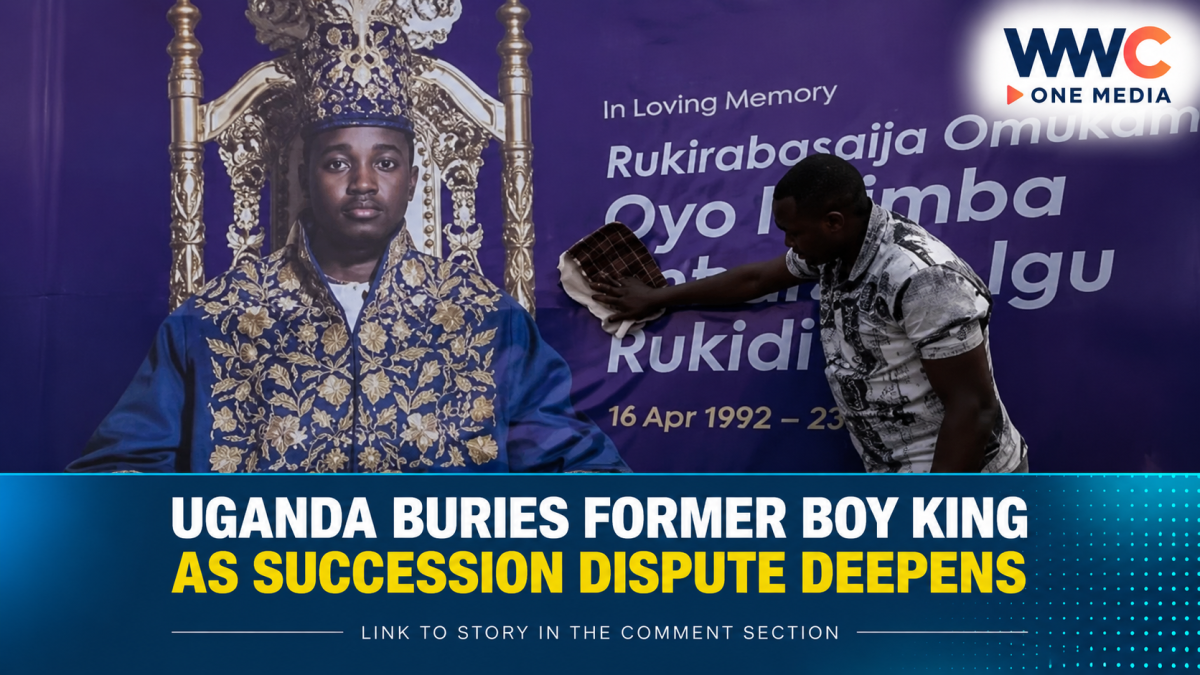
Uganda’s King Oyo Nyimba Kabamba Iguru Rukidi IV, who became the world’s youngest reigning monarch after ascending the throne at just three years old, was buried on Saturday as his Tooro Kingdom faced a bitter dispute over who should succeed him.
Oyo died on Aug. 27 at the age of 34 while receiving treatment for cancer in the United States. He had ruled the Tooro Kingdom for 31 years, growing from a child monarch into a respected cultural figure who remained an important symbol of the kingdom.
Thousands of mourners gathered in Fort Portal for his funeral, with the king’s coffin carried through the streets before being taken to the Karambi Royal Tombs, where members of the Tooro royal family have been buried. The ceremony took place exactly 31 years after Oyo’s coronation.
His death, however, has triggered an unusual succession crisis. A royal succession committee selected Oyo’s cousin, Edward Rukidi Kijanangoma, a 56-year-old news anchor and editor at Uganda Broadcasting Corporation, as the next monarch.
The decision has been challenged by Oyo’s mother and sister, who say the late king left a will naming his biological son as his successor. The alleged son had not previously been publicly known, and questions have been raised about his identity and whether he can be formally established as Oyo’s heir.
The dispute became so serious that Ugandan authorities intervened in an effort to ensure the king could be buried according to Tooro tradition. Traditional procedures require a successor to be identified before the monarch’s burial, adding urgency to negotiations between members of the royal family and kingdom elders.
Although Uganda is a republic and its traditional kings have no formal political authority, the Tooro monarchy retains considerable cultural and social influence. The position also comes with control over significant royal assets, including land and financial support from the central government, making the succession more than a purely ceremonial matter.
Kijanangoma was ultimately accepted as the successor ahead of the burial. During the ceremony, he participated in traditional rites marking the transfer of authority, while religious leaders urged the royal family and the wider community to put their differences aside.
Oyo’s reign began under extraordinary circumstances, after the death of his father in 1995 sparked a succession struggle that was eventually settled in court. His childhood coronation attracted international attention, and over the following decades he became closely associated with Tooro’s cultural identity and humanitarian causes, including efforts to combat HIV and Aids.
The succession dispute has now added uncertainty to the kingdom’s future. For many mourners, however, Saturday’s burial marked the end of a remarkable era in which a three-year-old who once captivated the world grew into a monarch who remained at the centre of Tooro’s public life for more than three decades.



Leave a Reply