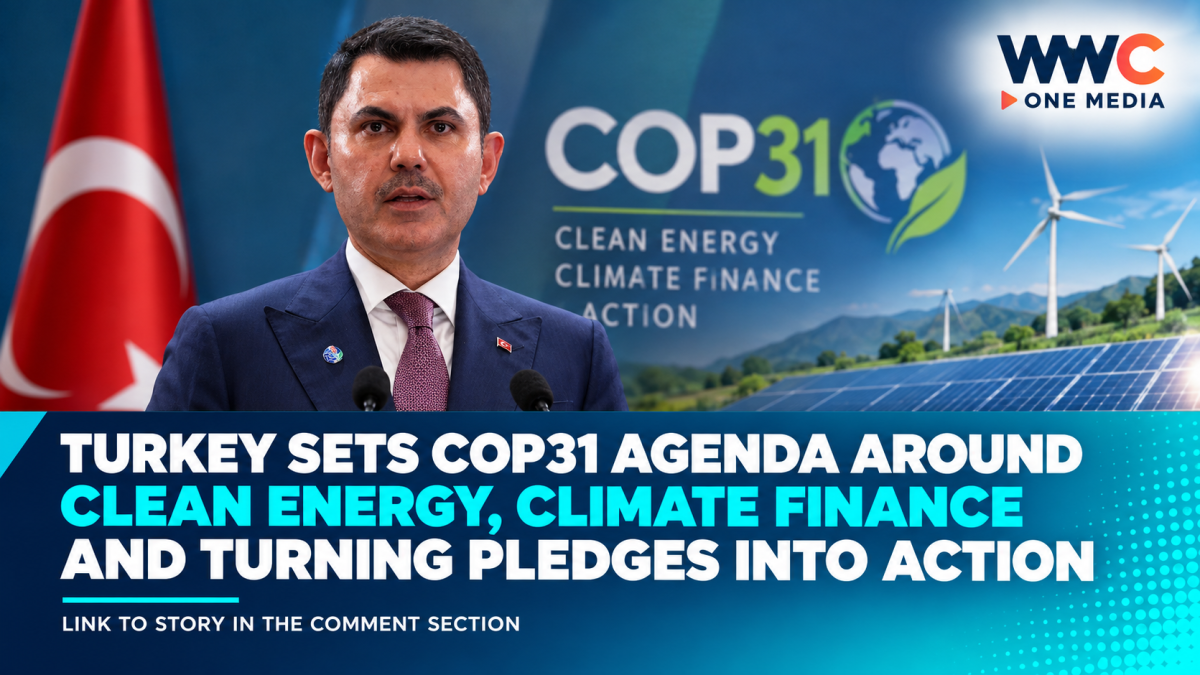
Turkey is preparing to use the COP31 climate summit to push governments beyond announcing new commitments and toward turning existing climate pledges into measurable projects, with clean energy, electrification, climate finance and resilience among the central priorities.
Environment, Urbanization and Climate Change Minister Murat Kurum, who will serve as COP31 president, outlined the agenda at a United Nations event in New York. He said the summit would emphasize implementation, investment and practical results as governments confront climate change alongside geopolitical tensions and rapidly developing technologies.
One of Turkey’s headline goals is to increase electricity’s share of global energy consumption from roughly 20% today to 35% by 2035. The proposed target is intended to accelerate electrification across transportation, buildings and industry while reducing dependence on fossil fuels and exposure to volatile energy prices.
The COP31 action agenda will cover 10 broad areas, including clean energy and electrification, methane reduction, zero waste, climate-resilient cities, green industrialization, food security, oceans, health systems, biodiversity and implementation of national climate plans.
Turkey estimates that the proposed initiatives could have the potential to reduce global emissions by between 8.5 billion and 10 billion metric tons of carbon dioxide by 2035, although those figures depend on countries and other participants implementing the voluntary measures.
Climate finance is another major issue. Turkey plans to promote mechanisms designed to connect developing countries with technology, expertise and investment, particularly through a proposed Green Industrialisation Facilitation Mechanism for least-developed countries.
The summit is also expected to launch initiatives involving green freight corridors, industrial decarbonization, artificial intelligence and clean technologies, circular economies, energy-efficient buildings, oceans, food security and climate-resilient health systems.
COP31 will take place in Antalya from Nov. 9 to 20 under an unusual arrangement between Turkey and Australia. Turkey will host the summit, hold the COP presidency and lead the non-negotiated Action Agenda, while Australia’s Climate Change and Energy Minister Chris Bowen will serve as President of Negotiations and lead the formal climate negotiations.
The division of responsibilities is significant because COP31 will be the first U.N. climate summit to formally split the presidency and negotiation leadership between two countries. Turkey and Australia have said they are working together, although questions have emerged over how disagreements between the two sides would be handled.
The summit will also have a strong Pacific focus. Fiji, Tuvalu and Australia are scheduled to host the official COP31 Pre-COP ministerial meeting and leaders’ event from Oct. 5 to 8, giving Pacific countries an opportunity to highlight their climate vulnerabilities and priorities ahead of the Antalya negotiations.
The push comes as climate policy is being complicated by energy-market disruptions, geopolitical tensions and concerns over the cost of transitioning away from fossil fuels. Supporters of faster electrification argue that renewable energy and stronger electricity systems can improve energy security as well as reduce emissions.
With COP31 approaching, Turkey is therefore positioning the conference around a practical question: how can existing climate promises be converted into investment, infrastructure and measurable emissions reductions rather than remaining commitments on paper?