
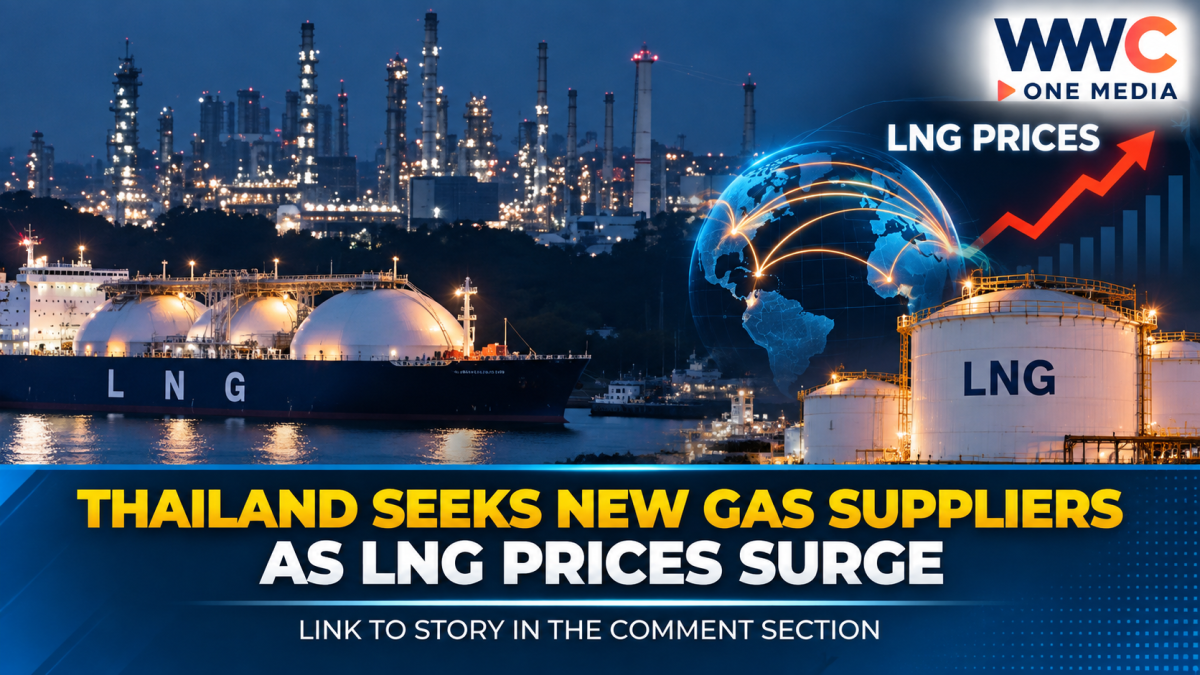
Thailand is accelerating efforts to secure alternative natural gas suppliers as rising geopolitical tensions push up energy prices and increase concerns over the country’s dependence on supplies from the Middle East.
Crude oil prices have climbed above US$100 a barrel, while spot liquefied natural gas prices have nearly doubled amid disruptions to energy markets and stronger seasonal demand.
The sharp increase has prompted Thai energy authorities to look for additional sources of LNG and strengthen the country’s energy security.
Thailand relies on imported LNG to supplement domestic natural gas production, making international prices and shipping conditions important factors for the country’s electricity and industrial sectors.
The latest market volatility has increased concerns over the cost of securing additional supplies, particularly as disruptions around major Middle Eastern shipping routes create uncertainty over fuel deliveries.
Energy authorities are therefore examining suppliers from outside the Middle East as part of efforts to diversify Thailand’s sources of natural gas.
The government has also been monitoring available LNG cargoes and assessing options for securing supplies over the coming months. Greater diversification could reduce exposure to disruptions in any single producing region.
The surge in LNG prices comes at a difficult time for Thailand, where electricity generation accounts for a large share of natural gas consumption. Higher fuel costs could eventually place pressure on electricity prices and increase expenses for businesses.
Energy Minister Akanat Promphan has stressed the importance of maintaining adequate fuel supplies as global energy markets face heightened volatility.
Thailand’s efforts to secure new suppliers are also taking place as demand for natural gas is expected to remain significant, particularly with rising electricity consumption from industrial activity and data centres.
The country is seeking to balance energy security with the need to control costs. Buying additional LNG on the spot market can provide flexibility but may expose importers to sharp price movements.
Officials are also looking at longer-term arrangements that could provide greater stability in supply and pricing.
The current situation highlights Thailand’s exposure to international energy markets despite efforts to increase domestic production and develop renewable energy sources.
As geopolitical tensions continue to affect global oil and gas supplies, Thailand is expected to maintain its search for alternative LNG sources while closely monitoring prices and shipping conditions.




Leave a Reply