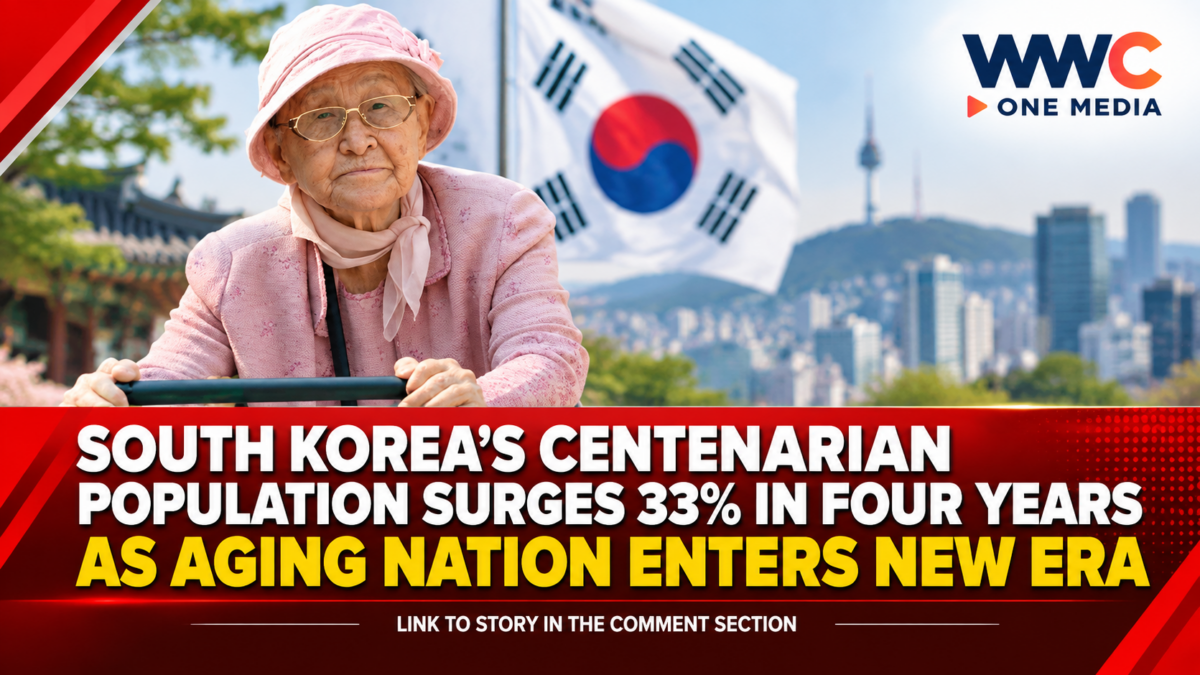
SEOUL, South Korea — South Korea is seeing a striking rise in the number of people reaching 100, with the country’s centenarian population increasing by nearly one-third in just four years.
National statistics show that 8,701 people aged 100 or older were recorded in 2025, up 32.6% from 6,563 in 2021. The figures were released Oct. 2 in connection with Senior Citizens’ Day.
The increase is part of a much larger demographic transformation underway in South Korea, where the population aged 65 and older accounted for 21.6% of the country’s total population in 2026, according to the government’s latest elderly-population statistics.
Women Make Up More Than 80% of Centenarians
The gender gap among people reaching 100 is particularly pronounced.
Of the 8,701 centenarians recorded in 2025, 7,242 were women, compared with 1,459 men. Women therefore represented more than 80% of the total and outnumbered men by almost five to one.
The figures highlight a longstanding difference in longevity between men and women, while also showing how rapidly the population surviving into very old age is expanding.
Some Rural Areas Have Far Higher Centenarian Rates
The distribution of centenarians is not uniform across South Korea.
Goheung County in South Jeolla Province recorded the country’s highest concentration, with 86.8 centenarians per 100,000 residents in 2025. It was followed by Yeongyang County in North Gyeongsang Province, with 84 per 100,000, and Bonghwa County, with 83.1.
At the opposite end, Ulsan’s Buk District recorded just 4.7 centenarians per 100,000 people, followed by Ulsan Jung District at 5.5 and Hwaseong in Gyeonggi Province at 6.9.
South Korea Is Already a Super-Aged Society
The growth in centenarians comes as South Korea’s entire population structure changes.
Government statistics released Oct. 1 show that people aged 65 and older represented 21.6% of the population in 2026. That share is projected to rise to 30% by 2036 and exceed 40% by 2050.
Separate census data counted 8,604 people aged 100 or older as of Nov. 1, 2025, with 1,428 men accounting for 16.6% of the total. The slight difference from the 8,701 figure reflects different statistical sources and reference dates.
Longer Lives Bring New Challenges
The rise in extreme longevity is also forcing South Korea to confront questions about healthcare, income security and long-term care.
The government’s 2026 elderly statistics show that people reaching age 65 in 2024 had an average remaining life expectancy of 21.7 years. For women it was 23.7 years, compared with 19.5 years for men.
At the same time, the government reported that the relative poverty rate among people aged 66 and older was 37.7% in 2024, despite improvements from the previous year.
The latest centenarian figures therefore tell a story that goes beyond longevity.
South Korea is not simply seeing more people reach 100. It is entering a period in which living longer is reshaping the country’s healthcare, pension, caregiving and social-support needs.
With the number of centenarians approaching 9,000 and the share of older adults continuing to climb, the next challenge may be ensuring that longer lives are accompanied by adequate support, independence and dignity.
WWC ONE MEDIA G,A