
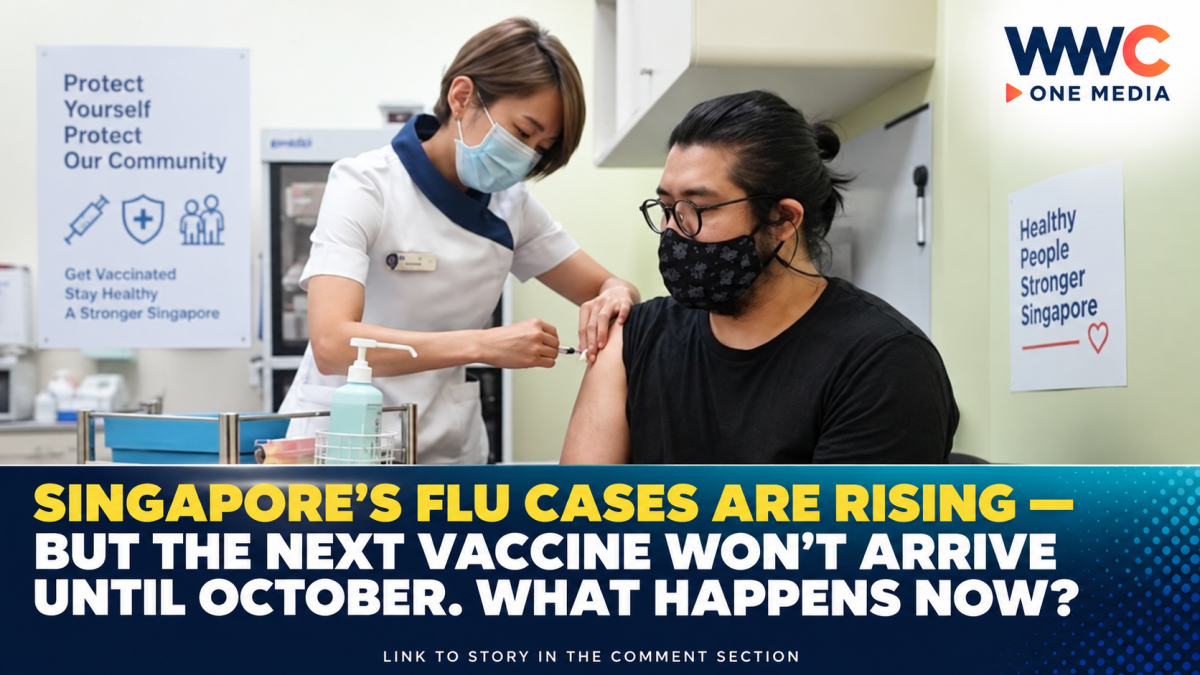
SINGAPORE — Singapore is seeing a noticeable rise in influenza activity just as the country prepares for its next seasonal flu season — but the updated Northern Hemisphere vaccine will arrive about two weeks later than usual, creating a potential timing challenge for people at higher risk of serious illness.
The Ministry of Health (MOH) and Communicable Diseases Agency (CDA) said the 2026–2027 Northern Hemisphere influenza vaccines are expected to become available in Singapore in early to mid-October, rather than the usual end-September timeframe.
The delay is being attributed to an industry-wide delay in developing the updated vaccine, which incorporates two strain changes from the 2026 Southern Hemisphere formulation following World Health Organization recommendations.
At the same time, Singapore’s influenza positivity rate has climbed sharply, putting renewed attention on vaccination and personal precautions.
Influenza positivity rate rises to 36.6%
According to the CDA, the proportion of influenza-like illness samples testing positive for influenza reached 36.6% during the week of Aug. 16–22, up from 24.0% the previous week.
The increase is significant, but authorities are stressing an important distinction: there is currently no indication that the infections are more severe than usual.
The latest positivity level also remains below Singapore’s previous peak of 43.9% recorded in January 2025.
In other words, the data show more influenza activity, not evidence of a more dangerous strain or unusually severe illness.
Why is the new flu vaccine arriving late?
Singapore normally receives the Northern Hemisphere seasonal influenza vaccine by the end of September, ahead of the Northern Hemisphere flu season, which generally runs from October through March.
This year, however, the updated vaccine is expected only in early to mid-October.
MOH and CDA said pharmaceutical companies have experienced an industry-wide delay in developing the latest formulation. The Northern Hemisphere vaccine contains two strain changes compared with the 2026 Southern Hemisphere vaccine, reflecting WHO recommendations.
That does not mean Singapore is without influenza vaccines altogether.
The 2026 Southern Hemisphere vaccine remains available, and health authorities say there is sufficient overall supply — although individual clinics have reported shortages as demand has increased.
Some clinics have already run out
CNA contacted 11 clinics and found that three had run out of the Southern Hemisphere vaccine, while another reported having only limited stock.
Some healthcare providers have also experienced a noticeable increase in demand.
Healthway Medical, Raffles Medical and Parkway Shenton all reported higher demand for influenza vaccinations. Parkway Shenton said demand had increased by about 15% compared with before the June school holidays, while Healthway Medical attributed increased uptake partly to seasonal travel and school holidays.
Healthway Medical said it expects the updated Northern Hemisphere vaccine to reach its clinics around mid-October.
Importantly, the situation does not appear to be a nationwide vaccine shortage. Parkway Shenton and Raffles Medical told CNA they expected their existing supplies to remain sufficient if demand continued to rise.
Who should consider getting vaccinated now?
The CDA and MOH are particularly urging people at higher risk of developing severe influenza complications to ensure they are protected.
This includes:
- People aged 65 and above
- Children aged six months to under five years
- People with underlying medical conditions and other vulnerable groups
For people in these groups who have not received the 2026 Southern Hemisphere vaccine, authorities say they may receive it now if they want interim protection.
However, they should still receive the 2026–2027 Northern Hemisphere vaccine when it becomes available, with a minimum interval of eight weeks between the two doses.
Those who have already received the 2026 Southern Hemisphere vaccine are advised to wait for the Northern Hemisphere formulation and take that as their next dose, again observing the minimum eight-week interval.
What about people who are travelling?
The timing could be particularly relevant for Singapore residents planning overseas travel.
A doctor cited by CNA said the Northern Hemisphere vaccine may be especially relevant for higher-risk travellers heading to destinations such as the United States, Europe or Japan between December and February, when influenza activity is typically higher in those regions.
For travellers, the advice depends on factors including destination, travel date and individual health risk. People who are unsure which formulation is appropriate should discuss their situation with their doctor rather than assuming they should automatically wait.
CNA also reported that travellers are generally advised to receive an influenza vaccine at least two weeks before a planned trip.
Singapore’s flu season is not limited to one time of year
Unlike countries where influenza largely follows one winter season, Singapore experiences influenza circulation throughout the year.
National surveillance data shows that activity tends to be higher during two broad periods: May to August and December to March. The timing can vary because of factors including international travel and population mixing.
That makes the current rise particularly relevant as Singapore moves toward another period of increased influenza activity.
What should people do if they have flu-like symptoms?
The CDA is also reminding people that vaccination is only one part of reducing transmission.
People experiencing mild acute respiratory infection symptoms should stay home until their symptoms resolve.
If they need to go out while symptomatic, authorities recommend:
- Minimising social interactions
- Wearing a mask
- Avoiding crowded places
- Avoiding contact with medically vulnerable people
People who are medically vulnerable, or whose symptoms are severe, prolonged or worsening, should seek medical attention.
This is a rise in cases — not a warning of unusually severe flu
The distinction is important.
Singapore’s influenza activity has increased considerably, but the CDA has not reported evidence that the infections are more severe than usual. The current positivity rate is also still below the peak recorded in early 2025.
The bigger issue right now is the combination of rising influenza activity, increased vaccination demand and the delayed arrival of the updated Northern Hemisphere vaccine.
For vulnerable people, the decision is therefore less about panic and more about timing, vaccination history and individual risk.
And as Singapore heads toward October, the question many people will be watching is no longer simply when will flu cases peak?
It is whether demand for protection will continue rising before the updated vaccine finally reaches clinics.
WWC ONE MEDIA M.J.E




Leave a Reply