
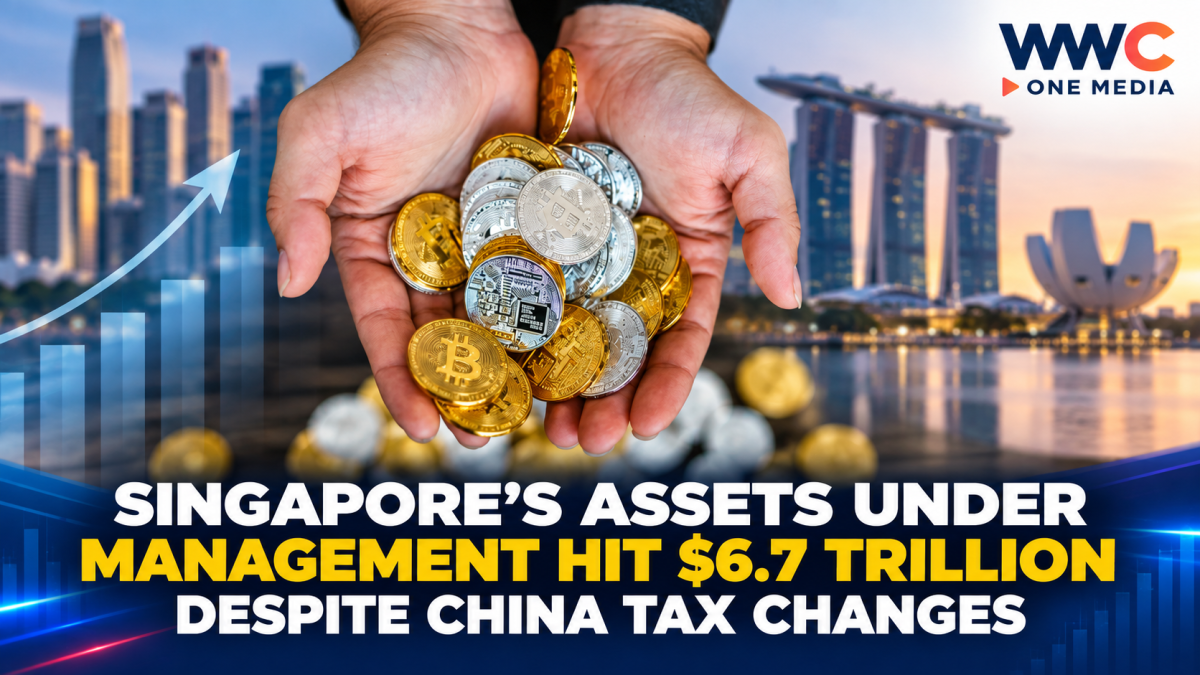
SINGAPORE — Singapore’s wealth management industry has continued to grow despite concerns over changing tax rules affecting wealthy Chinese investors, with assets under management climbing to a massive S$6.7 trillion.
The latest growth reinforces Singapore’s position as one of Asia’s leading wealth hubs, even as the sector faces new challenges from changing regulations, increased global scrutiny and intensifying competition for high-net-worth clients.
The rise in assets under management highlights the resilience of Singapore’s financial sector and the continued appeal of the city-state as a destination for global wealth. However, China-related tax changes are now emerging as an important issue for private banks, family offices and wealth managers serving Chinese clients.
Singapore’s Wealth Industry Keeps Growing
Singapore has spent years building its reputation as a global financial centre and a major hub for wealth management.
The country’s political stability, strong regulatory framework, extensive financial services ecosystem and strategic location have made it an attractive base for wealthy families and investors across Asia and beyond.
The latest rise to S$6.7 trillion in assets under management shows that Singapore’s wealth industry continues to attract and retain substantial pools of capital.
The growth comes as global wealth increasingly shifts toward Asia, creating major opportunities for banks, asset managers and family offices operating in Singapore.
China Tax Changes Put Wealth Managers on Alert
Despite the strong headline figures, wealth managers are closely monitoring changes to China’s tax environment.
The changes could affect how wealthy Chinese individuals structure overseas assets and investments, potentially creating new compliance requirements and tax considerations.
For Singapore’s financial sector, Chinese clients represent an important part of the broader Asia-focused wealth management market.
That means any significant shift in China’s tax enforcement or reporting requirements could have implications for private banks, family offices and financial advisers operating in the city-state.
The immediate impact, however, has not stopped Singapore’s overall assets under management from expanding.
Singapore Remains a Magnet for Global Wealth
Singapore continues to compete with other major financial centres for global capital.
The city-state has become particularly attractive to wealthy Asian families seeking professional investment management, estate planning and cross-border financial services.
The growth of family offices has also played an increasingly important role in Singapore’s wealth ecosystem.
Family offices typically manage the investments and financial affairs of ultra-wealthy families and can oversee everything from traditional investment portfolios to private businesses, property and philanthropic activities.
Their expansion has created growing demand for lawyers, accountants, private bankers, investment professionals and other financial services.
More Than Just Money Management
The competition for wealthy clients is no longer focused solely on investment returns.
Private banks and wealth managers are increasingly offering services involving:
- Estate and succession planning
- Tax and regulatory advice
- Family office management
- Philanthropy
- Private market investments
- Cross-border asset management
- Business succession
For Singapore, maintaining its position as a global wealth hub will depend on more than attracting new money.
The country will also need to ensure that its financial system remains trusted, transparent and capable of handling increasingly complex cross-border regulatory requirements.
A Strong but Changing Market
The rise in assets under management comes at a time when the global wealth industry is changing rapidly.
Markets are becoming more volatile, tax authorities are increasing scrutiny of offshore assets and governments are demanding greater transparency in cross-border financial activity.
China’s evolving tax environment is part of that wider global trend.
For Singapore-based wealth managers, the challenge will be to continue growing while helping clients navigate increasingly complex international rules.
The strong AUM figure suggests that Singapore remains highly competitive.
But the next phase of growth could depend on how successfully the industry adapts to new regulations.
Why Singapore Is Still Winning
Singapore’s continued growth reflects several major advantages.
Its location places it at the centre of Asia’s expanding wealth markets. Its banking sector is internationally connected. Its legal and regulatory systems are widely recognised by global investors.
The city-state has also benefited from increasing demand among wealthy families for geographic diversification.
Rather than concentrating all assets in a single country or financial centre, investors are increasingly spreading wealth across multiple jurisdictions.
Singapore has positioned itself as one of the key destinations for that diversification.
The Bottom Line
Singapore’s assets under management have climbed to S$6.7 trillion, showing that the city-state’s wealth industry remains a major force despite new challenges from China-related tax changes.
The growth highlights Singapore’s continued ability to attract global capital and wealthy Asian investors.
But as tax authorities around the world tighten oversight of offshore wealth, private banks and family offices are entering a more complex era.
Singapore’s wealth machine is still growing — but managing the world’s money is becoming just as challenging as attracting it.
WWC ONE MEDIA J.M.D




Leave a Reply